How to Get Better at Ping Pong: A Real Improvement Plan (2026)
 By Harshwardhan · Updated
In This Article
- The Short Answer: How Players Actually Improve
- 1. Get the Fundamentals Right First
- 2. Understand Spin Before It Beats You
- 3. Practice With Purpose, Not Just Games
- 4. Work on Your Footwork
- 5. Make Serve and Return Your Weapons
- 6. Play People Who Are Better Than You
- 7. Join a Club and Consider Coaching
- 8. Film Yourself and Watch Good Players
- 9. Upgrade Equipment at the Right Time
- 10. Build Fitness and a Match Mindset
- A 4-Week Starter Plan
- Common Mistakes That Hold Players Back
- Frequently Asked Questions
The Short Answer: How Players Actually Improve
To get better at ping pong, lock in sound fundamentals (grip, stance and the four basic strokes), practice with a specific goal instead of just playing games, and regularly play opponents who are better than you. Add serve practice, video review of your matches and, when you can, a coach. Those habits move almost every player forward faster than a new paddle ever will.
Most recreational players stall for the same reason: they play lots of games but rarely practice. Games reward what you can already do, so weak shots never get fixed. The plan below breaks improvement into ten steps, in roughly the order they pay off, and links to our detailed technique pages wherever a single stroke deserves its own walkthrough.
Key Takeaways
- Biggest lever: Structured practice, not more casual games
- First skills: Grip, stance, forehand, backhand, push, basic backspin serve
- Most overlooked: Footwork and serve return
- Best feedback: A coach, or video of your own matches
- Gear rule: Upgrade only when your equipment, not your technique, is the limit
1. Get the Fundamentals Right First
Advanced shots are built on basic ones. If your grip twists during rallies or you stand flat-footed, every new stroke inherits the problem. Spend your early weeks on the boring parts and they will carry you for years.
Grip and Ready Position
Most players use the shakehand grip, holding the handle as if shaking hands, with the index finger along the bottom of the backhand rubber and the thumb resting near the forehand rubber. Keep it relaxed; a tight squeeze kills feel and spin. Our table tennis grips guide covers shakehand and penhold options in detail.
Your ready position should be about an arm's length from the table, feet a little wider than shoulder width, knees bent, weight on the balls of your feet, and the racket in front of you around the middle. From there you can move to either side quickly.
The Core Strokes to Learn First
| Stroke | What It Does | Learn It Because |
|---|---|---|
| Forehand drive | Steady topspin hit on your racket-hand side | The base for loops and smashes |
| Backhand drive | Compact topspin hit in front of the body | Most club rallies go to the backhand |
| Push | Short backspin return against backspin | Keeps you in the point against chop and serves |
| Block | Short, controlled return of an attack | Turns your opponent's speed against them |
Once those four are consistent, add the topspin loop, which is the main attacking shot in the modern game, and then finishing shots like the smash and the flick over the table.
2. Understand Spin Before It Beats You
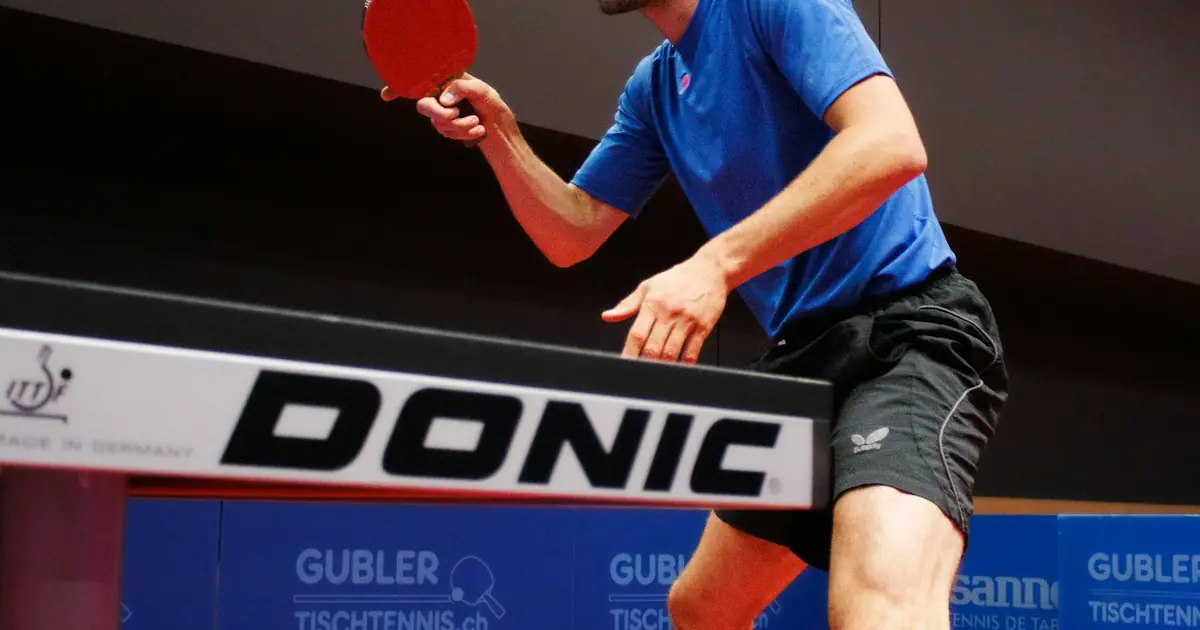
Spin is the reason a good player can make a beginner miss the table with what looks like an easy ball. Topspin dips and kicks forward, backspin floats and drops into the net if you do not lift it, and sidespin bends the ball and its bounce off your racket. Learning to read the opponent's racket angle and direction of swing at contact is one of the biggest jumps a player can make.
The practical rule: against topspin, close your racket angle; against backspin, open it and lift; against sidespin, angle the racket to counter the direction the ball wants to go off your rubber. Our table tennis spin guide explains the physics and how each spin reacts.
3. Practice With Purpose, Not Just Games
A session of nothing but games feels productive but rarely is. Each player gets only a few touches on the shot they most need to fix. A drill gives you dozens of repetitions of the same ball in the same spot.
Closed Drills vs Open Drills
Closed drills are fully predictable: for example, forehand to forehand crosscourt, or two backhands then one forehand from the middle. They build stroke mechanics and muscle memory. Open drills add a random element, such as a fixed serve and return followed by free play. They train decision-making under match-like pressure. Use closed drills to learn a stroke and open drills to make it hold up in games.
A Simple 60-Minute Session
| Block | Time | Focus |
|---|---|---|
| Warm-up | 10 min | Light movement, then easy forehand and backhand rallies |
| Technique drill | 15 min | One stroke you are improving, at moderate pace |
| Footwork drill | 10 min | Side-to-side or falkenberg-style patterns |
| Serve and return | 10 min | Your main serves, then receiving your partner's |
| Open play / points | 15 min | Games starting from specific serves, or practice matches |
No partner? Serve practice, shadow strokes, wall rallies, return boards and robots all work. See our guide to practicing ping pong alone for ten solo methods and a weekly plan.
4. Work on Your Footwork
Many shots that look like stroke problems are really footwork problems. If you reach for the ball instead of moving to it, you hit off balance, too early or too late, and your technique falls apart. Strong players move with small, quick adjustment steps so they can hit most balls from the same comfortable position relative to their body.
- Stay on the balls of your feet between shots and return to the ready position after every stroke.
- Use side-to-side shuffle steps for most movement; save the crossover step for very wide balls.
- Move first, then hit. The stroke should start once your feet are set.
Our table tennis footwork page covers the main step patterns and drills.
5. Make Serve and Return Your Weapons
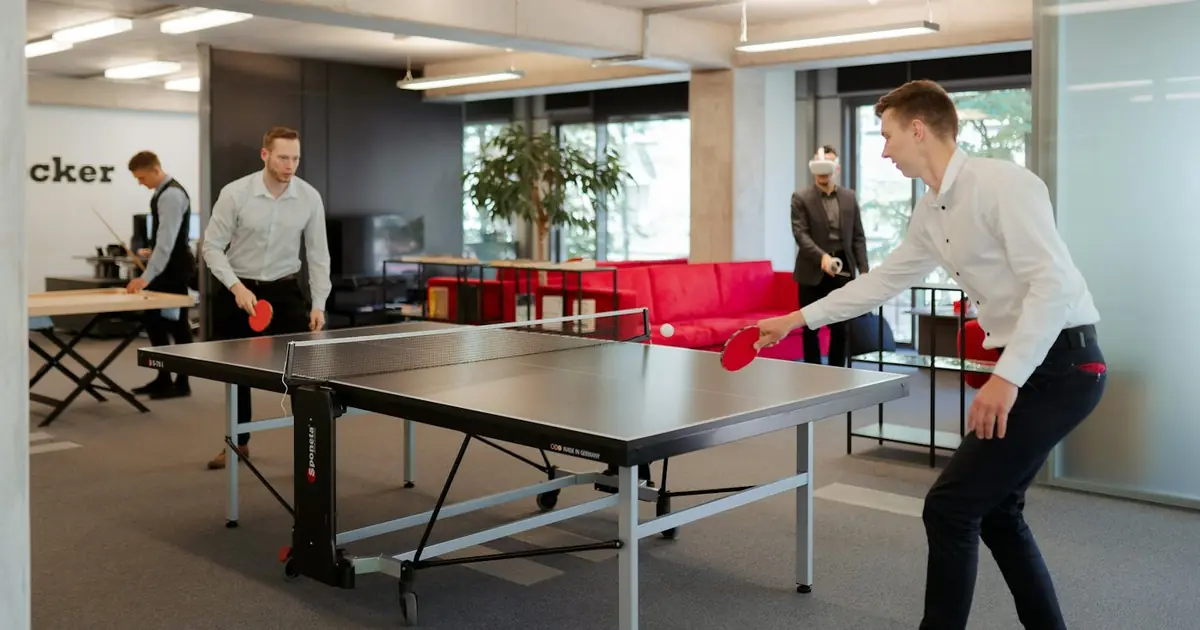
Every point starts with a serve or a return, yet few casual players practice either. The serve is the one shot you fully control, so a short, low backspin serve and a pendulum sidespin serve, landed consistently, will win cheap points and set up your next attack. Learn them in our step-by-step guide on how to serve in ping pong, and make sure they pass the table tennis serve rules.
Returning serve is the mirror skill. Watch the racket at contact, keep your first return simple and safe, and aim it deep or short with purpose rather than just getting it back. Our guide on how to return serve breaks down reading and handling each common serve.
6. Play People Who Are Better Than You
Beating the same friends every weekend can actually slow your progress. Stronger players punish weak returns, force you to handle more spin and speed, and show you what good shot selection looks like up close. Aim for a mix: some games against better players to stretch you, some against equals to compete, and some against weaker players where you practice new shots without pressure.
Variety of styles matters too. Choppers, blockers, loopers and players with long pips each pose different problems; meeting them in practice beats meeting them first in a tournament. Our ping pong strategy guide explains how to adjust your game plan against each.
7. Join a Club and Consider Coaching
A club gives you regular partners, a range of playing styles, proper tables and often leagues or rated events. In the US, USA Table Tennis (USATT) offers a club finder and a coach directory on its website, along with a rating system that lets you track progress in sanctioned events. Explore other options in our guide to places to play ping pong.
A coach is usually the fastest single way to improve, because they see technical faults you cannot feel yourself and can stop bad habits before they set in. USATT certifies coaches and requires certified coaches to complete SafeSport training and a background check. Even occasional lessons, with your own practice in between, can make a big difference. See our overview of table tennis lessons for what to look for.
8. Film Yourself and Watch Good Players
Video is free feedback. Prop your phone behind or beside the table and record a practice session or match. On review, look for a few specific things rather than everything at once:
- Points you lost. Note which shot failed and whether the error was technique, positioning or choice.
- Your ready position. Check whether you return to it between shots or stay stuck where you hit.
- Your serves. Check height, length and whether your motion gives the spin away.
- Your opponent's patterns. Spot which serves and placements caused you trouble.
Watching top players helps too. Notice how little their upper body moves on blocks, how they recover position, and how often they place the ball to the middle (the elbow area) to cramp the opponent. Our list of the best ping pong players is a good place to start for match footage worth studying.
9. Upgrade Equipment at the Right Time
A better paddle will not fix a flawed stroke. Very fast blades and grippy tensioned rubbers make every error bigger, which is why beginners often play worse after jumping to a "pro" setup. The table below is a simple guide to when an upgrade makes sense.
| Your Level | Sensible Setup | Upgrade When |
|---|---|---|
| Casual / new | Pre-assembled paddle with grippy rubber and moderate speed | Rubber is worn smooth or you can loop consistently |
| Improving club player | All-round or slower offensive blade with spin-oriented rubbers | You can loop and block reliably at moderate pace |
| Competitive player | Custom blade and rubbers matched to your style | A specific need appears (more speed, more control, more spin) |
Once you have a setup that suits you, stick with it so your touch can settle. For specific picks, see the best ping pong paddles for beginners and our main best ping pong paddles guide. Replacing worn rubber and keeping it clean also restores grip; our guide on how to clean a ping pong paddle shows how. Proper indoor court shoes help footwork more than many players expect; see the best table tennis shoes.
10. Build Fitness and a Match Mindset
Fitness for Table Tennis
Table tennis rewards quick bursts of movement, low stable posture and core rotation. Simple off-table work helps: leg strength (squats, lunges), short agility drills such as ladder work or side shuffles, core exercises, and shoulder mobility. A short dynamic warm-up before playing also lowers the risk of strains and makes your first games sharper. Learn more about what the sport does for your body in our article on the benefits of table tennis.
The Mental Game
Many matches are lost between points, not during them. A few habits help:
- Have a routine. Take a breath, towel off or bounce the ball before each serve so every point starts the same way.
- Play one point at a time. A missed smash is gone; your next serve is what matters.
- Plan simple tactics. Decide which serve to use and where you want the third ball before you serve.
- Use breaks wisely. Use the pause between games, or a timeout where the event allows one, to break an opponent's run and reset your plan.
- Judge by the process. After a match, rate how well you followed your plan, not just the score.
A 4-Week Starter Plan
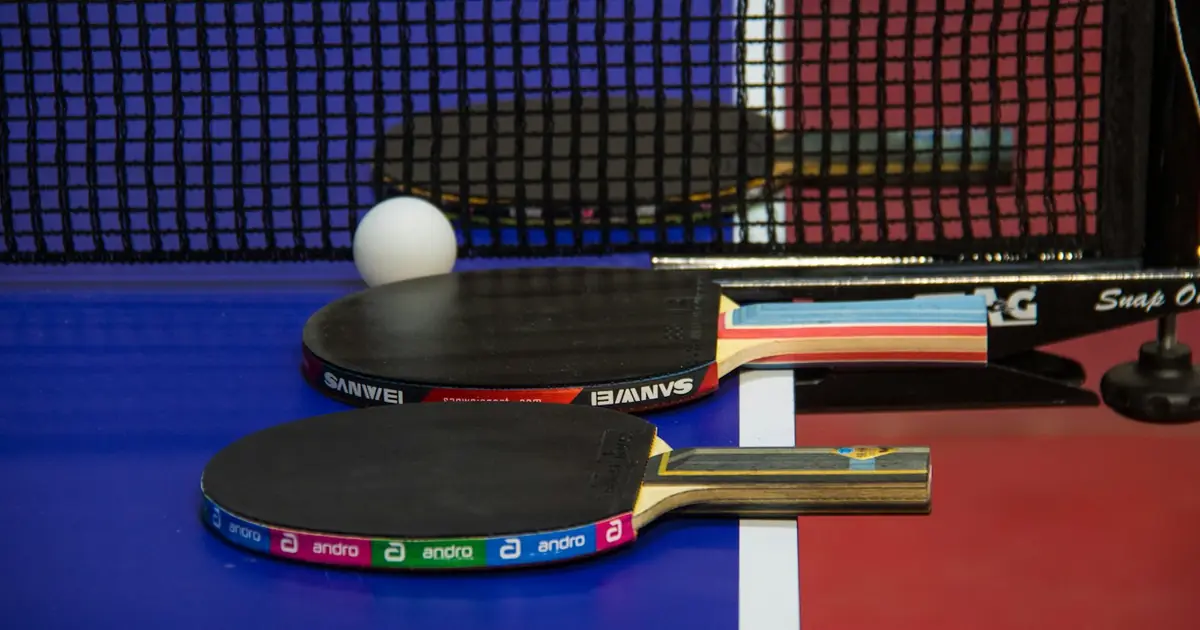
If you want a structure to follow, this plan assumes three sessions a week and can be repeated with new focus areas.
| Week | Main Focus | Supporting Work |
|---|---|---|
| 1 | Grip, ready stance, forehand and backhand drives | 10 minutes of serve practice per session |
| 2 | Push and block, reading backspin vs topspin | Basic side-to-side footwork |
| 3 | Forehand loop against backspin | Serve return against short backspin and pendulum serves |
| 4 | Open drills and practice matches | Film one match and pick next month's weakness |
Common Mistakes That Hold Players Back
| Mistake | Why It Hurts | Fix |
|---|---|---|
| Only playing games | Weak shots get few repetitions | Spend at least half of each session on drills |
| Hitting with the arm only | Little power and poor consistency | Rotate hips and shoulders and shift weight into the shot |
| Standing flat-footed | Late to the ball, off-balance strokes | Stay on the balls of your feet and recover after each shot |
| Ignoring serve and return | Losing points before rallies start | Practice both every session |
| Upgrading gear too early | Faster equipment magnifies errors | Wait until strokes are consistent |
| Always playing the same people | No exposure to new spins and styles | Join a club or league and seek out stronger players |
Improvement in table tennis is rarely about one secret. It comes from a sound base, deliberate practice, honest feedback and enough match play to test it all. If you are still learning the basic rules and scoring, start with our guide on how to play table tennis, then come back to this plan.
Frequently Asked Questions
How Long Does It Take to Get Good at Ping Pong?
It depends on how often and how well you practice. A casual player who trains with purpose two or three times a week will usually beat most basement players within months, while reaching a strong club level typically takes years of regular training and match play.
Can You Get Better at Ping Pong by Playing Alone?
Yes, up to a point. Serve practice, shadow strokes, footwork drills, a return board or a robot all build technique and consistency. You still need games against real people to learn to read spin, handle different styles and cope with pressure.
What Is the Fastest Way to Improve at Table Tennis?
Getting regular feedback from a qualified coach is usually the fastest route, because a coach spots technical flaws you cannot see yourself. If coaching is not an option, combine structured drills, video review of your matches and frequent games against stronger players.
Should I Buy a Better Paddle to Improve?
Only once your strokes are consistent. A faster, spinnier custom paddle amplifies both good and bad technique, so beginners often play worse with it. A decent all-round paddle with grippy rubber is enough until you can loop and block reliably.
How Often Should I Practice Ping Pong to Improve?
Two or three focused sessions a week of about an hour to 90 minutes is a solid target for most adult players. Regular, shorter sessions with a clear goal tend to produce more progress than one long, unstructured session.
What Should Beginners Practice First in Ping Pong?
Start with grip, ready stance, a consistent forehand and backhand drive, the push against backspin and a simple short backspin serve. Once you can rally those shots steadily, add footwork, topspin loops and serve return.