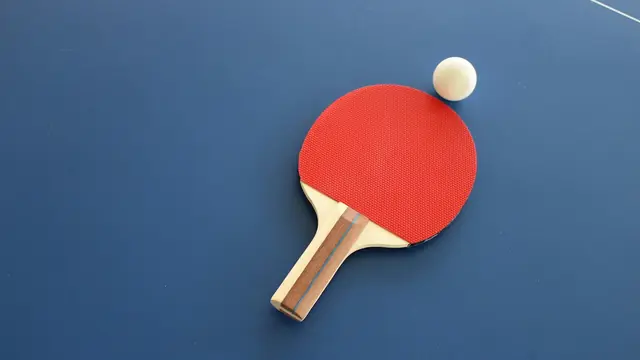
How to Serve in Ping Pong: Spin, Disguise and Free Points (2026)
In This Article
- How Serving Works and Why It Matters
- The Legal Basics in 30 Seconds
- Stance, Grip and Toss: The Setup for Every Serve
- How to Generate Spin: Brush, Don't Hit
- Step-by-Step: The Serves Worth Learning
- Types of Serves Compared
- Disguise and Variation: Making Serves Hard to Read
- A Simple Serve Practice Routine
- Common Serving Mistakes and How to Fix Them
- Where to Go Next
- Frequently Asked Questions
How Serving Works and Why It Matters
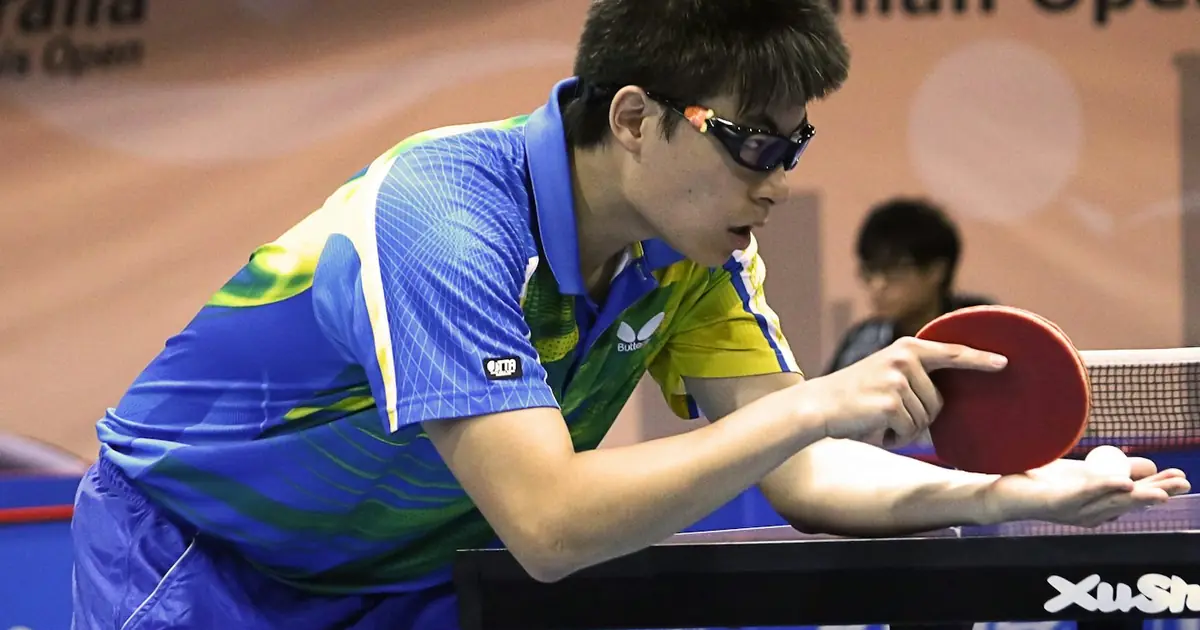
To serve in ping pong, rest the ball on your flat, open palm behind your end line, toss it straight up at least 16 cm, and strike it as it falls so it bounces once on your side and then once on your opponent's side. Everything else (spin, speed, placement) is built on top of that legal base.
The serve is the only shot in the game you fully control. Nobody is rushing you, the ball arrives exactly where you put it, and you decide the spin. That is why strong players treat it as an attacking weapon rather than a way to start the rally. A good serve either wins the point outright or forces a weak return you can attack on the third ball.
Quick Facts
- Minimum toss: 16 cm, near vertical, from an open stationary palm (ITTF Law 2.6)
- Where you stand: The ball must stay behind your end line and above the table surface until you hit it
- Serves per turn: Two in a row, alternating every point from 10-10
- No hiding: Since 1 September 2002 the ball must stay visible to the receiver throughout the serve
- Second serve: None. A fault is simply a lost point
The Legal Basics in 30 Seconds
This page is about technique, but every serve below has to pass the same checks. The full breakdown, including let serves and umpire calls, is on our table tennis serve rules page, and the wider game rules are covered in ping pong rules.
The no-hiding rule matters for technique. Before 2002 many players shielded contact with their free arm or shoulder so the receiver could not read the spin. Today the free arm has to move out of the way after the toss, so disguise has to come from racket speed and motion instead.
Stance, Grip and Toss: The Setup for Every Serve
Stance
For forehand serves, right-handers usually stand near the backhand corner, side-on to the table, with the left foot forward and the right foot back. This position lets you serve to any part of the table and leaves your forehand ready for the third ball. Bend your knees a little and stay close enough that the ball is struck just above table height. For backhand serves, most players stand more square to the table, around the middle or the backhand third.
Grip Adjustments for Serving
Most players use the shakehand grip covered in our table tennis grips guide, but they loosen and shift it when serving. A common adjustment for forehand serves is to release the last two or three fingers from the handle so only the thumb and index finger pinch the blade. That frees the wrist, and the wrist is where most serve spin comes from. Squeezing the handle hard is one of the most reliable ways to kill spin. Return to your normal grip straight after contact so you are ready for the next shot.
The Toss
A clean toss makes every serve easier because the ball arrives at the same height and position each time.
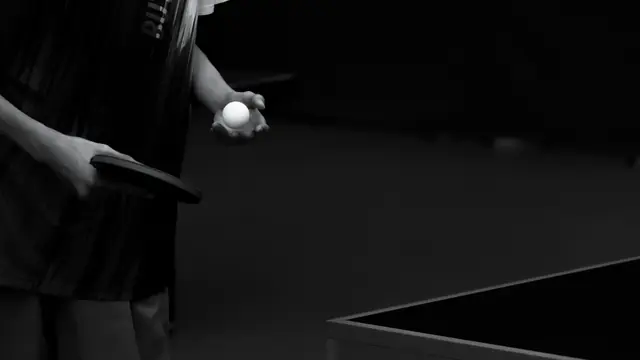
- Open the palm. Lay the ball in the middle of a flat hand, fingers together and thumb free. Do not cup it in your fingers.
- Keep the hand still. Pause briefly before tossing so the start of the serve is clear.
- Lift with the arm, not the fingers. Raise the ball nearly straight up by moving the whole arm, keeping the wrist fairly firm.
- Go at least 16 cm. Roughly the height of a standing ping pong paddle above your palm is a safe reference.
- Clear the free arm. After the toss, move the free arm away from the space between the ball and the net so the receiver can see the ball.
- Hit on the way down. Let the ball fall to just above net height for a short, low serve.
How to Generate Spin: Brush, Don't Hit
Spin comes from friction. Instead of driving through the middle of the ball, you graze it with a fast racket moving across its surface. The thinner the contact and the faster the racket, the more the ball spins relative to how fast it travels.
| Racket Path at Contact | Part of Ball Contacted | Spin Produced |
|---|---|---|
| Downward and forward, open face | Bottom | Backspin |
| Upward and forward, closed face | Back to top | Topspin |
| Sideways across the ball | Side | Sidespin |
| Sideways and down | Lower side | Side-backspin |
| Sideways and up | Upper side | Side-topspin |
| Forward push, little brush | Middle | Little or no spin |
Two tips make the biggest difference. First, accelerate into the ball with a quick wrist snap at the last moment rather than a big, slow swing. Second, keep the contact thin: if you hear a solid "clack", you probably hit through the ball; a quieter, grazing contact usually means more spin. Players deliberately use a fuller, slower contact for no-spin serves.
Your rubber matters too. Grippy, inverted rubber gives far more spin than hard bats or worn-out sheets, which is why our best table tennis rubber guide puts so much weight on grip and spin.
Step-by-Step: The Serves Worth Learning
All directions below assume a right-handed player. Left-handers can mirror them.
Basic Backspin Serve
The backspin (or chop) serve is the foundation of most serving games. Heavy backspin kept short is difficult to attack, so it is the best first serve to learn.
- Set up. Stand side-on in the backhand corner and open the racket face so it points mostly up.
- Toss and wait. Toss and let the ball drop close to table height.
- Brush underneath. Swing the racket forward and slightly down, grazing the bottom of the ball.
- Snap the wrist. Add a quick wrist flick at contact for extra spin.
- Keep the first bounce close to the net. Aim it about a third of the way into your half so the ball stays short.
- Check the spin. On a good one, the ball checks or even drifts back toward the net after its bounce on the other side.
Topspin and No-Spin Serves
These two pair naturally with backspin. A receiver who expects backspin and pushes a topspin or no-spin ball usually sends it high or long.
- Topspin: close the face slightly. Start below the ball and brush up and forward over the back of it.
- Topspin: contact late. Hit as the racket is rising so the brush goes upward.
- No-spin: copy the backspin motion. Use the same setup and swing so it looks identical.
- No-spin: change the contact. Push the ball forward with a fuller contact, ideally nearer the handle, and slow the wrist.
- Keep both low. A high topspin or no-spin serve is an easy ball to attack.
Forehand Pendulum Serve
The pendulum is the most common serve among intermediate and advanced players. The racket swings across the ball from right to left like a clock pendulum, producing sidespin. If the receiver does not compensate, the return tends to go to their right, which is your backhand side.
- Adjust the grip. Loosen the lower fingers so the wrist moves freely.
- Raise the elbow and drop the tip. Lift the elbow a little and point the racket tip toward the floor so the face angles across the ball.
- Toss and draw back. As the ball rises, take the racket back to the right, away from the ball.
- Swing right to left. Bring the racket across the back of the ball with a fast wrist snap.
- Choose the spin. Brush across and down for side-backspin, across for pure sidespin, or across and up for side-topspin.
- Follow through. Let the racket finish to your left, then reset quickly to the ready position.
Reverse Pendulum Serve
The reverse pendulum produces the opposite sidespin, so the return tends to drift to the receiver's left. It is harder to learn and usually comes later, but it pairs well with the standard pendulum because opponents must read two opposite spins from a similar stance. PingSkills recommends learning the plain sidespin version first.
- Use the pendulum stance. Stand side-on with the same grip.
- Raise the elbow high. Bring it up to roughly shoulder level, wrist curled in toward the body.
- Contact the outside of the ball. Swing from left to right, brushing the far side of the ball, with contact in front of your body near the back hip.
- Finish toward the net post. The racket should end pointing toward a net post.
- Add variations later. Tilt the racket back and brush down for backspin, or contact later as the racket rises for light topspin.
Backhand Serve
The backhand serve uses the backhand rubber with a left-to-right sweep across the body. It is a useful change of look because the sidespin is the opposite of a forehand pendulum. German star Dimitrij Ovtcharov is well known for a backhand serve.
- Face the table. Stand more square, around the middle or backhand side, with the racket in front of your body.
- Toss in front of you. Keep the ball close so it falls just in front of your hip.
- Draw the racket back. Take it toward your left hip with the face slightly open.
- Sweep left to right. Brush across the back of the ball with a wrist or elbow flick.
- Vary the path. More forward and down adds backspin; sweeping sideways and up at the end adds topspin.
Tomahawk Serve
In the forehand tomahawk the racket is held with the tip pointing up and the forehand rubber facing the ball's side, and the swing pivots at the elbow. The sidespin is opposite to the pendulum, which makes it a more approachable alternative to the reverse pendulum.
- Face the table more squarely. Stand closer to the middle than for the pendulum.
- Turn the racket upright. Tip points up, forehand rubber facing left, elbow bent and close to the body.
- Pivot at the elbow. Twist the racket inward and forward, brushing the back and right side of the ball.
- Brush down for backspin. Angle the swing downward to add backspin, or keep it level for sidespin.
- Control the direction. Aim crosscourt first; down-the-line tomahawks take more control.
Short Serves vs Long Serves
Length is just as important as spin. A short serve bounces twice on the receiver's side if it is left alone. That stops the opponent looping it, so they must push, flick or drop it short. A long serve reaches the end line and invites a loop but rushes players who are slow to step back.
| Factor | Short Serve | Long Serve |
|---|---|---|
| First bounce on your side | Close to the net | Close to your own end line |
| Typical spin | Backspin or side-backspin | Topspin, sidespin or no-spin |
| Main goal | Prevent an attack on the return | Surprise and rush the receiver |
| Main risk | Floating high or bouncing long | Being looped hard if expected |
Fast Long Serve
- Stand a little further back. This gives the ball room to travel low and fast.
- Let the ball drop low. Contact it close to table height.
- Bounce near your own end line. A first bounce near your end line keeps the trajectory flat.
- Hit forward through the back of the ball. Use a slightly closed face and add topspin or sidespin to keep it on the table.
- Aim for the corners or the elbow. Target the deep backhand corner, the deep forehand corner, or the receiver's playing elbow, where they must choose a side.
A fast long serve works best as a surprise. PingSkills includes Jan-Ove Waldner's fast serve down the line among its advanced serve lessons; read more about him on our best ping pong players page.
Ghost Serve
The ghost serve is an extreme backspin serve that bounces on the receiver's side and then spins back toward the net, sometimes back to the server's side. It is closely associated with China's Ma Lin. It is more of a showpiece than a match staple, but working toward it builds heavy backspin.
- Open the racket a lot. The face points almost straight up, with the front edge slightly higher.
- Contact near the bottom of the ball. Graze it underneath, a little toward the front, essentially scooping it.
- Keep forward speed very low. Nearly all the racket speed should go into spin, not distance.
- Bounce short. Land the first bounce close to the net so the ball barely crosses.
- Experiment with a higher toss. A higher toss gives the ball more speed to convert into spin, but takes longer to time.
Types of Serves Compared
Use this table to decide which serve to learn next. Difficulty is an editorial judgment based on how much wrist control and timing each serve requires.
| Serve | Main Spin | Difficulty | When to Use |
|---|---|---|---|
| Basic backspin | Backspin | Easy | Default short serve that limits attacks |
| Topspin | Topspin | Easy | Against players who struggle with topspin; long or half-long |
| No-spin (float) | Little or none | Medium | Disguised as backspin to draw high returns |
| Forehand pendulum | Sidespin plus back or top | Medium | Main serve for most club players; short or long |
| Reverse pendulum | Opposite sidespin | Hard | Pairing with the pendulum to confuse receivers |
| Backhand | Sidespin plus back or top | Medium | Change of look; serving from the middle |
| Tomahawk | Opposite sidespin to pendulum | Medium | Simpler way to get reverse spin |
| Fast long | Topspin, sidespin or no-spin | Medium | Surprise serve to corners or elbow |
| Ghost | Extreme backspin | Hard | Trick serve; builds backspin skill |
Disguise and Variation: Making Serves Hard to Read
Spin only wins points when the receiver misreads it. These habits make your serves harder to read:
- One motion, several spins. Use the same setup and swing, and change only the contact: down for backspin, across for side, up for topspin, fuller for no-spin.
- Fast racket either way. Swing just as fast on a no-spin serve as on a heavy one, so racket speed gives nothing away.
- Exaggerated follow-through. Many players finish with a big upward or downward motion after contact to suggest the opposite spin.
- Mix length and placement. A short backspin serve to the forehand becomes far more effective if you sometimes go fast and long to the backhand.
- Change rhythm. Serve the same way two or three times, then switch. Do not follow the same pattern every rally.
- Plan the third ball. Each serve should set up the attack you want next, so pick serves that suit your strengths.
A Simple Serve Practice Routine
Serving is the one skill you can train alone with a bucket of balls. A session of 15 to 20 minutes, a few times a week, adds up quickly. Our ping pong practice guide has more drills.
| Block | Focus | How |
|---|---|---|
| 1. Warm-up (3 min) | Legal toss | Toss and catch from an open palm, checking height and straightness |
| 2. Spin (5 min) | Backspin | Serve short and watch whether the ball checks back toward the net |
| 3. Targets (5 min) | Placement | Place a towel or paper target in each zone and count hits out of ten |
| 4. Variation (5 min) | Disguise | Alternate backspin and no-spin with the same motion |
| 5. Pressure (2 min) | Match feel | Serve as if at 9-9: one routine, one serve, full focus |
Common Serving Mistakes and How to Fix Them
| Mistake | Why It Happens | Fix |
|---|---|---|
| Tossing too low or from the fingers | Rushing the serve | Pause with a flat palm and lift at least 16 cm |
| Hiding the ball with the free arm | Old habits or copying old footage | Move the free arm away right after the toss |
| Little spin | Tight grip, slow wrist, hitting instead of brushing | Loosen the grip and graze the ball with a fast wrist snap |
| Serves go long | First bounce too deep, too much forward swing | Bounce near the net and convert speed into spin |
| Serves pop up high | Contact too high above the table | Let the ball drop lower before contact |
| Predictable patterns | One favorite serve every point | Prepare two or three serves and mix length and spin |
| Not ready for the return | Admiring the serve | Recover to the ready position immediately |
Equipment can hold you back too. A cheap paddle with hard or slick rubber will not grip the ball, however good your technique. If that is the issue, our best ping pong paddles guide covers paddles with grippy rubber at different price tiers.
Where to Go Next
Start with a legal toss and a short backspin serve, add the forehand pendulum, then a fast long serve, and work on disguise once those land. If you are newer to the game, our how to play table tennis guide covers the strokes that follow the serve. Before match play, check the full serve rules so a great serve is not called as a fault.
Frequently Asked Questions
What Is the Easiest Serve to Learn in Ping Pong?
The basic backspin serve is the usual starting point. You brush under the ball with an open racket, it is easy to keep short and low, and it is hard for a beginner opponent to attack. Learn it before adding sidespin.
What Is the Best Serve in Table Tennis?
There is no single best serve. The forehand pendulum is the most widely used serve among intermediate and advanced players because it can carry sidespin, backspin or topspin from a similar motion, but a serve is only as good as its placement and disguise.
How Many Serves Do You Get in Ping Pong?
Under the 11-point scoring system, each player serves two points in a row, then service passes to the opponent. At 10-10 the serve alternates every point. There is no second serve: a fault simply loses the point.
How High Do You Have to Toss the Ball When Serving?
The ITTF laws require the ball to rise at least 16 cm after leaving your open, stationary palm, and the toss must be near vertical with no spin added by the hand. Many players toss higher once they are comfortable.
Can You Serve Anywhere on the Table in Singles?
Yes. In singles the serve can bounce anywhere on your side and then anywhere on the opponent's side, including crosscourt or down the line. In doubles it must go diagonally from your right half to the receiver's right half.
Why Do My Serves Go Too Long?
Usually the first bounce lands too deep on your side or you hit forward instead of brushing. Aim the first bounce close to the net, slow the forward swing, and graze the ball with a thin contact so the spin, not the speed, does the work.
Sources and References
- ITTF Laws 2.6 (The Service), reproduced by Aberdeen & District TTA
- Megaspin: New Service Rule Published (no-hiding rule from 1 September 2002)
- Megaspin: It's Official - 7 Sets, 11 Points, 2 Serves
- PingSkills: Reverse Pendulum Serve
- PingSkills: Ma Lin Ghost Serve
- PingSkills: Types of Table Tennis Serves
- Paddle Palace Blog: Backspin serves and the ghost serve
- Table Tennis Teacher: Every Ping Pong Serve