The Table Tennis Flick: Attack Short Balls With Confidence (2026)
 By Harshwardhan · Updated
In This Article
- What Is a Flick in Table Tennis?
- When to Flick a Short Ball
- Setup: Grip, Stance and the Step In
- How to Play a Forehand Flick
- How to Play a Backhand Flick
- The Backhand Banana Flick
- Flick Types Compared
- How the Flick Changes Against Different Spin
- Common Flick Mistakes and Fixes
- Flick Drills to Practice
- How to Deal With an Opponent's Flick
- Putting the Flick Into Your Game
- Frequently Asked Questions
What Is a Flick in Table Tennis?
A table tennis flick is a short, attacking stroke played over the table against a ball that would bounce twice on your side if you left it. Because the table stops you taking a full backswing, the power comes from a quick snap of the wrist and forearm, usually adding topspin so the ball clears the net and drops in.
The older name is the "flip", and you will still hear both. The flick matters because short serves and short pushes are everywhere above beginner level. If your only answer to a short ball is a push, your opponent knows the next ball will be low and slow and can wait to attack it. A flick lets you take the initiative first.
Quick Facts
- Other names: Flip; the backhand banana version is also called a banana flip or chiquita
- Used against: Short serves and short pushes that stay over the table
- Main power source: Wrist and forearm, with a step in for balance
- Typical spin: Topspin, often with sidespin on the backhand
- Main types: Forehand flick, backhand flick, backhand banana flick and strawberry flick
When to Flick a Short Ball
You have three basic options against a short ball: push it back, drop it short, or flick it. The flick is the attacking choice. Its goals are to break up the server's planned third-ball attack, to move the opponent with an angle, and to surprise a player who is crowding the table waiting for a push.
| Situation | Flick? | Why |
|---|---|---|
| Short ball that bounces high or half-long | Yes | Easy to take at the top of the bounce and hit with speed |
| Short sidespin or no-spin serve | Yes | Less backspin to fight, so the ball is easier to lift |
| Opponent loves attacking your pushes | Yes | Takes away the slow ball they want to loop |
| Very low, heavy backspin ball | Sometimes | Possible with a more open racket, but a push is often safer |
| You cannot read the spin | Usually not | A misread flick tends to go into the net or off the end |
| You are off balance or late | No | Without the step in, contact is too far from the body |
Flicking is closely tied to how you return serve. A useful habit is to vary between a short push, a long push and a flick so the server cannot set up the same third ball every time.
Setup: Grip, Stance and the Step In
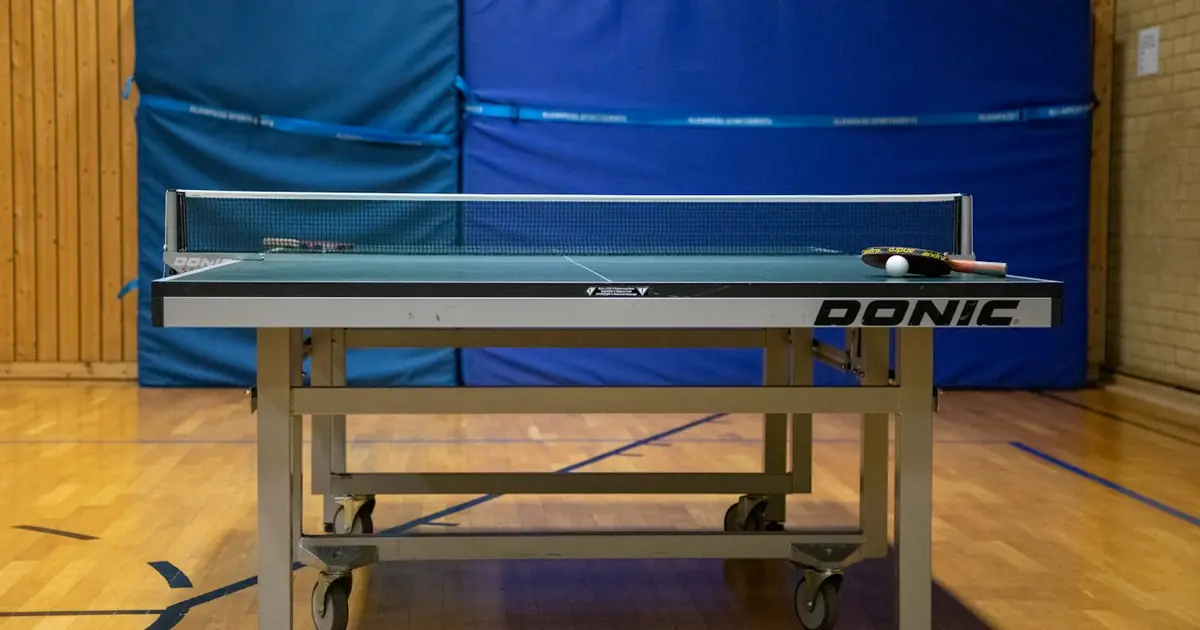
Most flicks are played with the standard shakehand grip described in our table tennis grips guide, held a little looser than normal. A loose grip lets the wrist move and helps you brush the ball. Squeezing the handle is one of the most common reasons a flick has no spin.
From your ready position, the key movement is the step in. For right-handers, the right foot usually steps under the table toward the ball, with the knee bent and weight moving onto that front foot. This brings your body close enough to contact the ball in front of you instead of reaching with a straight arm. Good footwork here is what makes the stroke repeatable.
Keep the racket in front of your body and above the table as you move in. There is no room for a big backswing, so the preparation is compact: the wrist does the winding up, not the shoulder.
How to Play a Forehand Flick
The forehand flick is usually played against short balls to the forehand or middle. It is harder for most players than the backhand version because the forehand wrist has less natural range when reaching under the table, so footwork and timing matter more.
- Read the ball. Decide early that the ball is short and judge the spin from the server's racket.
- Step in. Move the right foot (for right-handers) under the table so the ball is in front of your body.
- Prepare a short backswing. Keep the elbow bent and the racket close, with the wrist cocked back slightly. The racket face is flat or slightly closed against no-spin, more open against backspin.
- Take the ball at the top of the bounce. At the peak, the ball is highest above the net, so you can hit forward with less lift.
- Snap the wrist and forearm. Accelerate forward and slightly up with a quick wrist action, brushing the back of the ball for topspin.
- Keep the follow-through short. Finish toward the net and slightly up, around head height, without swinging across your body.
- Push back out. Push off the front foot and return to the ready position for the next ball.
Some coaches separate a wristy, topspin forehand flick from a flatter forehand flip that relies on rotating the forearm with little spin. The flatter version can work well against no-spin balls but is less safe against backspin. Once the ball is over the table and rallying, the stroke transitions into your normal forehand and loop game.
How to Play a Backhand Flick
The basic backhand flick is the most common way to attack short balls at club level. The wrist moves freely in front of the body, which makes it easier to generate spin and to hide the direction until late.
- Step in. Move the right foot under the table toward the ball and get your head close to the line of the ball.
- Bend the wrist toward you. Curl the wrist inward with the racket in front of your stomach or chest. The elbow stays roughly still and acts as a pivot.
- Contact at or just before the peak. Brush the back and upper part of the ball. Waiting until it drops shrinks your margin for error.
- Snap forward and up. Uncurl the wrist quickly, with the forearm adding speed. Do not swing from the shoulder.
- Finish short. Stop the racket around shoulder height and recover. A big follow-through slows your return to the ready position.
The more general table tennis backhand guide covers the drive and loop that follow once the rally opens.
The Backhand Banana Flick

The banana flick is a backhand flick with an exaggerated wrist and forearm rotation that adds sidespin to the topspin. The name refers to the curved movement of the racket around the ball, and the ball itself tends to follow a curved path. Many players also call it the chiquita.
Butterfly notes that players such as Wang Hao and Dimitrij Ovtcharov were among the first to use it as a main return of serve, and that each new generation has made it more common. Today it is a standard receive at intermediate and advanced level, partly because it can be played against short balls to the middle and even the forehand side.
- Move early. Start moving just before the server contacts the ball, then step in with the dominant foot as if you were going to push.
- Point the racket tip down. Raise the elbow above the hand and drop the racket head toward the table. The wrist and forearm are now loaded like a spring.
- Contact the side of the ball. Brush around the left side and back of the ball (for right-handers), more to the side than in a normal flick.
- Rotate through. Snap the forearm and wrist so the racket turns from tip-down to tip-up, adding topspin and sidespin together.
- Adjust for spin. Against backspin, brush the back of the ball and snap the wrist more upward. Against no-spin or topspin, snap more forward and brush higher on the ball.
- Recover quickly. Get back to neutral, especially after flicking from the middle or forehand side, because your wide backhand is now open.
The Strawberry Flick
The strawberry flick is the less common partner of the banana flick. It is still played on the backhand, but the wrist rotates the other way and the racket contacts the opposite side of the ball, so the sidespin is reversed. It is mainly a variation: once opponents get used to the banana flick, a strawberry flick that bends the other way can produce weak blocks. Most coaches suggest learning it only after the forehand, backhand and banana flicks are reliable.
Flick Types Compared
| Flick | Spin | Best Used On | Difficulty (Editorial) |
|---|---|---|---|
| Forehand flick | Topspin, sometimes with slight fade | Short balls to the forehand | Medium to hard |
| Backhand flick | Topspin | Short balls to the backhand and middle | Medium |
| Banana flick | Topspin plus sidespin | Short balls to the backhand, middle and often the forehand | Hard |
| Strawberry flick | Topspin plus reversed sidespin | Variation against opponents reading the banana | Very hard |
How the Flick Changes Against Different Spin
The incoming spin decides the racket angle and the direction of the snap. If you need a refresher on what each spin does, see our table tennis spin guide.
| Incoming Ball | Racket Angle | Stroke Direction | What Goes Wrong If You Don't Adjust |
|---|---|---|---|
| Heavy backspin | More open | Upward brush, slower | Ball goes into the net |
| Light backspin | Slightly open to vertical | Forward and up | Ball sits up for an easy block |
| No-spin | Vertical to slightly closed | Mostly forward | Ball flies long |
| Topspin | Closed | Forward, brushing over the top | Ball flies long or high |
| Sidespin | Aim against the spin | Adjust direction | Ball drifts wide of the table |
Butterfly also observes that the banana flick is easier against sidespin serves, which is one reason players often use it to receive short pendulum serves. A safe rule when unsure is to flick slower with more spin rather than faster and flatter.
Common Flick Mistakes and Fixes
| Mistake | Result | Fix |
|---|---|---|
| Not stepping in | Reaching with a straight arm, weak contact | Step the playing foot under the table every time |
| Hitting late, after the peak | Ball has dropped below the net, flicks go into it | Move earlier and take the ball at the top of the bounce |
| Tight grip | No brush and little spin | Relax the fingers so the wrist can snap |
| Using the shoulder | Slow, big stroke and strain on the shoulder | Pivot from the elbow; let the wrist and forearm do the work |
| Too little wrist bend | Flicks lack speed and spin | Cock the wrist fully before the snap |
| Racket too closed on backspin | Ball goes into the net | Open the face and brush up |
| Long follow-through | Late for the next ball | Stop the racket around shoulder or head height and recover |
Flick Drills to Practice
Flicks are a feel shot, so repetition is what makes them reliable. Start slow, focusing on clean contact and spin, then add speed.
- Short serve and flick. A partner serves short to your backhand; you flick, then play the point out. Repeat on the forehand side.
- Multiball flicks. A partner feeds short balls with mixed spin to different positions. Flick each one to a target zone, then return to the ready position.
- Flick then attack. Flick one short ball near the middle, then play topspins anywhere on the table so you practice the transition after the flick.
- Push or flick. Your partner pushes short; you choose between a short push and a flick so you learn to read which ball is flickable.
- Placement ladder. Flick ten balls to the wide backhand, ten to the middle, ten to the wide forehand, counting how many land.
Our ping pong practice guide has more ideas for structuring sessions, and the how to get better at ping pong guide shows where the flick fits in your overall development.
How to Deal With an Opponent's Flick
Knowing the flick also helps when you face it. Watch where the flicker has moved: if they stepped in from the backhand, their wide backhand may be open for a block. Playing into the middle takes away angles. Advanced players can loop the flick, using the body to drive through the sidespin. Against a player who flicks everything, serve more half-long and long, use short serves to the forehand, and mix in flat no-spin or heavy backspin serves.
Putting the Flick Into Your Game
Learn the backhand flick first, add the forehand flick, then the banana flick once the basic contact is reliable. Use the flick as part of a plan rather than as a single shot: flick to break the server's rhythm, then be ready to attack the fourth ball. For more on building those patterns, see our ping pong strategy guide, and for the serves your flicks will be answering, read how to serve in ping pong.
Frequently Asked Questions
What Is the Difference Between a Flick and a Flip in Table Tennis?
Nothing important. Flip is the older term and flick is the more common word today. Both describe an attacking stroke played over the table against a short ball, with the backswing compressed into a quick wrist and forearm action.
What Is a Banana Flick?
A banana flick is a backhand flick played with the racket tip pointing down at the start and a fast wrist and forearm rotation through contact. It adds sidespin to the topspin, so the ball travels on a curved path. It is also called a banana flip or chiquita.
Can You Flick a Backspin Serve?
Yes, but you must lift it. Open the racket a little more, brush the back of the ball and snap the wrist upward rather than forward. Against heavy backspin, start with slower, spinnier flicks before adding speed.
Is the Backhand or Forehand Flick Easier?
Most players find the backhand flick easier to learn because the wrist moves freely in front of the body and the stroke needs less footwork. The forehand flick usually requires a bigger step under the table and finer touch.
When Should You Not Flick a Short Ball?
Avoid flicking when the ball is very low and very short, when you cannot read the spin, or when you are off balance. A short push or drop shot is often the safer choice in those situations.
Why Do My Flicks Go Into the Net?
Usually the ball is too low when you hit it, the racket is too closed against backspin, or you are swinging forward without brushing upward. Step in earlier, take the ball at the top of the bounce and lift more against backspin.