Table Tennis Footwork: Stance, Steps and Drills That Work (2026)
 By Harshwardhan · Updated
In This Article
- What Good Footwork Actually Means
- The Ready Stance: Where All Footwork Starts
- The Four Footwork Patterns Every Player Needs
- How Footwork Changes Against Different Spin
- Common Footwork Mistakes and How to Fix Them
- Footwork Drills That Build Speed and Habits
- Footwork in Doubles
- Building Better Footwork Over Time
- Frequently Asked Questions
What Good Footwork Actually Means
Table tennis footwork is how you move your feet so that your body is in the right place, at the right distance, before you hit the ball. Good footwork is less about raw speed and more about small, early, balanced steps that let you play your normal stroke every time instead of reaching, cramping or lunging.
Every stroke on this site, from the forehand to the loop, assumes your feet have already done their job. If the ball is a few inches too far away or too close to your body, the arm has to compensate, and that is where most unforced errors start.
Quick Facts
- Stance width: Roughly 1.5 shoulder widths is a common starting point; many top players go wider
- Weight: On the balls of the feet, knees bent, slight forward lean
- Most-used movement: Small side-to-side shuffle steps
- Main footwork types: Shuffle, crossover, pivot (step-around), in-and-out
- Classic drill: The Falkenberg, named after the Falkenbergs BTK club in Sweden
The Ready Stance: Where All Footwork Starts
You cannot move quickly from a standing-tall, flat-footed position. The ready stance loads your legs so the first step happens instantly.
- Set your width. Place your feet about one and a half shoulder widths apart. Butterfly coach Larry Hodges notes that almost all world-class players use wide stances because they add stability and power while still allowing mobility, but very wide stances need leg strength, so use the width you can hold.
- Stagger the feet slightly. Right-handed shakehand players usually have the right foot a little behind the left (reverse for left-handers). This opens space for the forehand without hurting the backhand.
- Bend the knees, not the waist. Sit into a slight squat and lean forward so your weight is on the balls of your feet, heels light.
- Hold the racket in front. Elbow bent, racket roughly at table height and neutral between forehand and backhand, as covered in our table tennis grips guide.
- Position yourself. Stand about an arm's length or a little more behind the end line, slightly toward your backhand side so your forehand can cover more of the table.
Stay light rather than frozen. Many players make tiny bounces or adjustments while the opponent strikes the ball so they are already moving when the ball comes.
The Four Footwork Patterns Every Player Needs
Coaching material groups footwork into a handful of patterns. The examples below are for a right-handed player; left-handers mirror them.
| Pattern | Use It For | Distance Covered |
|---|---|---|
| Side-to-side shuffle | Most rally balls near your position | Small to medium |
| Crossover step | Very wide balls to the forehand | Large |
| Pivot (step-around) | Forehands from the backhand corner | Small, with body rotation |
| In-and-out | Short serves, short pushes and drop shots | Forward and back |
Side-to-Side Shuffle
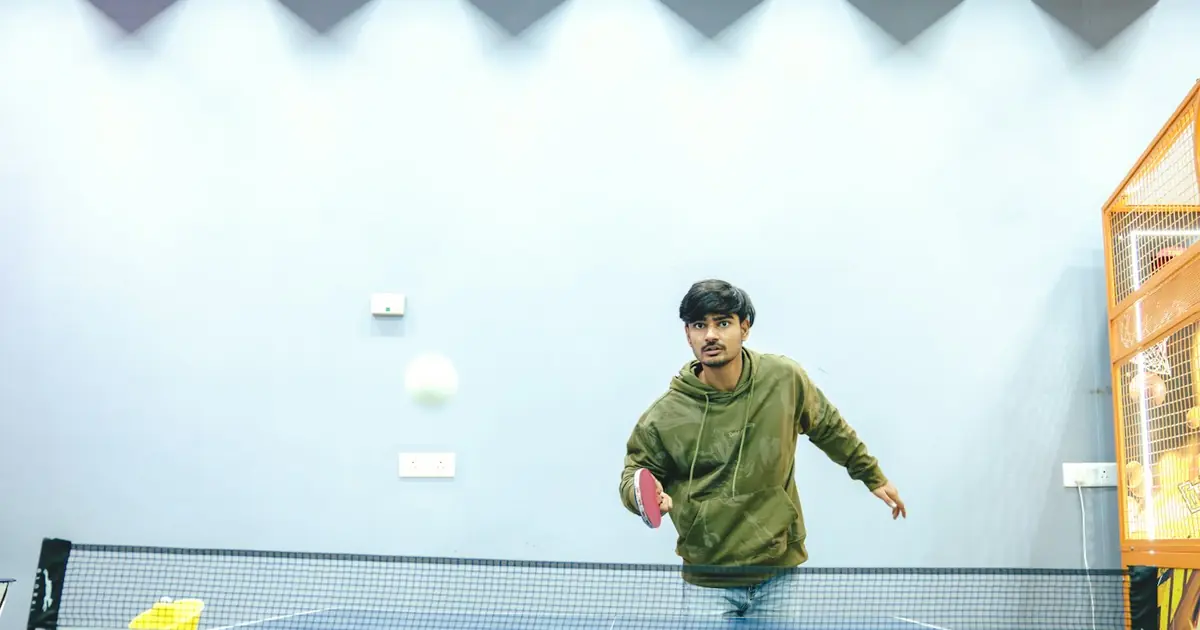
The shuffle is the workhorse. You move sideways without crossing your feet, so your shoulders stay facing the play and your balance stays centered.
- Lead with the near foot. To move right, take a short step with the right foot; to move left, start with the left foot.
- Bring the other foot along. Slide the trailing foot in the same direction so the stance width stays about the same. Keep the feet close to the floor.
- Settle, then hit. Strike once your feet are planted, not while they are still sliding.
- Recover. Shuffle back toward your ready position straight after the stroke.
Hodges recommends this "two-step" version for most players: a short first step with the foot on the side you are moving toward, then a shuffle of both feet together. With practice the two steps blend into one movement. Elite players often shuffle both feet almost at the same time, which demands high fitness. Biomechanics researchers call a similar sliding movement the chasse step.
Crossover Step
When a ball goes very wide to your forehand and a shuffle would leave you short, the crossover covers the distance.
- Push off and step wide. Take a big step to the right with the left foot, crossing in front of the body.
- Pivot on that foot. Use the left foot as an anchor and swing the right leg around behind.
- Hit as you land. Play the forehand while the right foot comes around and plants.
- Get back fast. You are now far from the middle, so return with quick, large steps.
The crossover is a last resort for wide balls, not a normal way to move. It leaves you off balance and out of position, so expect the next ball to go to your backhand.
Pivot (Step-Around) Footwork
The pivot lets you play a forehand from your backhand corner, which is how many attacking players use their stronger side more often.
- Step left with the left foot. Move toward the backhand corner.
- Swing the right foot back. Let it move far enough behind you that the forehand has room. Butterfly coaching advice is to rotate around the corner of the table rather than move parallel to the end line.
- Keep the elbow free. The playing elbow stays to the side of the body or slightly in front, not jammed behind or tucked in.
- Hit and recover. After the forehand, take one quick shuffle step back toward your original position and rotate square again, so you can cover the forehand side without drifting away from the table.
In-and-Out Movement
Short serves and short pushes force you to step in over the table and then step back out for the next, usually longer, ball.
- Step in with the right foot. For balls to the forehand or middle, place the right foot under the table close to the ball. For short balls to the backhand, many coaches teach stepping in with the left foot instead. If the ball is farther away, take a small adjusting step first.
- Play the short shot. A push, flick or drop shot, with your head close to the ball.
- Push back out. Drive off the front foot and return to the ready position before the opponent's next shot.
This is the pattern you use most on serve return. A common tip is to stand slightly deeper than usual and move in as the server contacts the ball.
How Footwork Changes Against Different Spin
Spin changes the depth and height of the ball, and that changes where your feet need to be. Our table tennis spin guide covers the physics; here is the practical side.
| Incoming Ball | What It Does | Footwork Adjustment |
|---|---|---|
| Short backspin | Stays near the net, bounces low | Step in early and get the head down by bending the knees |
| Long backspin | Comes deep but slows and drops | Move closer than it first looks and get low to lift the ball |
| Heavy topspin loop | Kicks forward and up off the bounce | Take half a step back if you want more time, or stay close to block early |
| Sidespin | Curves sideways in the air and off the bounce | Make a small extra step in the direction of the curve |
| Fast block or flat hit | Arrives with little time | Short, quick shuffles; there is no time for big steps |
Common Footwork Mistakes and How to Fix Them

| Mistake | What Happens | Fix |
|---|---|---|
| Standing upright and flat-footed | Slow first step, late to the ball | Bend the knees and keep weight on the balls of the feet |
| Reaching instead of moving | Stroke changes from ball to ball | Take a small step toward every ball, even a few inches |
| Over-moving | Too close, cramped stroke | Move the right amount; judge distance, not just direction |
| Hitting while still moving | Loss of balance and control | Plant, hit, then move |
| Admiring the shot | Out of position for the next ball | Recover to the ready stance right after the follow-through |
| Bending at the waist for low balls | Racket angle and stroke shape break down | Lower the body with the legs instead |
| Crossing the feet for normal balls | Off balance, slow to recover | Save the crossover for very wide forehands |
Footwork Drills That Build Speed and Habits
Footwork improves through repetition of game-like patterns. Start slowly with controlled drives, then raise the pace once the movement is clean. A partner, multiball feeding or one of the best table tennis robots can supply the balls.
The Falkenberg Drill
The Falkenberg is the best-known footwork drill in the sport. It takes its name from Falkenbergs BTK, a Swedish club founded in 1925 whose players have included Stellan Bengtsson, Ulf Carlsson, Jörgen Persson and Peter Karlsson.
- Ball one to your backhand. Play a backhand.
- Ball two to your backhand. Pivot and play a forehand from the backhand corner.
- Ball three to your forehand. Move wide and play a forehand from the forehand side.
- Repeat. Shuffle back to the backhand side and start again. Your partner usually blocks to the same pattern.
The drill combines the three most important movements in one loop: a backhand, a pivot and a long move back to the forehand. Easier versions use slower drives or pushes; harder versions add a backspin ball to loop or switch to free play after the wide forehand.
Backhand, Middle, Forehand
Your partner plays one ball each to your backhand, middle and forehand. Play the middle ball with your forehand and use small shuffle steps throughout. This builds the everyday side-to-side movement.
Short Serve, Push, Attack
Serve short, your partner pushes short, you step in and push back, then your partner pushes long and you step out to attack. This trains the in-and-out pattern you use at the start of most rallies.
Two-Point Forehand
Your partner alternates balls to your backhand corner and your forehand corner, and you play every ball with the forehand. It is tiring, so keep sets short. It trains the pivot and the long recovery step.
Shadow Play
Without a ball, rehearse shuffles, pivots and crossovers in front of a mirror or table, recovering to the ready stance each time. It is a simple way to groove patterns at home, and it fits well into the routines in our ping pong practice guide.
Footwork in Doubles
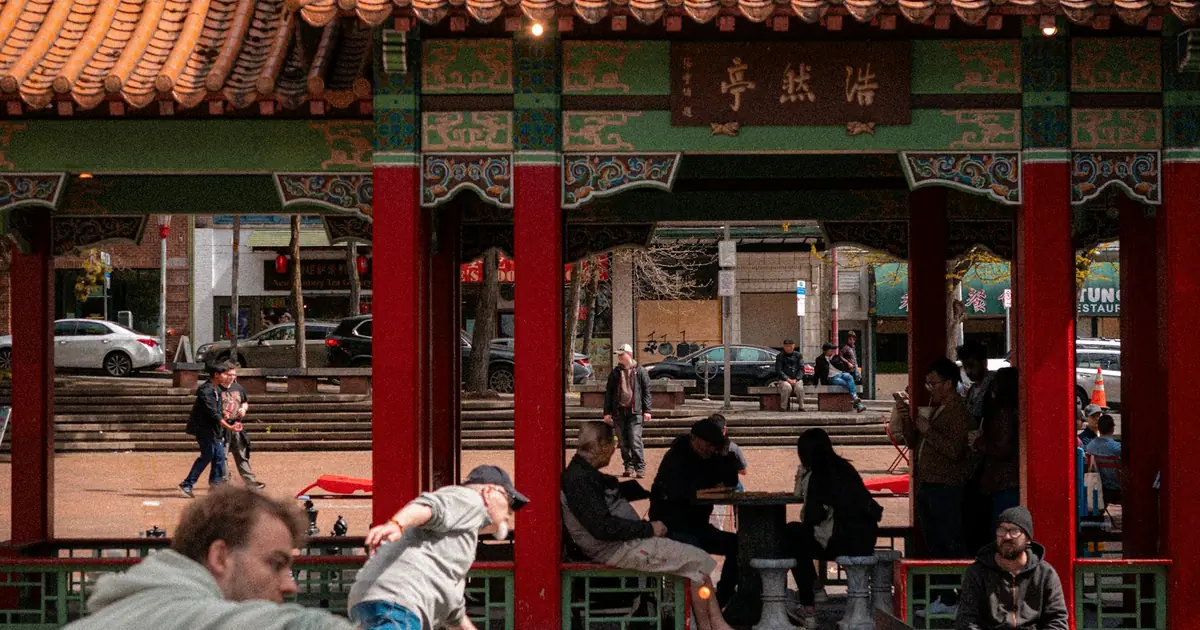
Partners must hit alternately in doubles, so footwork is as much about getting out of the way as getting to the ball. After hitting, move clear so your partner has a path to the next ball, often by stepping back and to the side. Pairs with one right-hander and one left-hander tend to have an easier time, because their forehand sides cover different areas and their movement paths cross less.
Building Better Footwork Over Time
Footwork is partly technique and partly fitness. Leg strength (squats, lunges), agility (side steps, ladder drills) and short intervals of fast multiball all help you hold a lower stance and move for longer. Footwear matters too: shoes with thin, grippy soles, like those in our best table tennis shoes roundup, give more stable side-to-side movement than running shoes. For how footwork fits into a wider improvement plan, see how to get better at ping pong.
Frequently Asked Questions
What Is the Most Important Footwork in Table Tennis?
The small side-to-side shuffle is used most often, because most balls arrive within a step or two of the ready position. It keeps your shoulders facing the play and your balance centered, so you can hit and recover quickly. Crossover and pivot steps are used less often but cover the situations a shuffle cannot.
How Wide Should My Stance Be in Table Tennis?
Most coaching material suggests feet roughly one and a half shoulder widths apart, knees bent and weight on the balls of the feet. Many top players go wider, but that takes leg strength, so use the widest stance you can hold comfortably through a rally.
Should I Cross My Feet When Moving in Table Tennis?
Only for wide balls you cannot reach with a shuffle. For normal movement, keep your feet from crossing so you stay balanced and facing the table. The crossover step is a deliberate tool for very wide forehands, not a default way to move.
What Is the Falkenberg Drill?
It is a three-ball footwork pattern: your partner plays two balls to your backhand and one to your forehand. You answer with a backhand, then a forehand from the backhand corner, then a forehand from the wide forehand side, and repeat. It trains the pivot and the long move back to the forehand.
How Can I Improve My Footwork at Home Without a Table?
Shadow play is the simplest option: rehearse shuffle, pivot and crossover movements with a racket and no ball, slowly at first and then faster, always recovering to the ready stance. Leg-strength and agility work such as squats, side steps and ladder drills also helps.
Do Table Tennis Shoes Help Footwork?
They can. Table tennis shoes are designed for lateral movement, with thin, grippy gum-rubber soles that keep you low and stable on court floors. Running shoes have thicker, softer heels that make quick side steps less stable.