The Table Tennis Loop: Forehand, Backhand and Counter-Loops (2026)
 By Harshwardhan · Updated
In This Article
- What Is a Loop in Table Tennis?
- When to Use the Loop
- Loop vs Drive vs Smash
- Grip, Racket and Ready Position
- How to Do a Forehand Loop: Step by Step
- How to Do a Backhand Loop: Step by Step
- Slow Spinny Loop vs Fast Loop
- Looping Against Backspin vs Topspin
- Counter-Looping
- Common Loop Mistakes and How to Fix Them
- Drills to Build a Reliable Loop
- Turning the Loop Into a Weapon
- Frequently Asked Questions
What Is a Loop in Table Tennis?
A table tennis loop is an attacking topspin stroke in which a closed racket brushes the back and top of the ball with a fast, upward-and-forward swing. The ball arcs over the net, dips sharply onto the table, and then kicks forward off the bounce, which makes it hard to block and the main attacking shot in the modern game.
The loop is often described as the reverse of the chop: where a chop brushes down the back of the ball for backspin, the loop brushes up it for topspin. According to the Wikipedia overview of table tennis strokes, the loop was perfected during the 1960s, and most top professionals now rely on it as their primary offensive stroke. If you want to understand why the ball behaves the way it does, our guide to table tennis spin covers the physics; this page is about playing the shot.
Quick Facts
- Spin: Heavy topspin, the opposite of a chop
- Racket face: Closed (angled toward the table), more so against topspin
- Contact: A thin, grazing brush rather than a flat hit
- Power source: Legs, hips and waist first, then shoulder, elbow and forearm
- Learn it against: Backspin first, then topspin, then counter-looping
- Rubber needed: Grippy inverted rubber on a sponge
When to Use the Loop
The loop is the right choice whenever the ball gives you time and some depth or height. Typical chances include:
- A long push or long backspin serve that bounces near your end line
- A block or drive that lands deep enough for a full swing
- A chop from a defender
- A soft or high return of your serve on the third ball
- An opponent's loop when you are a step or two back (the counter-loop)
It is usually not the right shot against a short ball that would bounce twice on your side. Short balls are better handled with a flick or a short push, which also keeps things simple when you are returning serve. Very high balls close to the net are often better finished with a smash.
Loop vs Drive vs Smash
The loop sits between the drive and the smash. It trades some raw speed for a safer, curving path and a much bigger kick off the table.
| Stroke | Contact | Swing Direction | Spin | Typical Use |
|---|---|---|---|---|
| Drive (counter-hit) | Fuller, through the ball | Mostly forward | Light topspin | Rallying, warming up, fast exchanges close to the table |
| Loop | Thin brush on the back and top | Up and forward | Heavy topspin | Attacking backspin and topspin, opening and sustaining rallies |
| Smash | Flat and full | Forward, often slightly down | Little | Finishing high, weak balls |
The basic forehand and backhand drives are the foundation, so make sure your forehand and backhand strokes are sound before spending most of your practice on the loop.
Grip, Racket and Ready Position
Most loopers use a shakehand grip, although penhold players loop too. Hold the racket firmly enough to control it but loose enough that the wrist and forearm can whip through; a tight squeeze kills racket speed and spin. Our table tennis grips guide explains the shakehand and penhold options in detail.
The rubber matters more for the loop than for almost any other shot. Grippy inverted rubber with a sponge layer underneath gives the friction the stroke depends on, while worn or hard rubbers make it difficult to lift backspin. If yours is slick, see our best table tennis rubber guide.
For the ready position, stand roughly an arm's length or a little more from the table, feet wider than your shoulders, knees bent, weight forward on the balls of the feet. Good footwork is what puts you in the right spot to loop, so you can swing without reaching.
How to Do a Forehand Loop: Step by Step
All directions assume a right-handed player. Left-handers can mirror them.
- Take a sideways stance. Set the right foot slightly behind the left so your body can turn. Stay low with bent knees.
- Turn and load. As the ball comes, rotate your hips and shoulders back to the right and shift your weight onto the right leg. Let the right shoulder drop a little.
- Drop the racket. Bring the racket back and down to around knee or hip height, depending on the incoming spin, with the face closed. Keep the arm relaxed and the elbow bent; a straight arm costs both speed and control.
- Drive from the legs. Push off the right foot and start rotating the hips and waist toward the table. The arm follows the body, not the other way round.
- Brush the ball. Accelerate the forearm up and forward and graze the back and top of the ball. A quieter, grazing contact usually means more spin than a loud, solid one.
- Contact in front of you. Meet the ball slightly in front of your body, around the top of the bounce or just after it.
- Follow through. Finish with the racket up near your forehead or above your left eye, weight now on the left foot.
- Recover. Return quickly to the ready position, because a good loop often comes back as a block.
How to Do a Backhand Loop: Step by Step
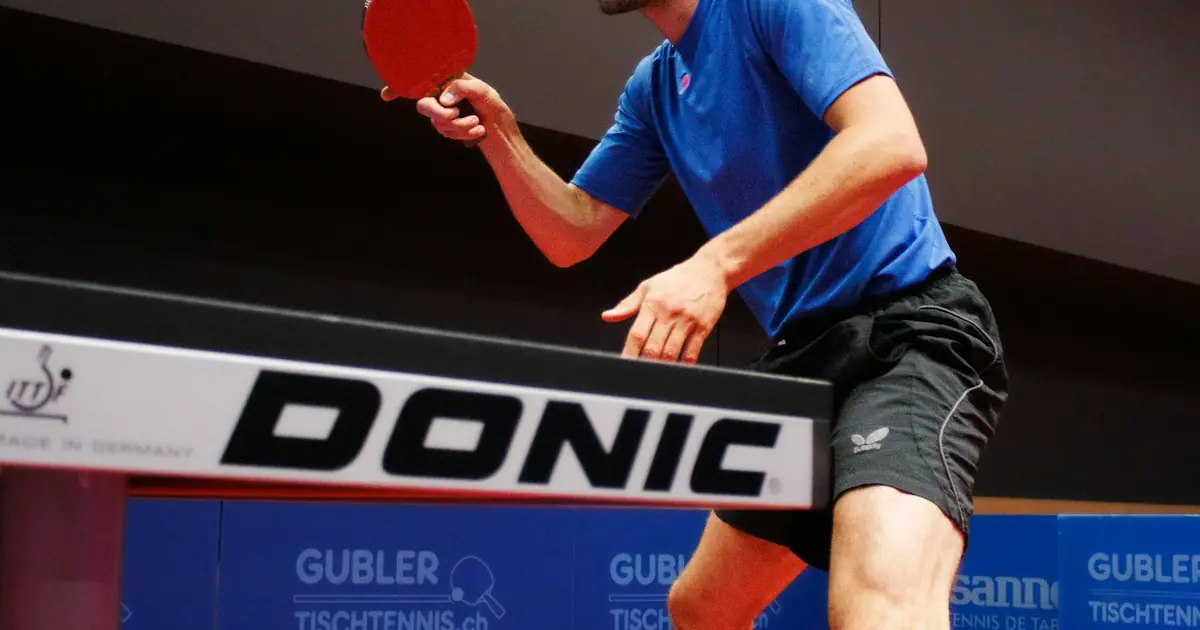
The backhand loop is shorter and relies more on the elbow, forearm and wrist than on a big body turn, but the legs and waist still start it.
- Square up. Stand more square to the line of play, feet wide and knees bent, with the ball in front of your body or slightly to the left.
- Bring the racket in. Draw it back toward your stomach or left hip with the face closed and the wrist cocked back. Push the elbow slightly forward so the forearm has room to swing.
- Get close enough. Move so the ball arrives in front of you. Reaching forward or standing too far away usually means taking the ball too late.
- Lift and rotate. Straighten the legs slightly and turn the waist as you swing.
- Snap the forearm and wrist. Uncoil the forearm and flick the wrist up and forward, brushing the back and top of the ball, much like throwing a frisbee.
- Finish forward. The racket ends in front and slightly to the right, pointing toward your target.
- Reset. Relax and return to neutral so you can switch to the forehand if needed.
Slow Spinny Loop vs Fast Loop
Not every loop should be hit at full power. Varying the speed and spin is one of the most effective ways to win points at club level.
| Feature | Slow Spinny Loop | Fast Loop (Loop Drive) |
|---|---|---|
| Goal | Maximum spin, safe arc | Speed and pressure |
| Contact | Very thin brush | Thicker, more "sink in" contact |
| Swing | Mostly upward | Mostly forward |
| Timing | Often after the top of the bounce | At or just before the top of the bounce |
| Best against | Heavy backspin, low balls, opening an attack | Weak, high or medium-height balls, follow-up shots |
| Typical result | High, kicking ball that jumps off the opponent's racket | Fast, low ball that rushes the opponent |
A heavy slow loop against backspin often sets up a winner on the next ball, because the opponent's block tends to pop up. Fast loops are better once the rally is moving and you are getting balls at a comfortable height. Mixing them, along with changes of placement, keeps blockers from settling into a rhythm.
Looping Against Backspin vs Topspin
The incoming spin changes the angle of your racket and the direction of your swing more than anything else. Coaches such as Larry Hodges, writing for Butterfly, recommend learning against backspin first: the ball is usually slower, and you are adding to the existing rotation rather than reversing it.
Looping Against Backspin
- Bend the knees more and start the racket lower, around knee height.
- Open the face a little compared with your topspin loop.
- Swing more upward, brushing up the back of the ball, with less forward drive.
- Drop the back shoulder on the forehand to help lift.
- You do not have to take the ball at the top of the bounce; letting it drop slightly gives more time.
Looping Against Topspin
- Start the racket higher, roughly at the height of the ball.
- Close the face more and contact nearer the top of the ball.
- Swing mostly forward rather than up; the incoming topspin supplies much of the lift.
- Drop the shoulder only slightly, if at all.
- Move your feet faster, since the ball arrives quicker than a push.
Against no-spin balls, use a racket angle and swing between the two. Against a chop from a defender, treat it like heavy backspin and expect the amount of spin to change from ball to ball.
Counter-Looping
A counter-loop is a loop played against the opponent's loop. It is common in high-level rallies, where both players attack from mid-distance and exchange heavy topspin.
- Take a step back. Most players counter-loop from mid-distance, which gives the ball time to drop and you room to swing.
- Close the face a lot. The incoming ball has heavy topspin, so a face that is only slightly closed sends the ball long.
- Swing forward and over the ball. Contact the top of the ball and drive through, using the incoming energy rather than trying to create all the lift yourself.
- Close-to-table option. Advanced players also counter-loop off the bounce with a short, compact stroke. This needs fast reactions, so build it from rally drills before using it in matches.
- Know when to block instead. If you are rushed or out of position, a solid block is the safer choice.
Common Loop Mistakes and How to Fix Them
| Mistake | What Happens | Fix |
|---|---|---|
| Using only the arm | Weak, inconsistent loops and a sore shoulder | Start every loop with the legs and hips; the arm finishes the motion |
| Straight, stiff arm | Low racket speed, little spin | Keep the elbow bent and the arm relaxed during the backswing |
| Hitting instead of brushing | Ball goes into the net against backspin or long against topspin | Graze the ball with a thin contact and fast racket |
| Wrong racket angle for the spin | Net (too closed vs backspin) or long (too open vs topspin) | Open slightly against backspin, close more against topspin |
| Standing too square on the forehand | No body rotation, cramped swing | Set up sideways with the right foot back |
| Reaching for the ball | Late contact, loss of balance | Move your feet to the ball before swinging |
| Stopping the swing at contact | Less spin, ball floats | Complete the follow-through up toward the forehead |
| Slow recovery | Caught out by the block return | Return to ready position straight after the follow-through |
Drills to Build a Reliable Loop
- Shadow strokes. Practice the full motion without a ball in front of a mirror, focusing on leg drive, rotation and follow-through.
- Multiball or robot backspin. A partner or a table tennis robot feeds long backspin to your forehand. Loop each ball to the same target before adding placement.
- Loop to block. Loop to a partner who blocks back to the same spot. Aim for long sequences of controlled loops before adding power.
- Push, loop, play. Partner serves backspin, you push, they push long, you open with a loop and then play out the point.
- Backhand-forehand alternation. Alternate one backhand loop and one forehand loop off a partner's block to train the transition.
- Falkenberg-style footwork. One backhand from the backhand corner, one forehand from the backhand corner, one forehand from the forehand corner, repeated. It combines looping with movement.
- Counter-loop rallies. Both players step back and loop to each other at medium pace, increasing speed only when the rally stays consistent.
For full practice plans, see ping pong practice, and for how the loop fits into point construction, read ping pong strategy and how to get better at ping pong.
Turning the Loop Into a Weapon
A loop becomes dangerous when it is consistent first and powerful second. Learn the forehand loop against backspin, then add the backhand loop, then loop against blocks and topspin, and only then work on counter-looping. Vary speed, spin and placement, especially the opponent's elbow and wide corners, and pair the loop with short serves that invite a long push. Built that way, the loop turns into the shot that opens most of your points and finishes many of them.
Frequently Asked Questions
What Is the Difference Between a Loop and a Drive in Table Tennis?
A drive (counter-hit) is a mostly forward stroke with a fuller contact that produces light topspin and a flatter path. A loop uses a closed racket that grazes the ball with a fast, upward-and-forward swing, so it carries much more topspin, arcs higher over the net and dips onto the table.
Is the Loop an Advanced Shot?
Many coaches treat it as a basic attacking stroke rather than an advanced one. Once a player has a reasonably sound forehand drive, they can start learning to loop, beginning against backspin, which is usually slower and easier to lift.
Should I Learn to Loop Against Backspin or Topspin First?
Backspin first. The ball tends to arrive slower, you have more time to set up, and the upward brush naturally fits the incoming spin. Looping against blocks and topspin rallies comes next, with a more forward swing and a contact closer to the top of the ball.
Why Does My Loop Go Into the Net?
Against backspin, the usual causes are a racket face that is too closed, a swing that goes forward instead of up, or a contact that is too thick. Open the face slightly, bend the knees to start lower, and brush up the back of the ball.
Why Does My Loop Go Long?
Against topspin, a loop flies long when the face is too open or the swing is too upward. Close the racket more, contact nearer the top of the ball and swing forward. Against backspin, a long loop often means hitting through the ball instead of brushing it.
What Rubber Is Best for Looping?
Grippy inverted (smooth) rubber with a sponge underneath is the standard choice, because the loop relies on friction. Short pips and long pips make heavy-topspin looping much harder, and worn-out sheets lose grip.