Table Tennis Lessons: Private, Group, Online and What to Expect (2026)
 By Harshwardhan · Updated
In This Article
- Are Table Tennis Lessons Worth It?
- Types of Table Tennis Instruction Compared
- What Happens in Your First Lesson
- How to Find a Qualified Table Tennis Coach
- What Affects the Cost of Lessons
- How Often Should You Train?
- How to Get the Most From Every Lesson
- Can You Teach Yourself Table Tennis?
- Lessons for Kids vs Adults
- Frequently Asked Questions
Are Table Tennis Lessons Worth It?
Table tennis lessons come in several formats: one-to-one private sessions, group classes at a club, junior programs, full-time academies and training camps, and online coaching through video tutorials. For most new players, a handful of early lessons is the fastest way to lock in a correct grip, stance and stroke technique before bad habits form.
The right choice depends on your goals, your budget and how much table time you can get between sessions. This guide compares each type of instruction, explains what a first lesson usually covers, and shows how to vet a coach so your money goes toward real improvement.
Quick Facts
- Most common format: Group classes and one-to-one lessons at a local club or training center
- US certification body: USA Table Tennis (USATT) runs a Club Coach Certification
- International pathway: ITTF courses start with the ITTF-PTT Level 1 course, followed by Level 2 and Level 3
- Best free starting point: The USATT club finder, since most coaches work out of clubs
- Biggest multiplier: Practice between lessons
Types of Table Tennis Instruction Compared
Each format suits a different stage and budget. Here is how they line up.
| Format | Best For | Strengths | Trade-Offs |
|---|---|---|---|
| Private (one-to-one) | Fixing technique fast, serious improvers | Full attention, tailored drills, lots of balls hit | Highest cost per hour |
| Group classes | Beginners, social players, budget-conscious learners | Lower cost, partners to drill with, fun atmosphere | Less individual feedback |
| Junior programs | Kids and teens | Age-appropriate games, peers at the same level | Fixed schedules and term dates |
| Academies and training centers | Competitive players and ambitious juniors | Many tables, multiple coaches, structured programs | Bigger time and money commitment |
| Camps | A concentrated boost during holidays | Many hours of training in a short window | Gains fade without follow-up practice |
| Online coaching | Self-starters, players far from a club | Flexible, low cost, replayable | No one watching you live unless you send video |
Private Lessons
A private lesson pairs you with a coach for a set block of time, often 30 or 60 minutes. The coach feeds, blocks and rallies at exactly your level, so you hit far more quality balls than in a typical club night. Private table tennis coaching is the most efficient way to correct a specific flaw, such as a wristy forehand or a high toss on the serve. Some clubs also offer short one-to-one slots inside group sessions, which gives you individual attention at a lower cost.
Group Classes
Group classes put several players on a few tables with one or more coaches rotating between them. You get structured drills, a partner, and the motivation of training alongside others. One coaching publication describes group training as an efficient way to log many hours of practice at a relatively low cost per player. For adults new to the sport, beginner classes are often the most enjoyable way to start.
Junior Programs
Many clubs run junior sessions grouped by age and ability, using games and targets to keep younger children engaged. If you are choosing for a child, our guide to table tennis for kids covers starting ages, equipment and what parents should look for.
Academies and Training Centers
A table tennis academy is usually a dedicated, full-time facility with many tables, several coaches and structured programs for different levels. Academies often run daily training groups, private lessons, camps and tournament preparation under one roof. They suit players who want to compete seriously, though plenty of them also run recreational and beginner classes.
Camps
Camps pack many hours of training into a few days or weeks, typically during school holidays or over weekends. They are great for a breakthrough on footwork or match play, but the improvement sticks only if you keep practicing afterward.
Multiball Sessions
Multiball is a training method rather than a lesson format: the coach feeds balls rapidly from a basket instead of rallying with one ball. It lets you repeat a stroke dozens of times in a minute and is used at every level, from a beginner's first forehand to elite footwork drills. Groups can share a multiball session by taking turns, which keeps costs down.
Online Coaching and Video Courses
Online coaching ranges from free video tutorials to paid courses and remote video analysis. One of the best-known platforms is PingSkills, whose coaches include co-founder Jeff Plumb, who represented Australia at the Sydney 2000 Olympics, and Alois Rosario, an Australian national team player and Olympic and Paralympic coach. PingSkills offers free video tutorials, blog posts, a podcast and an "Ask the Coach" forum, while its premium membership adds advanced tutorials and a 52-week training program. General course marketplaces also carry beginner table tennis courses. Online learning works best when you pair it with real table time and film yourself to compare against the demonstrations.
What Happens in Your First Lesson
Coaches structure first lessons differently, but most cover the same foundations. A typical first session looks like this:
- Quick assessment. The coach asks about your experience and goals, then rallies with you to see your current level.
- Grip check. Most coaches start with the shakehand grip and correct finger position. See our guide to table tennis grips for the main options.
- Ready position and stance. Feet apart, knees bent, weight forward, paddle in front.
- Forehand and backhand drives. Usually the core of the session, often fed with multiball so you can repeat the stroke many times.
- Basic serve. A simple, legal serve so you can start points properly.
- Homework. A few drills or focus points to practice before the next lesson.
If you want to arrive knowing the basics, read our how to play table tennis guide first. Wear athletic clothes and clean indoor shoes; many coaches can lend a paddle for the first session.
How to Find a Qualified Table Tennis Coach
Most coaching happens at clubs, so the USA Table Tennis club finder is the best place to start your search for ping pong lessons near you. Our where to play ping pong guide lists other options, such as rec centers, YMCAs and college clubs, many of which also run classes.
US Coaching Certification (USATT)
USA Table Tennis currently offers a Club Coach Certification. According to USATT, coaches need a current USATT Pro Membership, SafeSport compliance including a background check, and a passed certification exam. For parents, SafeSport training and a background check matter as much as playing ability. Some experienced coaches may list older USATT titles or overseas qualifications instead, so ask what their credentials mean.
International Coaching Courses (ITTF)
The International Table Tennis Federation runs a coach education pathway delivered with national associations. Its entry-level ITTF-PTT Level 1 course runs over five days (30 hours) and includes Para table tennis content. Candidates must then complete 30 hours of coaching practice, five of them supervised, before receiving the certificate. ITTF Level 2 and Level 3 courses follow for more advanced coaches.
Questions to Ask a Coach
- What certifications do you hold, and are you SafeSport trained with a current background check?
- What level of players do you usually coach: beginners, juniors or competitive adults?
- How long is each lesson, and does the fee include table rental and training balls?
- Do you use multiball, robots or video analysis?
- Will you give me drills to practice between lessons?
- Do you offer packages, group sessions or shorter lessons?
- What is your cancellation policy?
What Affects the Cost of Lessons
Rates vary widely by city and coach, so it is best to compare a few local options. The main cost factors are:
- Format: Private lessons cost the most per hour. One UK coaching site estimates one-to-one coaching can cost 5 to 20 times as much per player as group training.
- Coach experience: Former national team players and high-level coaches usually charge more.
- Location and facility: Big-city academies and table rental fees push prices up.
- Lesson length and packages: 30-minute sessions and multi-lesson packages can lower the outlay.
- Extras: Training balls, robot time and video analysis may be billed separately.
How Often Should You Train?
There is no single right schedule, but a few principles hold up:
- Adult improvers: A regular weekly lesson with the same coach, plus at least one practice session or club night, is a sustainable rhythm. Expert Table Tennis notes that an hour a week with a regular coach can make a big difference for a serious player.
- Kids and absolute beginners: Shorter, more frequent sessions keep focus and enjoyment high.
- Competitive players: Several sessions a week, plus camps and table tennis tournaments to test skills under pressure.
How to Get the Most From Every Lesson
- Arrive with one goal. "Fix my backhand" or "learn a backspin serve" gives the coach a clear focus.
- Film yourself. Ask to record a few drills on your phone so you can compare later.
- Take notes right after. Write down the two or three cues your coach repeated most.
- Practice between sessions. Lessons teach; practice makes it stick. Our ping pong practice guide covers solo drills, return boards and table tennis robots.
- Play matches. Club nights and leagues show whether new skills hold up in real points.
- Stay with one coach for a while. Constantly switching coaches can mean conflicting advice.
Can You Teach Yourself Table Tennis?
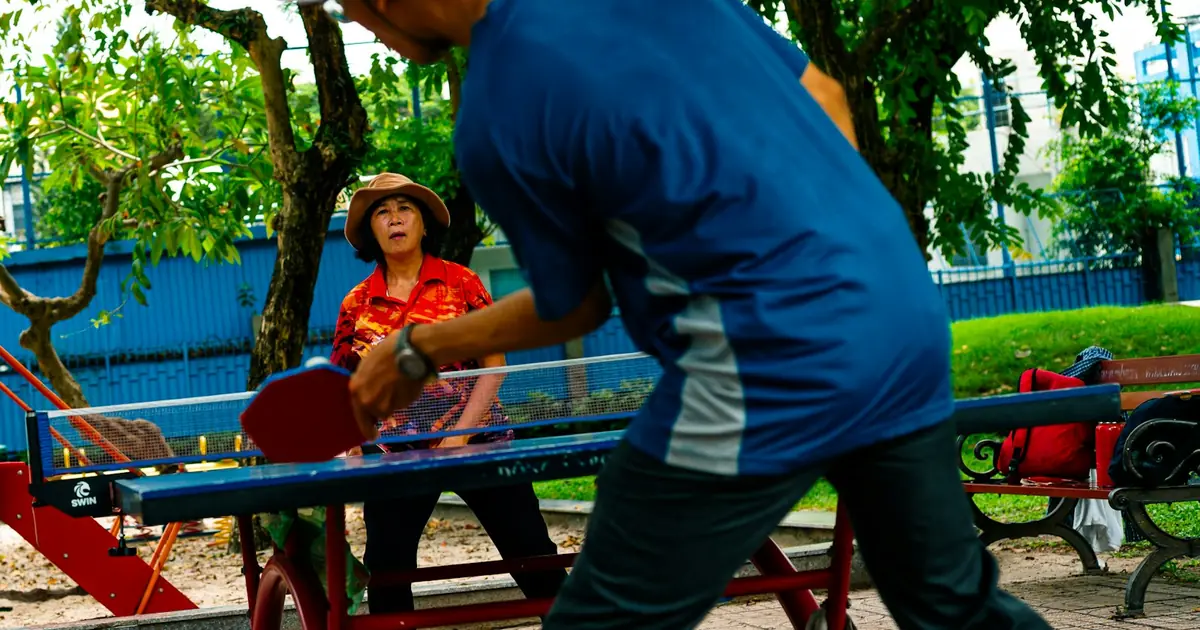
You can get a long way on your own with good resources: free video tutorials, structured online training plans, a robot or return board, and plenty of match play. The weak spot of self-teaching is feedback, because it is hard to see your own technique flaws. A sensible middle path is to learn from online lessons, film yourself regularly, and book an occasional in-person lesson to check your grip and strokes. For more ideas, see how to get better at ping pong.
Lessons for Kids vs Adults
| Factor | Kids | Adults |
|---|---|---|
| Best format | Junior group programs, then private lessons as interest grows | Beginner classes or private lessons, depending on goals |
| Session length | Shorter, game-based sessions | Longer, drill-focused sessions |
| Coach priorities | SafeSport training, background check, patience | Clear technical explanation, fitting your schedule |
| Typical goal | Fun, coordination, possibly competition | Fitness, social play, league or rating goals |
Adults may pick up new technique more slowly than young children, but they often bring focus and tactical understanding that speed up match improvement. If you play USATT events, your USATT rating is a handy way to track progress over time.
Frequently Asked Questions
Are Table Tennis Lessons Worth It for Beginners?
Usually, yes. A few early lessons fix the grip, stance and basic strokes before habits set in, which is much harder to do later. Even one or two sessions followed by structured practice can make a clear difference.
How Do I Find Ping Pong Lessons Near Me?
Start with the USA Table Tennis club finder at usatt.org, since most coaching happens at clubs and training centers. Then check parks and recreation programs, YMCAs, community centers and local Facebook or Meetup groups.
How Often Should I Take Table Tennis Lessons?
For an adult improver, a regular weekly lesson plus practice sessions in between is a common, sustainable rhythm. Young children and complete beginners tend to do better with shorter, more frequent sessions.
Can You Learn Table Tennis Online?
You can learn a lot online, especially technique, serves and tactics, through video tutorials and remote video analysis. Online coaching works best alongside real table time and, ideally, occasional in-person feedback.
Is It Too Late to Start Table Tennis as an Adult?
No. Clubs welcome adult beginners, and many run classes specifically for them. Adults may progress differently from children, but lessons and regular club play help at any age.
What Should I Bring to My First Table Tennis Lesson?
Wear comfortable athletic clothing and clean indoor court shoes, and bring water. Most coaches and clubs can lend a paddle for a first session, so ask before buying equipment.