Table Tennis Push: How to Keep Backspin Short, Low and Tricky (2026)
 By Harshwardhan · Updated
In This Article
- What Is a Push in Table Tennis?
- When to Push (and When Not To)
- Grip, Stance and Ready Position
- How to Do a Backhand Push
- How to Do a Forehand Push
- Short Push vs Long Push
- Heavy Push and Quick Push
- Contact Timing: Rise, Peak or Drop?
- How to Adjust the Push to Different Spin
- Common Push Mistakes and Fixes
- Push Drills to Practice
- Where the Push Fits in Your Game
- Frequently Asked Questions
What Is a Push in Table Tennis?
A table tennis push is a short, controlled stroke that returns backspin with backspin. You open the racket face, brush forward and slightly down under the ball, and send it back low over the net. It is the standard reply to short backspin serves and short backspin balls that are too low or too close to the net to attack.
Think of the push as the rally's patient move. It rarely wins the point by itself, but a good one stops your opponent from attacking first, and a careless one hands them an easy loop or smash. That is why strong players treat pushing as a skill with several versions (short, long, heavy and quick) rather than a single "safe" shot.
Quick Facts
- Spin returned: Backspin (you add your own backspin to the incoming backspin)
- Typical use: Receiving short backspin serves; rallies of short backspin balls
- Racket face: Open, more open against heavier backspin
- Main power source: Elbow and forearm, with wrist added later
- Four versions: Short push, long push, heavy push, quick push
When to Push (and When Not To)
The push works best against a ball that is short, low and carrying backspin. A short ball would bounce twice on your side if left alone, so a full looping stroke is cramped by the table. Pushing it back short gives your opponent the same problem.
Coaches warn against two opposite habits. Pushing because you feel uncomfortable attacking is a weak reason, and so is refusing to push because you think you should always attack. Megaspin's coaching article on the push puts it simply: learn to attack any ball, then choose to push for tactical reasons, for example against an opponent who struggles with backspin.
| Incoming Ball | Push? | Usually Better Option |
|---|---|---|
| Short, low backspin | Yes | Short push, or a flick to surprise |
| Short no-spin or side-backspin | Yes, with adjustments | Push or flick |
| Long backspin | Rarely | Loop |
| Topspin of any length | No | Block, counter or loop |
| High ball | No | Smash |
Grip, Stance and Ready Position
Use your normal shakehand or penhold grip, held relaxed. A tight grip kills feel, and feel is most of what pushing is about.
- Distance: Start about an arm's length from the table, then step in to the ball.
- Feet: Roughly shoulder-width apart, square to the table or with the playing-side foot slightly back.
- Body: Knees bent, weight on the balls of the feet, leaning slightly forward.
- Arms: Elbow bent at about 90 degrees, racket in front of you, a small gap between elbow and hip.
For short balls to your forehand, right-handers usually step in with the right foot under the table. For the backhand, many players step in with the right foot as well or shuffle in square. The key is getting your body close so you do not reach.
How to Do a Backhand Push
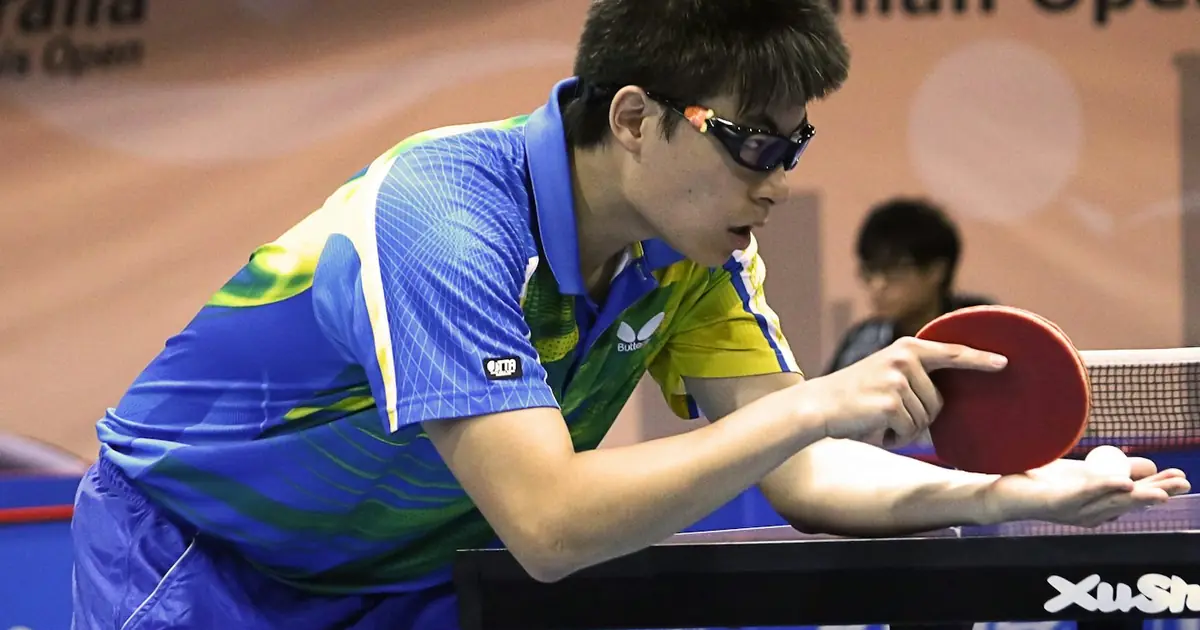
Most players learn the backhand push first because the ball is in front of the body and the stroke is easy to control.
- Read the spin. Watch the server's racket. A downward brush means backspin; heavier spin means you will need a more open face.
- Step in. Move close with a small step so the ball is in front of you, slightly toward your backhand side.
- Short backswing. Bring the racket back toward your body, face open, wrist fairly neutral. Keep it compact.
- Brush under the ball. Move forward and slightly down from the elbow, contacting the lower back to bottom of the ball.
- Follow through toward the target. Finish with the racket pointing where you want the ball to go, lower than where it started.
- Recover. Step back out and return to the ready position for the next ball.
Once it is reliable, add a little wrist at contact for extra backspin. The wider backhand stroke itself is covered in our table tennis backhand guide.
How to Do a Forehand Push
The forehand push is trickier because the ball is to the side and players tend to reach for it.
- Step in with the playing-side foot. For right-handers, put the right foot under the table toward the ball.
- Take the racket back and to the side. Keep the backswing small, face open.
- Contact at the side of the body. Play the ball slightly out in front and to the side, not directly in front of your chest.
- Use elbow and forearm. Brush forward and down under the ball; avoid swinging across the body.
- Finish forward. End with the racket facing the target, then push off the front foot to recover.
For how this fits with the topspin stroke on the same side, see our table tennis forehand guide.
Short Push vs Long Push
Length is the biggest decision in pushing. A short push is one whose second bounce, given the chance, would land on the opponent's side of the table. That stops a full loop. A long push travels deep to the end line, where the opponent has room to attack.
| Factor | Short Push | Long Push |
|---|---|---|
| Goal | Deny the opponent a loop | Rush the opponent or move them |
| Contact | Soon after the bounce, very soft | Faster and more forward stroke |
| Racket speed | Slow, absorbing the incoming pace | Quicker, often with late direction change |
| Main risk | Popping up or landing in the net | Being looped first |
| Best target | Close to the net, often the forehand short | Wide corners or the playing elbow |
The Short Push
Step in early, take the ball soon after it bounces, and use a relaxed grip so the racket absorbs the incoming pace instead of fighting it. Aim the first bounce close to the net and keep the ball low. Short pushing (sometimes called a drop shot) is mostly touch, so expect it to take longer to learn than the long push.
The Long Push
A long push is only useful if it is fast, low and well placed. In a Butterfly coaching article, USATT Hall of Famer Larry Hodges notes that a push landing six to twelve inches inside the backhand corner is easy to loop, while one that goes right over the corner or angles outside it is much harder to attack. A slow long push to the middle of the table is one of the most commonly punished shots in club play.
Heavy Push and Quick Push
Hodges describes three purposes for a push: heavy, quick and short. The short push is covered above; the other two work like this.
- Heavy push: Load as much backspin as possible to force a mistake or a weak lift. Open the face more, contact further underneath, and accelerate the racket with a quick forearm and wrist snap while keeping forward speed low. Opponents who loop with a flat racket often put a heavy push into the net.
- Quick push: Take the ball early with a short, firm stroke and change direction at the last moment. The goal is to rush the opponent rather than spin them. A useful pattern is to aim at the backhand until the last moment, then push wide to the forehand.
Contact Timing: Rise, Peak or Drop?
Coaching sources differ here, so it is worth experimenting. Hodges lists three contact points:
| Timing | Strength | Weakness |
|---|---|---|
| On the rise | Rushes the opponent; good for angles | Harder to control if you are rushed |
| Top of the bounce | More net clearance | Push tends to bounce higher, easier to attack |
| On the drop | Most control; easiest to load backspin | Gives the opponent more time |
Many beginner guides teach taking the ball at or just before the top of the bounce because it is easiest to time. As you improve, short pushes usually move earlier (on the rise) and heavy pushes later (on the drop).
How to Adjust the Push to Different Spin
The push depends on reading spin. Our table tennis spin guide explains why each adjustment works.
| Incoming Spin | Racket Angle | Adjustment |
|---|---|---|
| Heavy backspin | Very open, nearly flat | Contact the bottom of the ball, add a little more forward motion |
| Light backspin | Moderately open | Normal push |
| No-spin (float) | Less open | Push down the back of the ball so it does not pop up |
| Side-backspin | Open, angled to the spin | Aim against the sidespin so it does not drift off the side |
| Topspin | Do not push | Block, counter or loop |
Receiving serves is where most pushes happen; our how to return serve guide covers reading serves before you choose a reply.
Common Push Mistakes and Fixes
| Mistake | Likely Cause | Fix |
|---|---|---|
| Push goes into the net | Backspin heavier than you read | Open the face more and contact the bottom of the ball |
| Push goes off the end | Too much forward force or poor timing on deep balls | Soften the grip, shorten the stroke, take deep balls closer to the bounce |
| Push drifts off the side | Unread sidespin or being off balance | Aim against the spin and step in properly |
| Push floats high | Stiff arm, scooping, contact too high | Relax, brush forward rather than up, keep the stroke compact |
| Reaching for the ball | Not stepping in | Move the playing-side foot under the table |
| Jabbing | No follow-through | Finish with the racket pointing at the target |
| Pushing every long ball | Habit or fear of attacking | Loop long backspin; push only balls you cannot attack |
Push Drills to Practice
Pushing improves quickly with targeted reps. Add these to the routines in our ping pong practice guide.
- Backhand-to-backhand push rally. Push crosscourt, aiming for low and consistent. Count rallies without a miss.
- Short push target. Place a towel near the net on the far side and try to land the first bounce beside it, with the ball bouncing twice.
- Push, push, attack. Push two balls, then the partner pushes long and you loop it. This builds the habit of attacking long balls.
- Spin-reading serves. Partner serves short backspin or no-spin with the same motion; you push each one low.
- Pushing-only game. Play points where only pushes are allowed, to 11. It forces variation in length, spin and placement.
Where the Push Fits in Your Game
The push is a control shot that keeps you in short rallies and sets up the attack. Learn a reliable backhand push, add the forehand, then work on length, heavy spin and placement. Pair it with the flick so opponents cannot sit back waiting for backspin, and with a strong loop for every long ball. For the bigger picture, see ping pong strategy and how to get better at ping pong. If you play mostly from far back, the chop is the long-distance cousin of the push.
Frequently Asked Questions
What Is a Push in Table Tennis?
A push is a short, controlled stroke played with an open racket that brushes under the ball to return backspin with backspin. It is mainly used against short or low backspin balls that are hard to attack, especially serves.
What Is the Difference Between a Push and a Chop?
Both shots return backspin with backspin, but a push is played close to the table with a short stroke, usually against short balls. A chop is a longer, defensive stroke played from further back against topspin attacks.
Should Beginners Learn to Push?
Yes. The push is one of the first strokes most coaches teach, because beginners face lots of backspin serves and need a safe way to return them. Learn the backhand push first, then the forehand, and add attacking options later.
Is Pushing Too Much a Bad Habit?
It can be. Pushing balls that could be attacked, especially long ones, hands the initiative to the opponent. The push should be a deliberate tactical choice, not the default reply to every backspin ball.
Why Do My Pushes Go Into the Net?
Usually the incoming backspin is heavier than you read. Open the racket face more, contact the bottom of the ball, and add a little more forward motion. Against light backspin or no-spin, close the face slightly instead.
Is a Push Serve Legal?
A backspin serve made with a pushing motion is legal as long as it follows the normal serve rules: an open-palm toss of at least 16 cm, contact behind the end line, and the ball visible to the receiver throughout.