Table Tennis Chop: How Defenders Turn Attacks Into Backspin (2026)
 By Harshwardhan · Updated
In This Article
- What Is a Chop in Table Tennis?
- When to Use the Chop (and When to Push Instead)
- Grip and Ready Position
- How to Do a Backhand Chop
- How to Do a Forehand Chop
- How the Chop Changes Against Different Spin and Speed
- Common Chop Mistakes and How to Fix Them
- Chop Drills to Practice
- The Defensive Style: Classic Choppers and Modern Defenders
- Frequently Asked Questions
What Is a Chop in Table Tennis?
A table tennis chop is a defensive stroke that returns an attacking topspin ball with backspin. You step back from the table, let the ball drop, and swing the racket down and forward under the ball, so the return floats low and heavy with underspin. It is the signature shot of defensive players, often called choppers or defenders.
The chop works because it turns your opponent's energy around. A fast loop carries heavy topspin; a well-timed chop absorbs that speed and sends back backspin the attacker then has to lift. Every rally becomes a test of patience: can the attacker keep looping backspin, or will they make a mistake or give you a high ball to punish?
Quick Facts
- Spin produced: Backspin (underspin), sometimes with sidespin
- Typical position: Mid-distance to far from the table
- Used against: Loops, drives and smashes (topspin attacks)
- Contact timing: Late, as the ball descends
- Common equipment: Inverted rubber on the forehand, often long pips or anti-spin on the backhand
When to Use the Chop (and When to Push Instead)
Use the chop when your opponent attacks with topspin and you are back from the table, or when you want to slow the rally and make them do the work. It is the main weapon of a defensive style, but attackers also use an occasional chop to survive a ball they have no time to counter.
The chop and the table tennis push both create backspin, so players mix them up. The difference is the ball they answer and where you stand.
| Feature | Chop | Push |
|---|---|---|
| Incoming ball | Topspin attack (loop, drive, smash) | Backspin, usually short or low |
| Position | Mid-distance or far back | Close to the table |
| Stroke size | Long, from shoulder to knee | Short and compact |
| Contact timing | Late, as the ball falls | Early, near the top of the bounce |
| Main purpose | Absorb pace and return heavy backspin | Keep the ball low and deny an attack |
Choppers do push too. When an attacker drops a short ball to pull them in, they push it back, then retreat to chop again. Close to the table, defenders also use the chop block, a short downward block that adds backspin to an incoming loop; it is covered alongside the normal table tennis block.
Grip and Ready Position
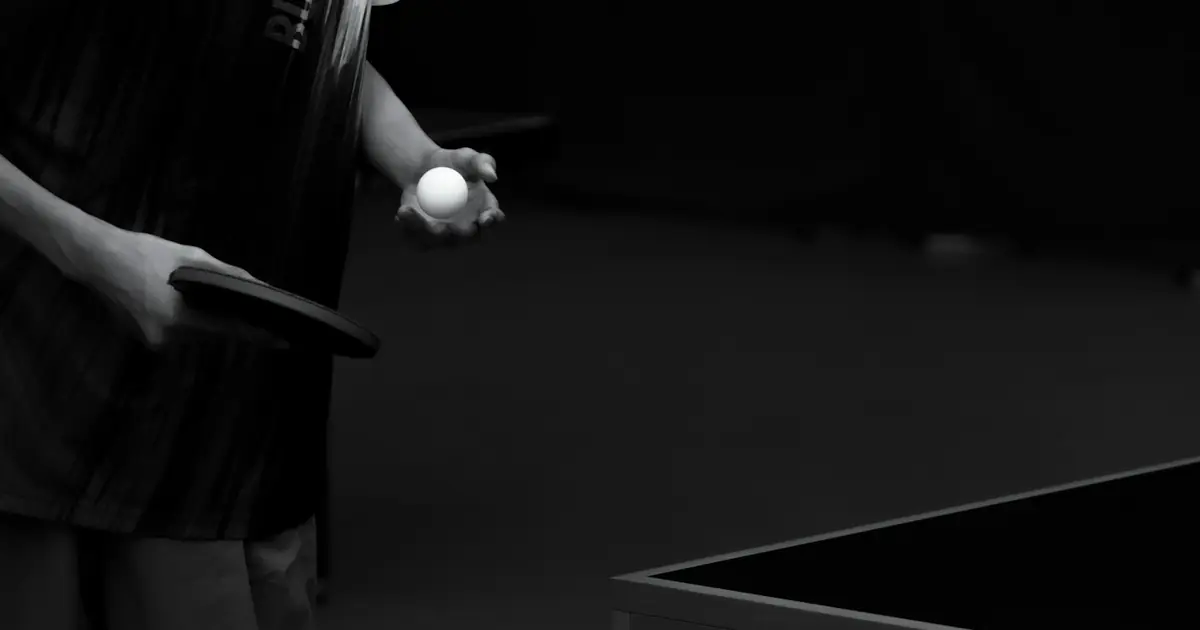
Most choppers use the shakehand grip from our table tennis grips guide, held relaxed so the wrist can add spin at contact. A tight grip makes the racket face rigid and the ball bounces off it with less spin.
Stand with your feet at least shoulder-width apart, knees bent and weight slightly forward on the balls of your feet. A defender's ready position is usually well behind the end line, farther back against strong loopers, so there is time to read the ball and move. Stay balanced: chopping is mostly about getting your body to the right place before the stroke starts, which is why table tennis footwork matters so much for defenders.
How to Do a Backhand Chop
The backhand chop is usually learned first because the movement is more natural and it covers the large backhand side. Directions assume a right-handed player.
- Turn side-on. Step back with your left foot so your right shoulder points toward the ball and you are slightly sideways to the table.
- Raise the racket. Lift it to around shoulder height on the left side of your body, face open (tilted back) and the racket tip pointing roughly to the left.
- Wait for the drop. Let the ball pass the top of its bounce and fall toward waist height. Late contact gives you more time and control.
- Swing down and forward. Lead with the shoulder, then the elbow, and brush under the back of the ball. Add a small wrist snap for more spin.
- Follow through low. Extend the arm forward and finish around knee level with the racket face still open.
- Recover. Step back to your ready position at once; the next attack comes quickly.
How to Do a Forehand Chop
The forehand chop uses the same idea on the other wing, but it needs a bigger body turn because the ball is on your strong side and it is easy to get too close.
- Step back with the right foot. Turn so your left shoulder faces the table and the ball is to your right.
- Lift the racket high. Take it up to shoulder height or slightly above, beside your right shoulder, with an open face.
- Keep your distance. Leave a gap between body and ball so the arm can swing freely. Crowding the ball is the most common forehand chop error.
- Chop down and through. Swing down and forward across the bottom of the ball, using the shoulder and forearm together.
- Finish near the knee. End with the racket low and in front of you, then reset.
How the Chop Changes Against Different Spin and Speed
The incoming ball decides the shape of your chop. The heavier the topspin and the faster the ball, the more vertical your swing should be; against lighter balls, swing more horizontally and push further forward.
| Incoming Ball | Racket Angle | Swing Path | Tip |
|---|---|---|---|
| Heavy, slow loop | Fairly closed (more vertical) | Steeply downward | The topspin will kick upward off your racket; chop down more to keep it low. |
| Fast drive or smash | Vertical to slightly open | Short, downward block-like chop | Move back to buy time and focus on making the ball land. |
| Light topspin or no-spin | More open | Forward and slightly down | A steep chop here drops the ball into the net. |
| Sidespin loop | Angle the face against the side | Down, aimed slightly to compensate | Expect the ball to curve off your racket; aim away from the side it kicks to. |
If the physics behind this is new to you, our table tennis spin guide explains how each spin reacts to the racket.
Varying the Spin
A defender who sends the same chop every time is easy to loop. The real weapon is variation from a similar-looking stroke:
- Heavy chop: fast racket, thin brushing contact under the ball. Often draws a safe push or a loop into the net.
- Float (light) chop: similar swing but a fuller, slower contact, so little backspin. An opponent who lifts it like heavy backspin tends to send it high or long.
- Side-backspin chop: brush across as well as down to curve the ball.
- Twiddling: some choppers turn the racket so a pimpled rubber and an inverted rubber swap sides, changing the spin the opponent receives.
USATT coach Richard McAfee notes in a Newgy coaching article that chopping lighter than the previous return tends to produce a pop-up, while chopping heavier tends to draw a safe push the defender can then attack.
Placement
Aim deep, close to the end line, and change direction between the corners. A deep chop forces the attacker to lift from far back and weakens their next loop. Mix in a short ball occasionally to bring them forward.
Common Chop Mistakes and How to Fix Them
| Mistake | What Happens | Fix |
|---|---|---|
| Swinging too flat against heavy topspin | Ball sits high and gets smashed | Make the swing steeper and more vertical |
| Facing the table square | Cramped, arm-only stroke | Step back and turn side-on before every chop |
| Hitting the ball too early | Rushed contact, poor spin control | Move back and let the ball drop to waist height |
| Too little backspin | Opponent loops with ease | Swing faster, loosen the grip and brush with the wrist |
| Standing too close to the ball | Blocked swing, especially on the forehand | Leave space between body and ball; move your feet, not just your arm |
| Staying planted after the shot | Late for the next ball | Recover to the ready position immediately |
Chop Drills to Practice
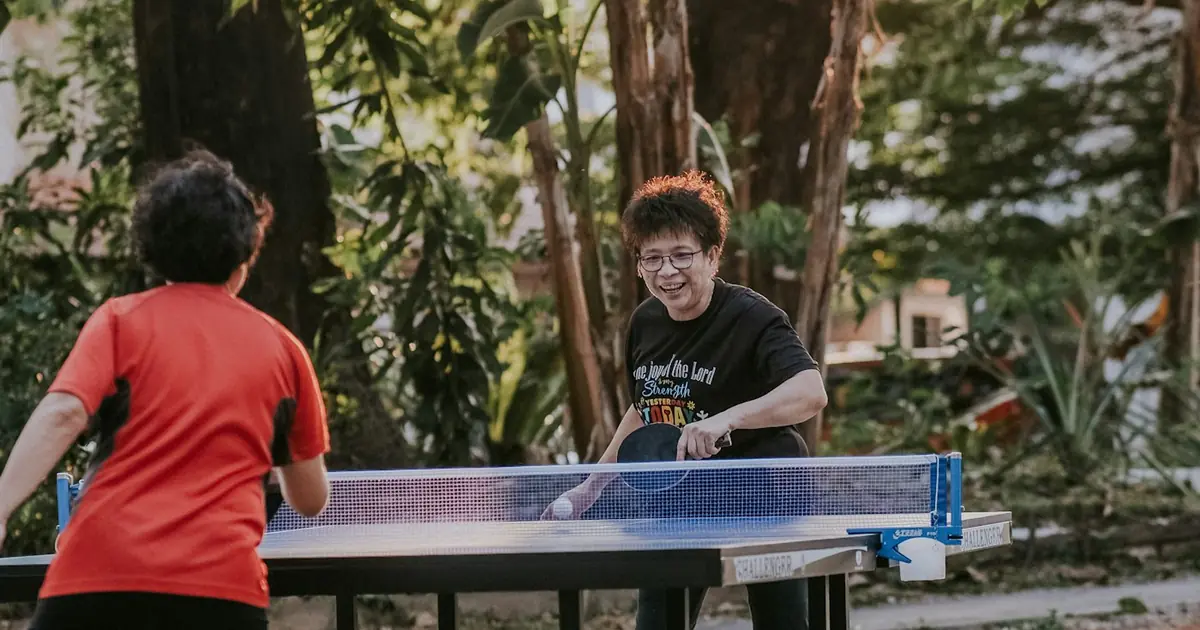
Chopping needs a partner who can loop consistently, or a robot. Short, focused drills work best; you can slot them into the routines in our ping pong practice guide.
- Loop-to-chop, one corner. Your partner loops to your backhand; you backhand chop deep. Repeat, then switch to the forehand.
- Two-point chop. Partner loops alternately to your forehand and backhand. Focus on moving your feet and turning before each stroke.
- Random chop. Partner loops anywhere on the table so you practice reading and reacting.
- Heavy and float. Alternate a heavy chop and a light chop and watch how your partner's loop changes.
- Chop and attack. Chop until your partner pushes a ball high or short, then step in and attack it with a table tennis loop or a smash.
A table tennis robot set to topspin is useful for building rhythm when no looping partner is available.
The Defensive Style: Classic Choppers and Modern Defenders
Wikipedia's overview of table tennis styles calls the chopper "the single most distinctive style in table tennis." Choppers give up the initiative and return attacks with slow, floating backspin chops played as late as possible. They usually use inverted rubber on the forehand and long pips or anti-spin on the backhand, because those rubbers are less sensitive to spin. If you are curious about that equipment, see our guide to long pips.
Modern defenders still chop, but they look for the chance to counterattack. South Korea's Joo Sae-hyuk is the best-known example: Wikipedia describes him as primarily defensive, returning heavy backspin on both wings, with a powerful topspin forehand for counterattacks. He won the men's singles silver medal at the 2003 World Championships in Paris, where Austria's Werner Schlager took the title, and a team silver at the London 2012 Olympics. Other defenders listed in the same overview include Chen Weixing and Ding Song.
The lesson for club players is the same: a chop alone keeps you in the rally, but a defender who can also attack the loose ball is far harder to beat. For the wider tactical picture, read our ping pong strategy guide.
Frequently Asked Questions
What Is the Difference Between a Chop and a Push?
Both create backspin, but a push is a short, compact stroke played close to the table against a backspin ball. A chop is a longer, downward stroke usually played back from the table against topspin attacks such as loops and drives.
Is Chopping a Good Style for Beginners?
Chopping is a valid style, but it relies on strong footwork, patience and a good read of spin. Most coaches suggest learning basic drives, pushes and blocks first, then adding the chop once those strokes are reliable.
What Rubber Do Choppers Use?
Many choppers use grippy inverted rubber on the forehand and long pips or anti-spin on the backhand, because pips are less sensitive to incoming spin. A smaller number defend with inverted rubber on both sides.
How Do You Return a Chop?
A chop carries backspin, so open the racket a little and lift the ball with a loop or push it back. The heavier the backspin, the more upward your stroke needs to be; aiming low and flat sends the ball into the net.
Can You Chop Close to the Table?
Yes, but it is harder because you have less time to read the spin and swing. Short chops and chop blocks are used near the table, while the classic full chop is usually played from mid-distance or farther back.