Anti Spin Rubber: How the Slickest Sheet in Table Tennis Works (2026)
 By Harshwardhan · Updated
In This Article
- What Is Anti Spin Rubber?
- How Anti-Spin Rubber Is Built
- How Anti Neutralizes Spin
- Anti-Spin Rubber vs Long Pips
- Who Uses Anti-Spin Rubber?
- Choosing a Blade for Anti-Spin Rubber
- How to Play With Anti-Spin Rubber
- How to Beat Anti-Spin Rubber
- Is Anti-Spin Rubber Legal?
- Popular Anti-Spin Rubbers
- Frequently Asked Questions
What Is Anti Spin Rubber?
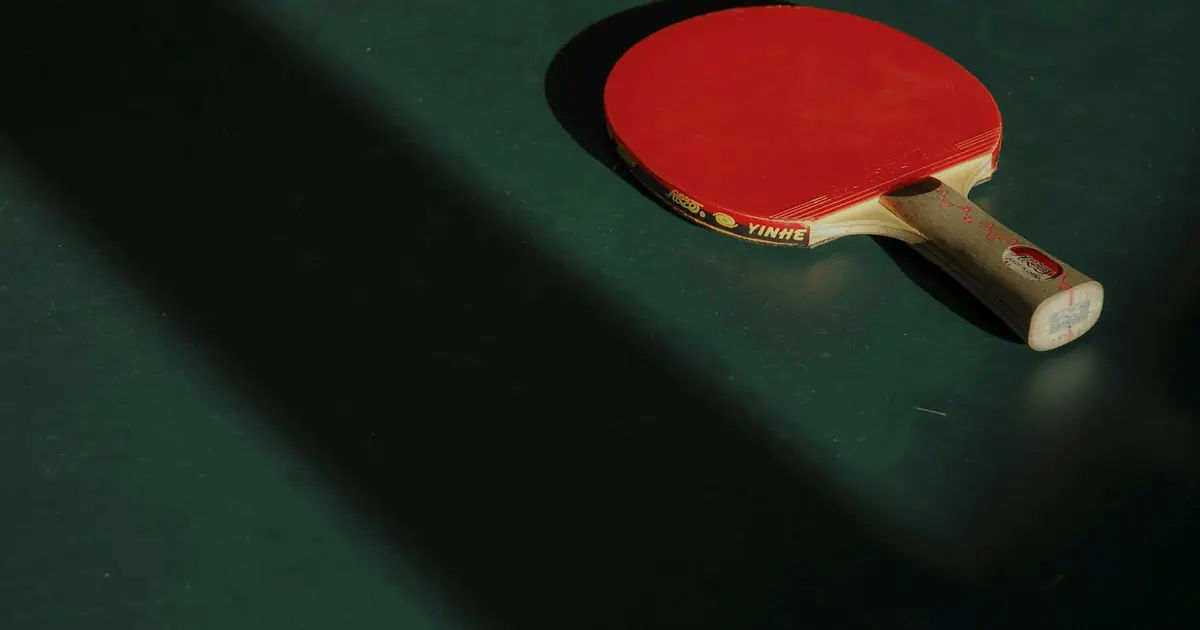
Anti spin rubber is a smooth, pips-in table tennis rubber with an extremely slippery top sheet and, usually, a soft and deliberately "dead" sponge. Because the ball slides across the surface instead of gripping it, the rubber creates very little spin of its own and sends much of the opponent's spin back at them, slowed down and reduced.
From across the table it looks almost identical to normal inverted rubber, and that is the point. Anti is a disruption tool: it turns heavy loops into floating, backspin-laden balls and makes spinny serves far less dangerous. This guide goes deeper than our overview of table tennis rubber types, covering how anti actually neutralizes spin, how it compares with long pips, who it suits, how to play with it and how to beat it.
Quick Facts
- Surface: Smooth (pips facing in), very low friction
- Sponge: Traditionally soft and slow; some modern antis use a hard sponge with a taut top sheet
- Own spin: Very low
- Main effect: Reduces and largely preserves incoming spin, which reaches the opponent as the opposite spin
- Typical setup: Anti on the backhand, fast inverted rubber on the forehand
- Legal? Yes, if the exact sheet is on the ITTF list of authorized coverings
How Anti-Spin Rubber Is Built
Every anti sheet has the same two-part structure as a normal inverted rubber: a top sheet with pips facing inward, glued to a sponge. What changes is how those two layers are tuned.
The Slick Top Sheet
A normal inverted top sheet is grippy or even tacky so it can "bite" the ball. An anti top sheet is the opposite. It is made to have very little friction, so even a fully brushing stroke slips across the ball. Grip still varies between models: some antis are almost glassy, others have a trace of grip that lets a skilled player add a little spin.
The Dead Sponge
Classic antis sit on a soft, low-elasticity sponge that soaks up pace. Butterfly describes its Super Anti as combining a "nearly frictionless topsheet and soft sponge" that reduces the opponent's spin and speed. The result is a slow, low ball that often lands short.
Not every anti follows that recipe. DONIC's Alligator Anti, for example, uses a hard sponge and a taut anti-spin top sheet, and DONIC describes it as very direct with a short dwell time. Harder antis feel faster and are easier to attack with, but they forgive less on blocks.
| Feature | Traditional (Soft) Anti | Modern (Hard) Anti |
|---|---|---|
| Top sheet | Slick, low friction | Slick, often tauter |
| Sponge | Soft, dead | Harder, more direct |
| Speed | Slow | Slow to medium |
| Strength | Absorbing heavy spin and pace | Mixing anti blocks with flat attacks |
| Example | Butterfly Super Anti | DONIC Alligator Anti |
How Anti Neutralizes Spin
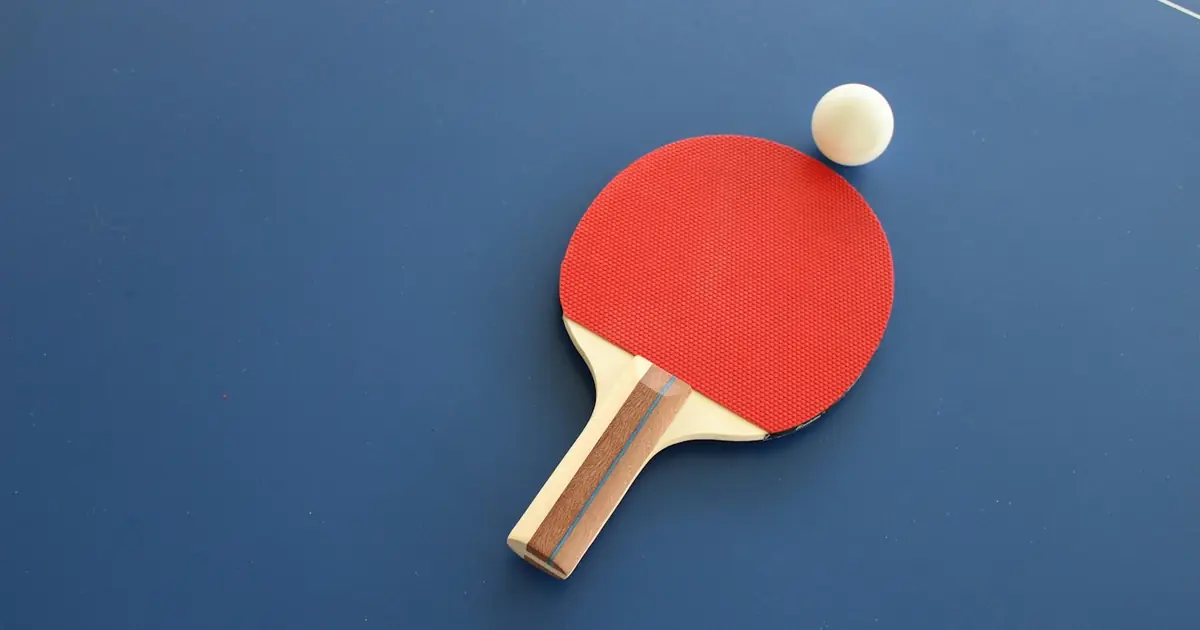
To understand anti, think about what normal rubber does. A grippy inverted sheet "catches" the ball, cancels most of its incoming rotation and replaces it with the spin of your own stroke. That is why inverted players must read spin carefully: the rubber reacts strongly to it.
Anti barely catches the ball at all. The ball slides, keeps rotating in roughly the same direction, and loses some of that rotation along the way. Because the ball travels back the other way while still spinning in the same direction, the opponent experiences the opposite spin. If you want the physics behind this, our guide to table tennis spin explains how rotation and direction interact.
In practice, the most common outcomes look like this:
| Incoming Ball | Anti Stroke | What the Opponent Receives |
|---|---|---|
| Heavy topspin loop | Block or chop-block | Light to medium backspin, slow and often short |
| Backspin push or serve | Push | Light topspin or float that looks like backspin |
| Backspin | Flat hit or gentle topspin stroke | Low-spin ball with some topspin |
| No-spin ball | Any | Very little spin either way |
Two details matter. First, the amount of spin always drops; anti does not amplify spin. Second, the type of stroke changes the result. A brushing stroke changes the outgoing spin more than a flat stroke does, but still far less than it would with normal rubber. That is why the most important question when facing anti is simple: what spin did I just put on the ball?
Anti-Spin Rubber vs Long Pips
Anti and long pips are often lumped together as "junk rubbers," and both can send your spin back. The way they do it is different, and so is the ball you get back.
| Factor | Anti-Spin | Long Pips |
|---|---|---|
| Surface | Smooth, pips facing in | Tall, thin pips facing out |
| How it kills grip | Slippery top sheet | Pips bend on contact |
| Spin reversal | Present, usually milder | Usually stronger and more variable |
| Ball flight | Slow, consistent, predictable path | Can float, dip or wobble |
| Looks like inverted? | Yes, from a distance | No, pips are visible |
| Learning curve | Moderate | Steeper |
| Typical user | Blockers, twiddlers, older club players | Choppers, pushblockers, defenders |
A useful rule of thumb: long pips are the bigger weapon, anti is the safer one. Anti returns are more uniform, so they are easier to control but also easier for a strong opponent to adjust to. Long pips create more confusion but make your own shots less consistent. Many players who find long pips too erratic land on anti, and many who find anti too readable move on to long pips.
Who Uses Anti-Spin Rubber?
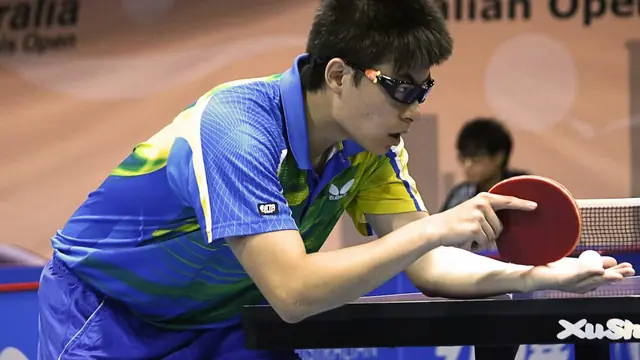
Anti is rare among top professionals, because elite players read slow, low-spin returns quickly and attack them. At club and league level it is a different story, and it tends to suit a few clear profiles:
- Blockers and defenders who stand close to the table and want to absorb pace rather than generate it.
- Older or less mobile players who rely on placement and variation instead of footwork and power.
- Combination players who keep fast inverted rubber on one side and twiddle (rotate the paddle) to switch surfaces mid-rally.
- Players with a weak backhand loop who prefer a reliable dead block to a backhand they cannot attack with.
It is usually a poor choice for beginners. Anti masks stroke problems instead of fixing them and stops you from learning how to create and read spin. Start on inverted rubber from our best table tennis rubber picks and treat anti as a specialist tool for later.
Choosing a Blade for Anti-Spin Rubber
Anti does not need a special blade, but the blade decides how the whole combination plays, especially because the other side is usually a fast attacking rubber.
- All-round wood blades give the most control on anti blocks and pushes while leaving enough speed for the inverted forehand.
- Defensive blades slow everything down further. Good for choppers and pure blockers, but they make the inverted side less threatening.
- Faster composite blades make anti returns livelier and easier to hit through, at the cost of some control.
Butterfly's own Super Anti listing suggests pairing the rubber with blades ranging from the all-round Boll Allround to the faster Innerforce Layer ALC, which shows how wide the window is. For a deeper look at plies and materials, see our guide to table tennis blade types or our shortlist of the best table tennis blades.
How to Play With Anti-Spin Rubber
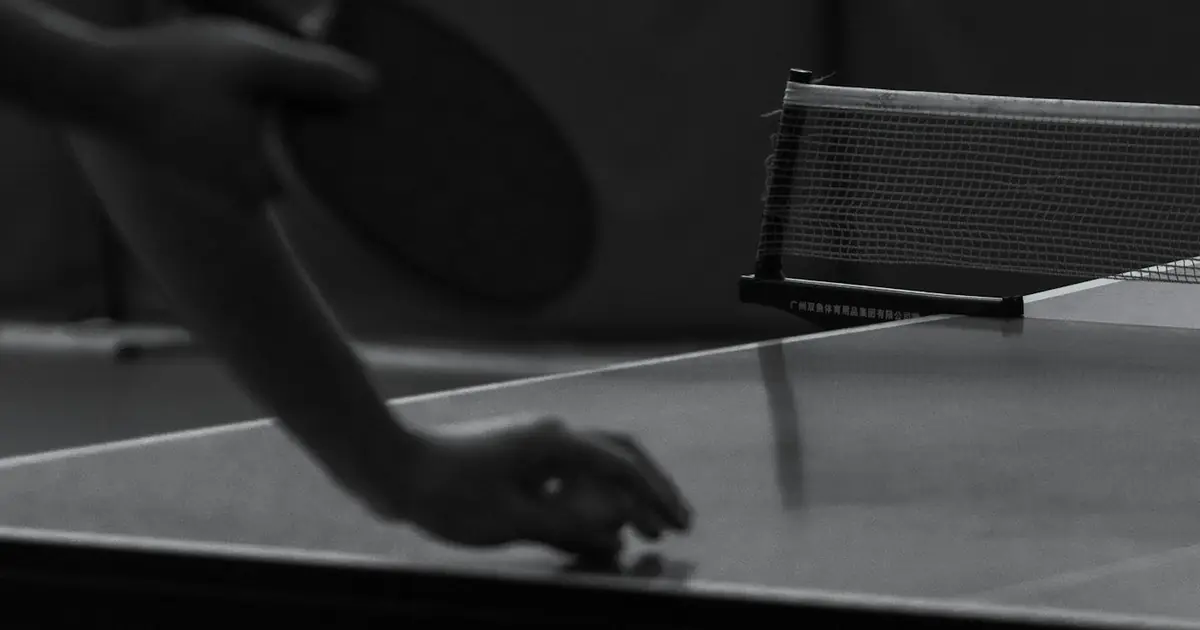
Anti rewards players who use it actively. Simply blocking everything back lets a good opponent settle into a rhythm. These are the core patterns:
- Block and chop-block topspin. Meet heavy loops with a short, relaxed block. A slight downward chop-block adds backspin to the reversed spin and makes the ball die even more.
- Push long and low. Anti pushes against backspin come back with light topspin or float. Opponents who expect backspin often lift them long or into the air.
- Serve with fake spin. A big brushing serve motion with the anti side still produces very little spin. Mix it with real spin serves from the inverted side so the opponent cannot trust the motion.
- Twiddle at the right moment. Flip the paddle between points or mid-rally so your opponent never knows which surface is coming. Unlike long pips, the two sides can look similar at speed, which makes this especially effective.
- Finish with the inverted side. Anti creates weak returns; the forehand or a twiddled inverted backhand should punish them. Anti alone rarely wins points outright.
How to Beat Anti-Spin Rubber
Playing against anti feels strange at first, but it follows clear rules. Once you understand them, anti is usually more beatable than long pips.
- Track your last spin. The spin you put on the ball is what comes back, reversed and weaker. Heavy topspin returns as backspin; your push returns as light topspin or float.
- Push, then loop. Push to the anti side, expect a floaty topspin return, and attack it. Pushing again and again just gives the anti player the rally they want.
- Use no-spin and flat balls. A flat hit or a dead serve gives the anti nothing to reverse, so the return carries almost no spin and is easier to attack.
- Serve long backspin. Long backspin to the anti side often produces a slow, high-ish return you can loop. Heavy sidespin serves are less useful because anti simply absorbs them.
- Play to the inverted side under pressure. If the opponent does not twiddle much, the anti side becomes predictable; work the inverted side when you need a safe ball and attack the anti side with patience.
- Vary depth and placement. Anti players often lack mobility. Moving them wide and in and out matters more than pure power.
Before the match, use your right to look at the racket. Under the ITTF Laws, a player must show the opponent and umpire the racket at the start of a match and whenever it is changed. Smooth anti can pass for inverted at a glance, so a quick look and a touch of the surface saves you from a confusing first game. Learn the blocking and pushing skills on both sides of this matchup in our table tennis block guide.
Is Anti-Spin Rubber Legal?

Yes. Anti is a recognized covering type and is legal in sanctioned play when it meets the same requirements as any other rubber:
- The exact sheet must appear on the ITTF List of Authorized Racket Coverings (LARC), which the ITTF publishes quarterly, and the ITTF logo must be visible near the handle.
- One side of the racket must be black and the other a bright color clearly distinguishable from black and from the ball, which is part of why ping pong paddles are red and black. With anti on one side, this rule is often the only quick visual clue.
- Thickness limits apply as for any sandwich rubber, and coverings must be used without physical, chemical or other treatment, so boosters are not allowed.
An old, worn anti may play very differently from a new sheet, but legality depends on the authorized covering being used untreated. Clean anti only with methods the maker recommends; general paddle-cleaning advice for inverted rubber does not always apply.
Popular Anti-Spin Rubbers
Anti is a small, specialist category, and the sheets below are among the best-known names from major manufacturers. Specs come from the manufacturers' own listings where available; check current thicknesses and availability before buying.
Butterfly Super Anti
Butterfly's classic soft anti, built around a nearly frictionless top sheet and soft sponge. Butterfly recommends pairing it with a fast, spinny offensive rubber on the other side.
Butterfly Super Anti
Best for: Blockers and twiddlers who want a slow, low-spin return on the backhand
Butterfly describes Super Anti as a rubber that does not react the way most others do: a nearly frictionless top sheet over a soft sponge that reduces the opponent's spin and speed and sends back a slower, low-spin ball.
| Type | Anti-spin |
|---|---|
| Top Sheet / Sponge | Nearly frictionless top sheet, soft sponge (Butterfly) |
| Sponge Hardness | 25 (Butterfly scale) |
| Thickness | 1.9 mm (US listing) |
| Colors | Red, black |
| Butterfly Stability / Variation | 5 / 7 (maker's ratings) |
Pros
- Textbook example of a traditional, dead-feeling anti
- Butterfly itself recommends pairing it with a fast, spinny rubber on the other side
- Sold through major US retail channels as well as table tennis specialists
Cons
- Very little ability to create your own spin
- Only one thickness shown on the US listing
- Stock can run out; check current availability
Not listed on Amazon US right now. Check the maker's website or a specialist table tennis dealer.
DONIC Alligator Anti
A more aggressive anti with a hard sponge and taut top sheet, aimed by DONIC at defensive players, all-rounders and disruptive players who want to mix anti shots with attacks.
DONIC Alligator Anti
Best for: Disruptive players who want anti returns but also want to attack with the same side
DONIC calls Alligator Anti very direct, with a short dwell time but very good control. The hard sponge and taut top sheet make it a more aggressive take on anti than the classic soft, dead sheets.
| Type | Anti-spin |
|---|---|
| Construction | Hard sponge, taut anti-spin top sheet (DONIC) |
| Thicknesses | 1.0 mm, 1.5 mm |
| DONIC Speed / Control | Medium / Medium (maker's descriptions) |
| Colors | Red, black |
Pros
- More direct and faster-feeling than soft traditional antis
- Thin sponge options keep the ball low and controllable
- Built by DONIC for defenders, all-rounders and disruptive players
Cons
- Short dwell time gives less margin for error on blocks
- Harder sponge is less forgiving than a classic soft anti
- Not a good first pips-alternative for players who rarely attack
Not listed on Amazon US right now. Check the maker's website or a specialist table tennis dealer.
Yasaka Anti Power
A long-standing traditional anti that is frequently mentioned alongside Super Anti, and a common starting point for players moving a backhand to anti.
Yasaka Anti Power
Best for: Players who want a well-known traditional anti to try as a backhand alternative
Yasaka Anti Power is regularly grouped with Butterfly Super Anti as a traditional anti-spin rubber: a slick surface designed to kill and redirect incoming spin rather than create spin of its own.
| Type | Anti-spin |
|---|---|
| Brand | Yasaka |
Pros
- One of the most frequently named traditional anti sheets
- Stocked by major specialist retailers such as Megaspin
- Pairs naturally with an inverted forehand for twiddling
Cons
- Low own-spin potential, like all traditional antis
- Check the current listing for available thicknesses
- Takes practice before it becomes a weapon rather than a weakness
Other names you will see include Dr. Neubauer's anti range and Yasaka's Trick Anti. Whatever you choose, confirm the exact version is ITTF-authorized if you play in sanctioned events. If you want an anti side on a fully assembled racket, custom ping pong paddles let you combine a blade, an inverted forehand and an anti backhand in one order.
Frequently Asked Questions
Is Anti-Spin Rubber Legal in Tournaments?
Yes, as long as the exact sheet appears on the ITTF List of Authorized Racket Coverings, carries the ITTF logo near the handle, is used without any treatment and follows the color rule of one black side and one bright side. Anti is a recognized covering category, not a loophole.
Is Anti-Spin Better Than Long Pips?
Neither is better overall. Anti is usually slower, more consistent and easier to control, while long pips create stronger spin reversal and a less predictable, wobbling ball. Players who want reliability often prefer anti; players who want maximum disruption usually choose long pips.
Can You Serve With Anti-Spin Rubber?
Yes. Because the slick surface barely grips the ball, a serve with a big brushing motion still comes out with very little spin. Many anti players use that to disguise no-spin serves, then twiddle to serve real spin with the inverted side.
Should Beginners Use Anti-Spin Rubber?
Usually not. Anti hides weak strokes instead of fixing them, and it prevents a newer player from learning how to create and read spin. Most coaches suggest inverted rubber on both sides until basic strokes are reliable.
Why Do So Few Professionals Use Anti?
At elite level, opponents read the dead returns quickly and attack them, because anti produces little spin or speed of its own. It is far more common, and far more effective, at club and league level, where many players struggle against unusual rubbers.
How Do I Know if My Opponent Is Using Anti?
ITTF rules let you ask to see your opponent's racket at the start of a match and whenever they change it. Anti looks like smooth inverted rubber, so ask, check the surface, and watch for slow, low-spin returns that send your own spin back.