Long Pips in Table Tennis: How They Work and How to Beat Them (2026)
 By Harshwardhan · Updated
In This Article
What Are Long Pips in Table Tennis?
Long pips are a pips-out table tennis rubber with tall, thin, flexible pimples. Instead of gripping the ball the way smooth inverted rubber does, the pimples bend on contact and let the ball keep most of its rotation. The result is the famous "spin reversal": your topspin comes back as backspin, your backspin comes back as topspin or float, and the ball often wobbles in the air.
That makes long pips a deliberately awkward surface. It produces little spin of its own, but it turns the opponent's spin against them. This guide covers how long pips work, who they suit, how to play with them and, just as important for most club players, how to beat them. If you want the big-picture comparison with inverted, short pips and anti-spin first, start with our guide to table tennis rubber types.
Quick Facts
- What makes a pip "long": ITTF Technical Leaflet T4 classes pimples-out rubber as "Long" when the pimple height-to-diameter ratio is above 0.89
- Upper limit: The same leaflet caps that ratio at 1.10
- Pimple density: 10 to 30 pimples per square centimetre (ITTF Law 2.4.3.1)
- Thickness: The pimpled layer may be no more than 2.0 mm; with sponge, the whole covering must be under 4.05 mm including adhesive
- Frictionless pips: Effectively banned from July 1, 2008, when a minimum friction requirement took effect
- Versions: OX (no sponge) or with a thin sponge, typically about 0.5 to 1.5 mm
How Long Pips Reverse and Confuse Spin
An inverted rubber grabs the ball and imposes its own rotation. Long pips work differently. Because the pimples are long and slender, they buckle and fold over when the ball arrives, giving a low-grip contact that does not "catch" the ball's spin. The ball largely keeps spinning the same way it was already spinning.
Here is the clever part. The direction of rotation in space barely changes, but the ball is now travelling the other way. A ball spinning forward toward you (topspin) that is sent back without its rotation changing is now spinning backward relative to its new direction of travel. From the opponent's point of view, their topspin has come back as backspin. That is why the effect is called spin reversal, even though long pips are really just preserving spin rather than creating it. Our table tennis spin guide explains the underlying physics of each spin type.
What Comes Back From Long Pips
The return depends on two things: the spin you sent and the stroke the long-pips player uses. This is the chain to learn.
| You send | Long-pips stroke | What usually comes back |
|---|---|---|
| Topspin (loop or drive) | Block | Backspin, often low and short |
| Topspin (loop or drive) | Chop | Heavier backspin |
| Backspin (push or serve) | Push | Light topspin or no-spin, which tends to float |
| Backspin (push or serve) | Attack or hit | Topspin |
| Topspin | Topspin stroke | Light backspin or no-spin |
| No-spin (float) | Any stroke | Very little spin, since the pips have little to work with |
The key insight is that the heavier your spin, the heavier the reversed spin you get back. A huge loop into a long-pips block can return as heavy backspin that drags your next shot into the net.
Why the Ball Wobbles
Long-pips returns sometimes dip, float or wobble unpredictably. The bending pimples do not release the ball the same way every time, and a ball with very little spin can drift in the air. The effect tends to be most noticeable with OX versions, which give a lower, shorter trajectory and more wobble.
Short vs Medium vs Long Pips
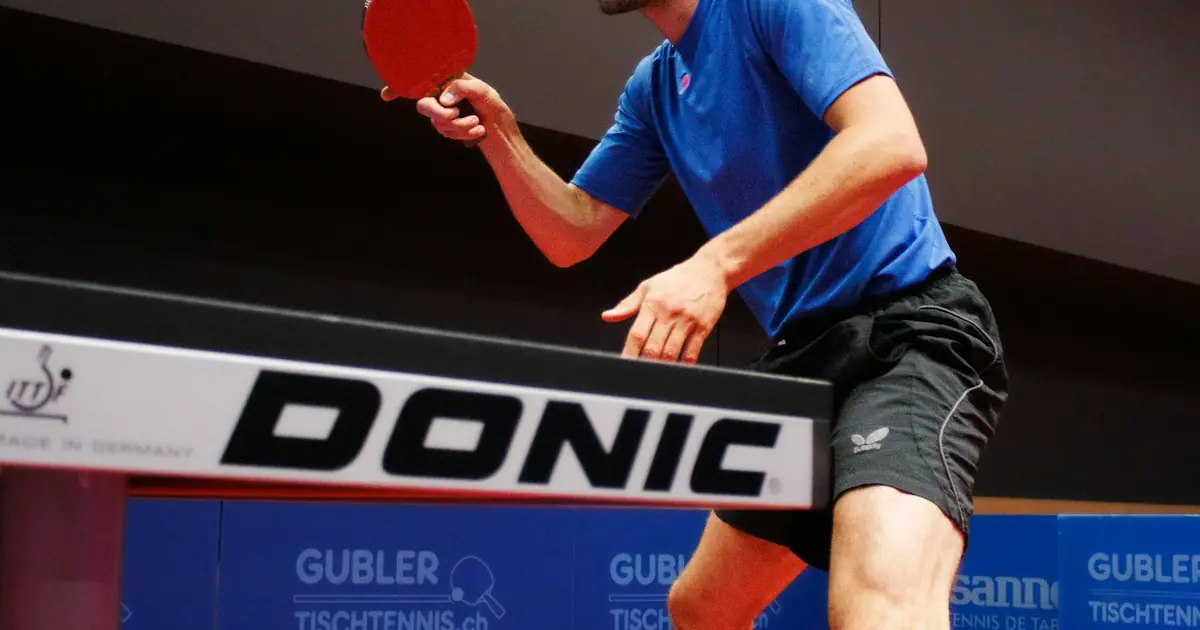
All three are pips-out rubbers, but they behave very differently. The longer and thinner the pimple, the less the rubber grips and the more it preserves incoming spin.
| Type | Pimple shape | Main use | Spin behavior |
|---|---|---|---|
| Short pips | Short and wide | Flat hitting, blocking, counter-attack | Less spin than inverted; less affected by incoming spin |
| Medium pips | Between the two | Mostly attacking with some disruption | More attacking and less spin effect than long pips |
| Long pips | Tall, thin and flexible | Blocking, chopping, pushing, disruption | Preserves incoming spin, producing spin reversal |
Officially, ITTF Technical Leaflet T4 separates coverings into four types: In, Anti, Out and Long. A pimples-out rubber only counts as Long when its pimple height divided by pimple diameter is greater than 0.89. Everything else pimples-out is classed as Out.
OX vs Sponged Long Pips
Most long pips come in two forms: OX (also called orthodox), where the pimpled topsheet is glued straight onto the blade, and sponged versions with a thin layer of foam underneath.
| Feature | OX (no sponge) | Thin sponge (about 0.5 to 1.5 mm) |
|---|---|---|
| Spin reversal | Maximum | Reduced as the sponge gets thicker |
| Speed | Slow, with a braking effect | Faster, easier to play actively |
| Trajectory | Lower and shorter | Longer, more forgiving arc |
| Wobble | More pronounced | Less pronounced |
| Typical user | Close-to-table blockers | Choppers away from the table and players who want to attack with the pips |
A sensible rule: if you plan to stay at the table and block, OX gives the most disruption. If you chop from mid-distance or want to hit with the pips side, a thin sponge gives more control and reach. Popular sheets such as Butterfly's Feint Long III are sold in both OX and thin-sponge versions so players can choose. For how pips compare with today's tensor rubbers, see our best table tennis rubber picks.
Who Should Use Long Pips?
Long pips are a style choice, not an upgrade. They make some shots easier and others much harder, so they suit specific players.
- Close-to-table blockers. Players who like to stay at the table and redirect pace can use long pips to send the opponent's topspin back as awkward backspin.
- Defenders and choppers. Chopping with long pips can return heavy backspin against heavy loops without needing to generate much spin yourself. See our guide to the table tennis chop.
- Older or less mobile players. Because the pips do much of the work, long pips reward placement and touch more than athletic footwork, which is one reason they are often seen among veteran club players.
- Players who struggle on the backhand. Many players fit long pips on the backhand only and keep an inverted rubber on the forehand for attacking.
Pros
- Turns the opponent's spin against them
- Unfamiliar for most opponents
- Rewards control and placement over power
- Less sensitive to heavy incoming spin than inverted
Cons
- Very little spin of your own
- Hard to attack with, especially OX
- Serving and receiving no-spin balls is tricky
- Experienced opponents learn to read the spin chain
How to Play With Long Pips
Success with long pips comes from accepting that you are not trying to out-spin the opponent. You are trying to control, vary and disrupt.
Blocking
The block is the core long-pips shot. Keep the racket fairly still and let the ball rebound, which sends the opponent's topspin back as low backspin. Vary between a soft, dead block that drops short and a firmer punch block that pushes the ball deep. Our table tennis block guide covers the basic technique.
Chopping
From further back, a downward chop against a loop returns heavier backspin. Sponged long pips usually give more control here than OX. Because the pips preserve spin, a light chop against a heavy loop can still come back heavy.
Pushing and Attacking Backspin
Pushing against backspin with long pips usually returns light topspin or a floaty ball, which an alert opponent can attack. Many long-pips players instead hit or "punch" backspin balls, which comes back as topspin and can catch an opponent expecting another push.
Twiddling
Twiddling means rotating the racket in your hand during a rally so you hit with the inverted side or the pips side when the opponent least expects it. It is legal, and it is one reason ITTF rules require a black side and a bright-colored side: the opponent must be able to see which surface you used. Read more in why ping pong paddles are red and black.
Choosing a Blade
Long pips are usually paired with slower, controlled blades, especially for chopping. Defensive all-wood blades are a common choice; browse our best table tennis blades to compare speed classes.
How to Play Against Long Pips
Most club players lose to long pips because they hit the same shot they would against inverted rubber and get punished by their own spin. Use these principles instead.
- Track the spin chain. Before each shot, remember what spin you just sent. Topspin comes back as backspin, backspin comes back light or as topspin.
- Push one, loop one. Push with backspin to the pips, expect a floaty or light-topspin return, then attack it. After a loop, expect backspin and lift accordingly.
- Vary loop spin and speed. A slow, heavy loop into a block returns heavy backspin. Mix in faster, flatter drives with less spin, which come back with less backspin.
- Serve long backspin to the pips. The return tends to carry light topspin or no-spin, which sets up an attack. Heavy sidespin serves matter less, since the pips do not react to them like inverted.
- Attack the inverted side and the middle. Many long-pips players are weaker on their inverted side or at the crossover point. Watch for twiddles.
- Use depth and angles. Long pips blocks are easiest when the ball comes straight at them; move the player with wide angles and changes of length.
- Be patient. Long-pips points take more shots. Wait for the high ball instead of forcing winners off low backspin.
For broader match tactics, see ping pong strategy.
Are Long Pips Legal? ITTF Rules
Yes. Long pips are fully legal in ITTF competition, provided the specific sheet is an authorized covering and meets the equipment rules. The key requirements are:
| Rule | Requirement | Source |
|---|---|---|
| Pimple density | 10 to 30 per square centimetre | ITTF Law 2.4.3.1 |
| Pimpled rubber thickness | Not more than 2.0 mm (OX total under 2.05 mm including adhesive) | ITTF Laws 2.4.3, 2.4.3.2 |
| Sponged covering total | Under 4.05 mm including adhesive | ITTF Law 2.4.3 |
| "Long" classification | Height-to-diameter ratio above 0.89 | ITTF Technical Leaflet T4 |
| Maximum aspect ratio | 1.10 | ITTF Technical Leaflet T4 |
| Friction | Kinetic friction coefficient of at least 0.50 against a ball | ITTF Technical Leaflet T4 |
| Treatment | Must be used without any physical, chemical or other treatment | ITTF Law 2.4.7 |
The friction rule has a history. In the early 2000s some manufacturers sold "frictionless" long pips with a glassy, near-zero-grip surface that magnified spin reversal. The ITTF introduced a minimum friction requirement effective July 1, 2008, which effectively ended them in sanctioned play. Altering pips to reduce friction is also illegal, because coverings must be used untreated. If you glue your own sheets, use an approved water-based product; see our table tennis glue guide.
The Bottom Line on Long Pips
Long pips do not create spin; they hand the opponent's spin back in reverse. That makes them a powerful tool for blockers, choppers and control-minded players, and a puzzle for everyone else. Whether you are trying one on your backhand or facing one next league night, the same rule applies: know the spin you sent, and you will know what comes back.
Frequently Asked Questions
What Do Long Pips Do in Table Tennis?
Long pips have tall, thin pimples that bend on contact instead of gripping the ball, so the ball keeps most of its incoming spin. From the opponent's view the spin is reversed: their topspin returns as backspin and their backspin returns light or as topspin.
Are Long Pips Good for Beginners?
Usually not. Long pips produce little spin of their own and can make it harder to learn normal topspin strokes. Most players are better off learning fundamentals with inverted rubber and trying long pips later if a blocking or defensive style suits them.
Should I Use OX or Sponge Long Pips?
OX (no sponge) gives the most spin reversal, a slower ball and more wobble, which suits close-to-table blockers. A thin sponge adds speed and control, which suits choppers playing further back and players who want to attack with the pips.
Are Long Pips Legal in Tournaments?
Yes, as long as the sheet is ITTF-authorized and untreated. ITTF rules allow 10 to 30 pimples per square centimetre, a pimple height-to-diameter ratio of up to 1.10, and a pimpled layer no thicker than 2.0 mm.
Why Were Frictionless Long Pips Banned?
Frictionless pips had a glassy, near-zero-grip surface that exaggerated spin reversal. The ITTF introduced a minimum friction requirement effective July 1, 2008, which effectively removed them from sanctioned competition.
What Is the Difference Between Long Pips and Anti-Spin?
Both disrupt spin, but long pips use tall, flexible pimples that tend to reverse spin and create wobble, while anti-spin is a smooth, very low-grip sheet that mostly deadens the ball. Long pips usually give a more unpredictable return.