Why Are Ping Pong Paddles Red and Black? The Story Behind the Rule (2026)
 By Harshwardhan · Updated
In This Article
- Why Ping Pong Paddles Have a Red and a Black Side
- The Short History: How Same-Color Rubbers Led to the Rule
- Why Red and Black Specifically?
- Is the Red Side Different From the Black Side?
- The New Colors: Pink, Purple, Green and Blue
- Full Rules for a Legal Table Tennis Racket
- Casual Play vs Tournament Play
- The Bottom Line
- Frequently Asked Questions
Why Ping Pong Paddles Have a Red and a Black Side
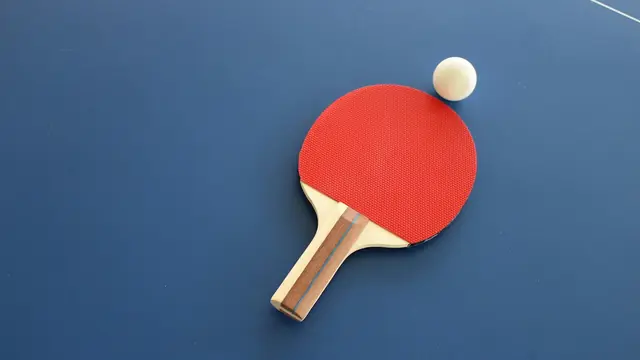
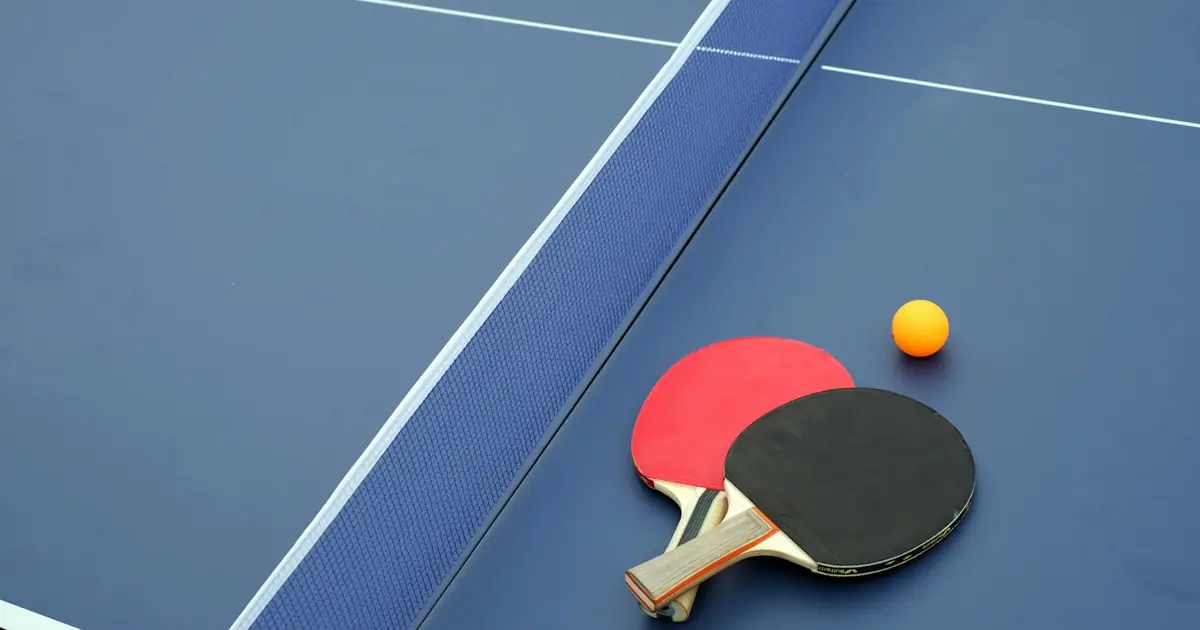
Ping pong paddles are red and black because the rules require it. Since the mid-1980s, the ITTF has demanded one black side and one differently colored side so your opponent can see which rubber you used to hit the ball. Before that, players disguised two very different rubbers in the same color and flipped the racket to fool opponents.
Red is no longer the only option, either. Since 1 October 2021, pink, purple, green and blue are legal in place of red, as long as the other side stays black. Below is how the rule came about, and everything else a racket needs to be legal in a real tournament.
Quick Facts
- Purpose: Let opponents tell which rubber struck the ball
- 1983: Two "distinct" colors required
- 1985 decision, 1986 rule: One side black, the other red
- Since 1 October 2021: Red, pink, purple, green or blue, plus black
- Surface: Matt, never glossy
- Casual play: Any colors are fine at home
The Short History: How Same-Color Rubbers Led to the Rule
For a long time, a racket only had to be the same color on both sides. According to the ITTF's own account, both sides had to match in the 1960s, and players used blue, green or red rubber.
Twiddling and the Problem With Look-Alike Rubbers
In the late 1970s, new coverings such as long pimpled rubber and anti-spin arrived. Each one does something very different to the ball. Long pips can return your own spin back at you, while anti-spin kills most of it. Paired with a normal spinny rubber on the other side, they gave players two completely different weapons on one bat.
When both sides were the same color, opponents could not tell which side had hit the ball. Players would "twiddle" (rotate the racket in the hand) during rallies and before serves, so the receiver had to guess what spin was coming. The receiver could easily misread the spin and miss a ball that looked simple. If you want to see what these coverings actually do, read our guides to long pips and anti-spin rubber.
From "Distinct Colors" to Red and Black
The ITTF fixed it in two steps:
| Year | What Changed |
|---|---|
| 1960s | Both sides of the racket had to be the same color (blue, green or red were common) |
| Late 1970s | Long pips and anti-spin make same-color, two-rubber rackets a tactical weapon |
| 1983 | At the World Championships in Tokyo, Congress requires two "distinct" colors |
| 1985 | Players argued shades like red and maroon counted as distinct, so the Gothenburg Congress settled on one black and one red side |
| 1986 | Red and black becomes the rule for rackets |
| 2021 | From 1 October, pink, purple, green and blue are allowed in place of red |
Why Red and Black Specifically?

The ITTF has not published a single official reason for picking red as the partner color, so treat the following as practical logic rather than a quoted rationale:
- Contrast: Black and a bright color are easy to tell apart at a glance, even across a table.
- No argument at the table: A fixed black side removes the shade disputes that broke the 1983 version.
The current law keeps that idea. One side must be black, and the other a bright color "clearly distinguishable" from black and from the color of the ball. That second part is why a racket covering can't simply be white or orange, the two legal ball colors (see our ping pong ball size guide for the ball rules).
Is the Red Side Different From the Black Side?
Not because of the color. The rule only governs appearance; it says nothing about which rubber goes on which side. Most rubbers, including popular models like Tenergy 05, are sold in both red and black, and what really changes how a side plays is the rubber type, sponge thickness and hardness.
That is why you will see top players use black on the forehand and red on the backhand, or the other way around. Many players choose by feel, by the rubbers they like, or simply by habit. Some players believe the same model plays a little differently in each color, but the rules treat the two identically and there is no official performance difference.
The New Colors: Pink, Purple, Green and Blue

The 2021 change was the first time the permitted colors changed since 1985. The ITTF presented it as a way to make rackets more pleasing to the eye while keeping the "distinct difference" between the sides. The four new options can replace red only; black stays mandatory on the other side.
| Racket Combination | Legal in Sanctioned Play? |
|---|---|
| Red + black | Yes |
| Pink, purple, green or blue + black | Yes, since 1 October 2021 (authorized covering required) |
| Red + blue (no black) | No |
| Black + black or red + red | No |
| Printed, glossy or patterned surfaces | No |
Not every rubber is made in every color, and a colored sheet is only legal if that specific covering is on the ITTF's authorized list. The ITTF noted that the expanded colors helped grow that list, which is now published four times a year.
Full Rules for a Legal Table Tennis Racket
Color is only one line in Law 2.4 of the Laws of Table Tennis. Here is the full checklist for a racket used in ITTF-sanctioned events.
The Blade: Any Size, Shape or Weight
There is no size, shape or weight limit for a racket. The only blade requirements are:
- Flat and rigid: No bendy or curved hitting surfaces.
- At least 85% natural wood by thickness.
- Reinforcement limits: Fiber layers such as carbon, glass fiber or compressed paper may be added inside the blade, but each is limited to 7.5% of the total thickness or 0.35 mm, whichever is smaller.
- Even thickness: The blade, inner layers and covering must be continuous and of even thickness. Material may be added to shape the handle.
That is why carbon blades are legal: the carbon is a thin internal layer in an otherwise wooden blade. Our guide to table tennis blade types explains all-wood versus composite blades.
The Covering: Thickness Limits
A side used to strike the ball must be covered with one of two kinds of rubber. Thickness is measured including the glue:
| Covering Type | What It Is | Maximum Thickness (Incl. Adhesive) |
|---|---|---|
| Ordinary pimpled rubber | A single rubber layer, pimples out, no sponge | About 2 mm (under 2.05 mm in the 2025 Laws) |
| Sandwich rubber | One sponge layer plus a pimpled top sheet, pips in or out | About 4 mm (under 4.05 mm in the 2025 Laws) |
Pimpled rubber must also have between 10 and 30 pimples per square centimeter, and a sandwich rubber's top sheet can be no more than 2.0 mm thick. For how these types play, see table tennis rubber types.
Coverage, Edges and Surface
- The covering must reach the edges of the blade but not go beyond them.
- The part of the blade nearest the handle, where your fingers sit, may be left bare or covered with anything.
- Both surfaces must be matt. Small, accidental deviations in color or surface continuity are tolerated if they do not change how the surface plays.
ITTF-Authorized Rubbers and the Logo
In sanctioned events, each rubber must be a brand and type currently on the ITTF List of Authorized Racket Coverings (LARC). It must be glued so that the ITTF logo and the brand name are clearly visible near the handle. A good competition rubber from our best table tennis rubber picks will carry that marking.
No Boosters or Treatments
The covering must be used "without any physical, chemical or other treatment." In 2008 the ITTF stated that this covers boosters and tuners, and old-style speed glue is banned too. Only legal water-based adhesives belong on a racket; see our table tennis glue guide.
Racket Inspection
Before a match, and whenever a player switches rackets during it, the player must show the racket to the opponent and the umpire and let them examine it. That inspection is the moment your opponent learns what rubber is on each colored side.
Casual Play vs Tournament Play

All of these rules apply to sanctioned events: ITTF tournaments and leagues run under national associations. In a basement, office or garage, nobody will check your racket, and a pre-made recreational paddle with any colors is perfectly fine.
If you plan to enter a club league or tournament, it is worth buying a racket built from authorized rubbers in black plus one legal color. Many pre-assembled rackets in our best ping pong paddles guide are sold this way; if you assemble your own, our custom ping pong paddles guide covers the build. Rules for the rest of the game, from serves to scoring, are in our ping pong rules guide.
The Bottom Line
Ping pong paddles are red and black so that opponents can always tell which rubber struck the ball. Players once used same-colored rubbers with very different behavior and twiddled the racket to hide them, so the ITTF required distinct colors in 1983 and fixed the pairing as black and red from 1986. Since October 2021, pink, purple, green or blue can replace red. Add a flat blade that is at least 85% wood, authorized rubbers within the thickness limits, and no boosters, and your racket is tournament legal.
Frequently Asked Questions
Can a Ping Pong Paddle Be Black on Both Sides?
Not in sanctioned play. The Laws require one side to be black and the other a bright color clearly different from black and from the ball. At home or in casual games, any paddle is fine.
Does the Red or Black Side Play Differently?
The color itself is not a performance rule. Most rubbers are sold in both colors, and what changes how a side plays is the rubber model, sponge and thickness you choose for it.
When Did Ping Pong Paddles Become Red and Black?
The ITTF required two distinct colors from 1983, then settled on one black and one red side at its 1985 Congress in Gothenburg. That red and black requirement applied from 1986.
Can You Use a Blue or Pink Paddle in a Tournament?
Yes, if the rubber is an ITTF-authorized covering in that color and the other side is black. Pink, purple, green and blue were allowed in place of red from 1 October 2021.
Do You Need Rubber on Both Sides of a Paddle?
Only on a side you hit the ball with. A side used for striking must be covered with legal rubber, and the two sides must still show black and a bright color when both are covered.
Is There a Size Limit for Ping Pong Paddles?
No. The Laws say a racket may be any size, shape or weight, as long as the blade is flat and rigid and at least 85% natural wood by thickness.