Ping Pong Ball Size: How Big It Is, What It Weighs and Why (2026)
In This Article
- How Big Is a Ping Pong Ball?
- Official Ping Pong Ball Size and Weight (ITTF Specs)
- Ping Pong Ball Dimensions in Every Unit
- Why Ping Pong Balls Got Bigger: 38 mm to 40 mm
- What Are Ping Pong Balls Made Of?
- Seamed vs Seamless Balls
- What Do the Stars on a Ping Pong Ball Mean?
- White or Orange: Which Ball Color Should You Use?
- Are Beer Pong Balls the Same Size?
- Why Ping Pong Balls Dent and How to Fix Them
- Regulation Balls Worth Keeping on Hand
- The Bottom Line
- Frequently Asked Questions
How Big Is a Ping Pong Ball?
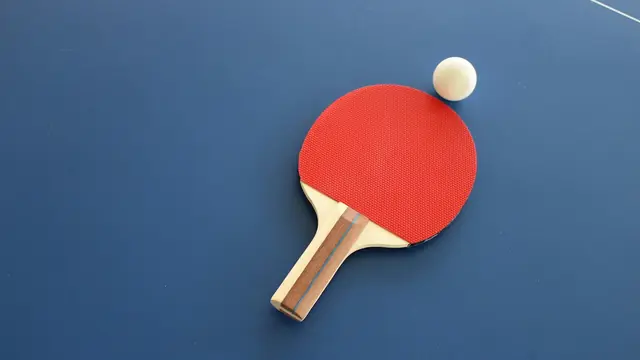
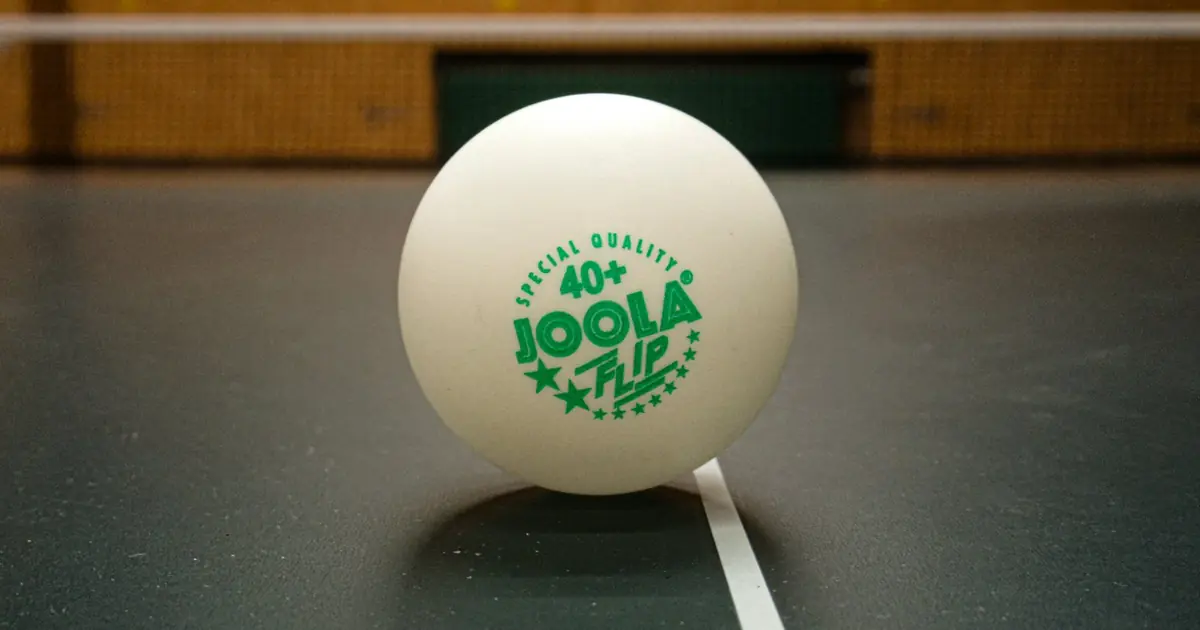
A regulation ping pong ball is 40 mm (1.57 inches) in diameter and weighs 2.7 grams (about 0.095 oz). It must be white or orange with a matt finish, and since July 2014 competition balls have been made of plastic instead of celluloid.
That sounds simple, but the ball has a surprisingly busy history. It grew by 2 mm in 2000, switched materials in 2014,, and is still made to very tight tolerances. Here is everything worth knowing, from exact specs to why your ball keeps denting.
Quick Facts
- Diameter: 40 mm / 4.0 cm / 1.57 in
- Weight: 2.7 g / about 0.095 oz
- Allowed size range: 40.00 to 40.55 mm per ball
- Allowed weight range: 2.67 to 2.77 g per ball
- Material: Plastic (celluloid-free) since 1 July 2014
- Colors: White or orange, matt
- Previous size: 38 mm, used in international play until 1 October 2000
Official Ping Pong Ball Size and Weight (ITTF Specs)
The Laws of Table Tennis set the headline numbers in Law 2.3: the ball is spherical, 40 mm in diameter, weighs 2.7 g, is made of celluloid or a similar plastic, and is white or orange and matt. The ITTF ball technical manual then adds the tolerances that manufacturers must hit for a ball to be approved.
| Specification | Official Value | Allowed Range (Single Ball) |
|---|---|---|
| Diameter | 40 mm | 40.00 to 40.55 mm |
| Weight | 2.7 g | 2.67 to 2.77 g |
| Bounce | Dropped from 305 mm onto a steel block | Rebound of 240 to 265 mm |
| Color | White or orange | Matt finish required |
| Material | Celluloid or similar plastic | Plastic (non-celluloid) in practice since 2014 |
The whole size window is just 0.55 mm wide, and the weight window is a tenth of a gram. That precision is why only balls that pass every lab test can be stamped as ITTF-approved 3-star balls.
Ping Pong Ball Dimensions in Every Unit
If you need the diameter, weight or other measurements in a specific unit, this table does the conversion for you. The circumference and volume are calculated from the 40 mm diameter.
| Measurement | Metric | Imperial |
|---|---|---|
| Diameter | 40 mm (4.0 cm) | 1.57 in |
| Radius | 20 mm (2.0 cm) | 0.79 in |
| Maximum allowed diameter | 40.55 mm | 1.60 in |
| Circumference (calculated) | 125.7 mm | 4.95 in |
| Volume (calculated) | 33.5 cm³ | 2.04 in³ |
| Weight | 2.7 g | 0.095 oz |
| Weight range | 2.67 to 2.77 g | 0.094 to 0.098 oz |
| Old ball diameter | 38 mm | 1.50 in |
For scale, the ball is a tiny part of the playing surface. A regulation table is 2.74 m long, so see our ping pong table dimensions guide for the full layout, net height included.
How Many Ping Pong Balls Make a Pound?
At 2.7 g each, about 168 balls weigh one pound and about 370 balls weigh one kilogram. Those are straight calculations from the official weight, so real packs will vary slightly with each ball's tolerance.
How Many Ping Pong Balls Fit in a Container?
This is a classic estimation puzzle. Loose spheres poured into a box fill roughly 64% of the space (the usual figure for random packing), so you can estimate the count by dividing usable volume by 33.5 cm³.
| Container | Volume | Estimated Balls (Calculation) |
|---|---|---|
| 1 liter jar | 1,000 cm³ | About 19 |
| 1 US gallon jug | 3,785 cm³ | About 72 |
| 1 cubic foot box | 28,317 cm³ | About 540 |
These are rough estimates, not measurements. Narrow containers fit fewer because balls cannot pack tightly against the walls.
Why Ping Pong Balls Got Bigger: 38 mm to 40 mm
For most of the 20th century, the standard ball was 38 mm. The ITTF changed the law so that the ball has a diameter of 40 mm and a weight of 2.7 g, taking effect on 1 October 2000 for international competitions. National associations were allowed to keep using 38 mm balls domestically for a while.
The goal was to slow the game down. Faster blades and thicker sponges had made rallies extremely quick and hard to follow, especially on television. A larger ball has more air resistance, so it travels slower and carries less spin.
Lab data from the Singapore Sports Council's biomechanics laboratory, published in 2002, backed this up. The 40 mm ball was slower and spun less than the 38 mm ball across strokes:
The same data showed speed drops of up to 7.9% on the forehand smash. The old 38 mm balls measured in that study weighed about 2.5 g, so the new ball was both bigger and heavier. For the bigger picture of how the sport evolved, see our history of table tennis.
What Are Ping Pong Balls Made Of?
Today's ping pong balls are hollow plastic shells, most commonly ABS. For about a century before that, they were celluloid.
The Celluloid Era
Celluloid is a thermoplastic made from nitrocellulose and camphor. According to Wikipedia's history of the sport, British enthusiast James W. Gibb found novelty celluloid balls on a trip to the US in 1901 and found them ideal for the game. Celluloid bounced well, which is why it lasted so long.
The downside was fire risk. Celluloid is flammable, and old, brittle balls burn readily, which is why lighting a ping pong ball became a popular (and risky) science demo.
The Switch to Plastic in 2014
The ITTF introduced the plastic ball on 1 July 2014. Its own account of the transition gives several reasons:
- Safety: the flammability of celluloid had become a risk driver as safety awareness grew.
- Regulation: the ITTF wanted to get ahead of rules that might make celluloid balls impossible to use in some countries.
- Logistics: non-flammable balls are easier to store and ship.
- Supply: makers stopped celluloid production as it stopped being profitable, and the last supplier eventually withdrew approval.
Early plastic balls had roundness and durability problems. Makers got more development time in 2015, which led to ABS balls, and a second generation of ABS balls reached the approved list in mid-2016. By the end of 2019, the ITTF counted almost 100 non-celluloid balls on the market.
Why Plastic Balls Say 40+
The 40+ marking separates plastic balls from the old 40 mm celluloid ones. Plastic balls can measure up to about 0.5 mm larger, sitting toward the top of the allowed size range. Many players feel they spin a little less than the old celluloid balls.
Seamed vs Seamless Balls
Most balls are made from two half-shells joined together, which leaves a seam. Seamless balls are produced without that join. Both are legal if they meet the specs.
| Type | How It Is Made | Where You See It |
|---|---|---|
| Seamed | Two halves bonded at a seam | Most match and training balls, including many top-event balls |
| Seamless | Formed without a visible join | Brands such as JOOLA Flash and Xushaofa |
Some players notice a small difference in feel or sound between the two, so it is worth practicing with the same type you play matches with.
What Do the Stars on a Ping Pong Ball Mean?
Stars are a quality grade, not a size. Every grade is the same 40 mm size; what changes is how consistently the balls hit the size, weight, roundness and bounce targets.
- 3-star: the top grade. Only 3-star balls can be ITTF approved for competition.
- 2-star and 1-star: lower grades that suit casual play, schools and drills.
- Training balls: bulk balls for robots and multiball, often unstarred.
Watch out for budget brands that print three stars without ITTF approval. If you need a match-legal ball, check for approval on the ball or listing. Our best table tennis balls guide sorts the options by grade.
White or Orange: Which Ball Color Should You Use?
The laws allow only white or orange, and the ball must be matt. Pick the color that contrasts best with your table and room. A white ball is easy to see against a blue or green table but can disappear against light walls; an orange ball stands out in bright rooms. Novelty balls in other colors are fine at home but not in sanctioned play.
Are Beer Pong Balls the Same Size?
Yes, for practical purposes. Beer pong is played with ordinary ping pong balls, and packs sold as beer pong balls are typically listed at the standard 40 mm. You do not need expensive 3-star balls for party games. If you are setting up a party table rather than a regulation one, check our beer pong table dimensions guide.
Why Ping Pong Balls Dent and How to Fix Them
A ball's wall is thin and its whole weight is under 3 g, so stepping on it, squeezing it or packing it under something heavy easily leaves a dent. A dented ball bounces unpredictably, which ruins practice.
The common home fix uses hot water. The heat warms the air inside, and the expanding air can push the dent back out:
- Heat water. Boil water and pour it into a heatproof cup or bowl deep enough to cover the ball.
- Submerge the ball. Hold it under with a spoon, dent facing down, for a few minutes.
- Check and dry. Lift it out with the spoon, dry it and let it cool before you play.
- Test the bounce. Drop it next to a good ball. If it bounces short or wobbles, retire it.
Prevention is easier. Store balls in their box or a case, away from heat and heavy objects, and keep cheap training balls for table tennis robots and drills.
Regulation Balls Worth Keeping on Hand
If you want balls that match the official specs above, start with an ITTF-approved 3-star ball for games and a bulk training box for everything else.
DHS DJ40+ 3-Star (6 Pack)
Best for: Players who want a regulation 40+ competition ball
The DJ40+ is DHS's top 3-star ABS ball, sold as ITTF approved and built with a seam. If you want a ball that matches the official specs in this guide, a 3-star approved ball like this is the safe choice.
| Grade | 3-star, ITTF approved |
|---|---|
| Material | ABS plastic |
| Construction | Seamed |
| Size | 40+ |
| Pack | 6 balls |
Pros
- ITTF-approved 3-star ball built to the official size and weight
- DHS DJ balls were used at the Tokyo 2020 Olympic Games
- Seamed ABS construction
Cons
- Small pack for drills
- Premium tier compared with training balls
JOOLA Training 40+ (12, 60 or 120 Pack)
Best for: Drills, robots and family games
JOOLA markets the Training 40+ as a seamed ABS ball for drills, coaching and solo practice. It is the standard 40+ size, so it plays like the real thing while letting you hit hundreds of balls without worrying about breakage.
| Use | Training |
|---|---|
| Material | ABS plastic |
| Construction | Seamed |
| Size | 40+ |
| Pack | 12, 60 or 120 balls |
Pros
- Regulation-size 40+ ball in bulk packs
- Seamed ABS, the same basic build as match balls
- Made for high-volume practice
Cons
- A training ball, not a tournament ball
- Bulk boxes take up storage space
For the full lineup, see our best table tennis balls guide, or browse the rest of the table tennis equipment you need, from paddles to nets. Ready to play properly? Our ping pong rules guide explains how the ball must be served and returned.
The Bottom Line
A ping pong ball is 40 mm across, weighs 2.7 g and is made of plastic, white or orange. It replaced the 38 mm ball in 2000 to slow the game for players and viewers, and plastic replaced flammable celluloid in 2014. Whatever you buy, the size is the same; the stars tell you how consistent it will be. For more quick guides, visit our tips and tricks hub.
Frequently Asked Questions
What Is the Diameter of a Ping Pong Ball in mm?
An official ping pong ball has a diameter of 40 mm. Under the ITTF ball standard, an individual ball must measure between 40.00 mm and 40.55 mm.
How Much Does a Ping Pong Ball Weigh in Grams?
A regulation ball weighs 2.7 g, which is about 0.095 oz. The allowed range for a single approved ball is 2.67 g to 2.77 g.
Are All Ping Pong Balls the Same Size?
Almost all balls sold today are the 40 mm size, marked 40+ on plastic balls. Older 38 mm balls were replaced in international play from 1 October 2000, so you may only find them in old stock or novelty packs.
Are Ping Pong Balls Flammable?
Old celluloid balls are flammable, which was one reason the ITTF moved away from them. Modern plastic balls are described by the ITTF as easier to store and ship because they lack that flammability, but you should still keep any ball away from open flames.
Can You Use Table Tennis Balls for Beer Pong?
Yes. Balls sold for beer pong are generally standard 40 mm ping pong balls, so any regular ball works. You do not need a 3-star competition ball for party games.
What Does 40+ Mean on a Ping Pong Ball?
The 40+ marking identifies the plastic, celluloid-free ball introduced in July 2014. It is still a 40 mm ball, but plastic balls can measure slightly larger than the old celluloid ones within the official tolerance.
Sources and References
- Laws of Table Tennis 2026-27 (Table Tennis England, Law 2.3 The Ball)
- ITTF Ball Technical Manual (M3, rev 5)
- ITTF: Transition from Celluloid to Plastic Balls
- ITTF Rule Changes 2000: 40 mm Ball From 1 October 2000 (masatenisi.org archive)
- Effect of the Increase in Table-Tennis Ball Size (Singapore Sports Council data, SPONET)
- Wikipedia: Table Tennis (Equipment, Ball)
- Science Notes: Why Ping Pong Balls Burn
- Dimensions.com: Ping Pong Ball
- iFixit: How to Repair a Dent in a Ping Pong Ball
- Table Tennis Spot: How to Inflate a Dented Ping Pong Ball
- Relaxdays Beer Pong Balls, 40 mm (Kaufland listing)