How to Fix a Dented Ping Pong Ball (and When Not to Bother) (2026)
 By Harshwardhan · Updated
In This Article
- The Quick Fix for a Dented Ping Pong Ball
- How to Fix a Dented Ping Pong Ball With Hot Water
- Why the Hot Water Method Works
- Celluloid vs Plastic Balls: Why the Fix Often Fails Today
- Safety: Keep It Simple and Supervised
- When a Ping Pong Ball Must Be Replaced
- How to Store Ping Pong Balls to Prevent Dents
- Frequently Asked Questions
The Quick Fix for a Dented Ping Pong Ball
To fix a dented ping pong ball, hold it under very hot water for 20 to 60 seconds. The heat makes the air inside the ball expand, and that pressure pushes the dent back out. It works well on light dents in older celluloid balls, less reliably on modern plastic 40+ balls, and never on a cracked ball.
Below is the step-by-step method, the simple science behind it, the safety points that matter if kids are helping, and how to store balls so they dent less often in the first place.
How to Fix a Dented Ping Pong Ball With Hot Water
You need a kettle, a heat-safe mug or bowl, a spoon and a towel.
- Heat the water. Boil water in a kettle and let it sit for a moment off the boil.
- Pour it into a mug. Fill a heat-safe mug or bowl deep enough to cover the ball. Working in a mug on a counter is safer than leaning over a pot on the stove.
- Submerge the ball. The ball floats, so hold it under with a spoon. Turn it so the whole ball heats, not just one side.
- Watch the dent. Small dents often pop out within 20 to 30 seconds. Check every half minute, and take the ball out as soon as it looks round.
- Cool and test. Lift the ball out with the spoon, let it cool on a towel, then bounce it on a table. A good ball bounces straight with an even sound.
Why the Hot Water Method Works
A ping pong ball is a sealed, hollow shell full of air. When a gas warms up at roughly constant pressure, it expands. This is Charles's law, one of the classic gas laws taught in school science.
Inside a dented ball, the warming air cannot expand freely, so the pressure on the inside of the shell rises. At the same time, the heat makes the shell a little more flexible. The dent is the weakest, most bent part of the ball, so that is where the pressure pushes it back out.
That also explains when the trick fails. If the ball has a crack, even a hairline one, the warm air simply leaks out, and nothing pushes the dent back.
Celluloid vs Plastic Balls: Why the Fix Often Fails Today
Most online advice about dented balls dates from the celluloid era. The ITTF introduced the plastic ball on 1 July 2014, mainly because celluloid is flammable and harder to store and ship. Second-generation plastic balls are made from ABS (acrylonitrile butadiene styrene), and the ITTF notes they brought better durability and roundness. Celluloid suppliers have since dropped out, and you will now mostly find celluloid only in old stock.
| Ball Type | How to Spot It | Hot Water Fix |
|---|---|---|
| Celluloid (older balls) | Usually marked "40" with no plus sign, or older 38 mm balls | Usually works on soft, rounded dents |
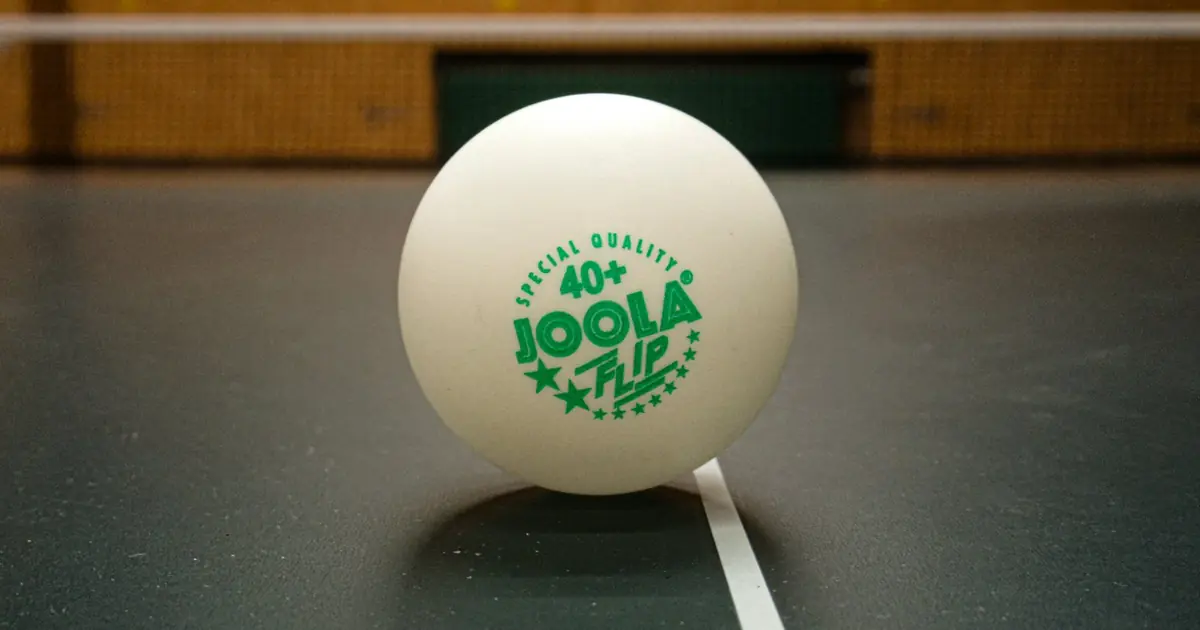
| Plastic / ABS (modern) | Marked "40+" | Hit or miss; light dents may pop, creased dents usually stay |
| Any cracked ball | Visible line, buzzing or dull sound on the bounce | Does not work; replace |
Modern plastic balls are tougher, so they dent less often in the first place. When one does dent, it tends to be a sharper fold, which is harder to reverse. ABS also has limits with heat: its heat deflection temperature is listed at about 81 °C (178 °F), below the boiling point of water, so a long soak in near-boiling water can soften and warp the shell. Short, watched dips are the safer approach. For more on how today's balls are built and measured, see our guide to ping pong ball size.
Safety: Keep It Simple and Supervised
This is a popular fix to do with kids, which is exactly why safety matters. The City of San Diego Fire-Rescue Department warns that 140 °F (60 °C) liquid can injure a young child's skin in about five seconds, and 160 °F (71 °C) liquid in about one second. Kettle water is much hotter than that.
- An adult handles the kettle and pours the water.
- Never boil water directly with children doing the work, and keep the mug away from table edges.
- Use a spoon, never fingers, to hold the ball under.
- No lighters, matches or open flames. Celluloid is flammable, and ABS can also burn at high temperatures.
- Let the ball cool before anyone picks it up.
A hair dryer is a gentler alternative for small dents. It heats the air inside the same way, just less evenly, so keep the ball moving and expect it to take longer.
When a Ping Pong Ball Must Be Replaced
Some balls are not worth saving. Replace the ball if:
- You can see a crack or split, even a fine one.
- The bounce sounds dull, buzzy or "dead" compared with a good ball.
- The ball wobbles or kicks sideways off the table after repair.
- The dent has a sharp crease that does not move after a minute in hot water.
- The shell feels soft or looks warped after heating.
Repaired balls are fine for casual rallies and ping pong games, but for practice and matches a fresh ball gives a truer bounce. Balls are cheap enough that a bulk pack is the easiest long-term answer, especially in busy settings like office ping pong. Our best table tennis balls guide compares match and training options.
JOOLA Training 40+ (12, 60 or 120 Pack)
Best for: Replacing dented or cracked balls for practice and casual games
JOOLA sells the Training 40+ as a seamed ABS ball for drills, coaching and practice. When a ball will not pop back into shape, a bulk pack like this is the simplest fix.
| Use | Training |
|---|---|
| Material | ABS plastic |
| Construction | Seamed |
| Size | 40+ |
| Pack | 12, 60 or 120 balls |
Pros
- Regulation-size 40+ ball
- Bulk packs mean a dented ball is no longer a problem
- Seamed ABS, the same basic build as match balls
Cons
- A training ball, not a tournament ball
- Bulk boxes take up storage space
How to Store Ping Pong Balls to Prevent Dents
Most dents happen off the table: a ball stepped on, crushed in a bag or left somewhere hot. A few habits prevent most of them:
- Keep balls in a box or tube. The original packaging or a hard case stops them from being squashed.
- Do not pack them loose with paddles. A heavy blade in a bag can crush a ball. A ping pong paddle case with a ball compartment helps.
- Avoid heat. Keep balls out of hot cars, sunny windowsills and spots near heaters, since plastic softens with heat.
- Pick up stray balls. Most crushed balls are stepped on. A ball net or collector keeps the floor clear during practice.
Once your ball is round again, put it to use. Our guides on how to play table tennis and the official ping pong rules are a good next stop.
Frequently Asked Questions
Can You Fix a Dented Ping Pong Ball With Boiling Water?
Very hot water from a kettle is the usual method, and it often works on light dents. Pour it into a mug rather than dropping the ball into a pot on the stove, hold the ball under with a spoon, and take it out as soon as the dent pops.
Why Won't My Dented Ping Pong Ball Pop Back Out?
The dent may be a sharp crease, the shell may be cracked so the expanding air escapes, or the ball may be a modern plastic 40+ ball that does not reshape as easily. In those cases the ball is best replaced.
Can You Fix a Cracked Ping Pong Ball?
Not in any useful way. Heat cannot seal a crack, and tape or glue changes the weight and bounce. A cracked ball should be replaced.
Does a Hair Dryer Fix a Dented Ping Pong Ball?
It can work on small dents, because it also heats the air inside the ball. It heats less evenly than water, so keep the ball moving and never use a flame or lighter instead.
Does a Repaired Ping Pong Ball Play the Same?
Often close, but not always. A ball that has been dented may be slightly out of round or have a weak spot, so test the bounce and keep repaired balls for casual play rather than matches.