13 Fun Ping Pong Games to Play With Friends, Family and Kids (2026)
 By Harshwardhan · Updated
In This Article
- The Best Ping Pong Games to Play at Home
- Ping Pong Games at a Glance
- Group Games for 3 or More Players
- Classic Scoring Games
- Skill Challenge Games for Two Players
- Target and Cup Games
- Doubles Variations
- Kid-Friendly and Paddle-Free Games
- Ping Pong Party and Drinking Games for Adults
- Which Ping Pong Game Should You Play?
- Frequently Asked Questions
The Best Ping Pong Games to Play at Home
The best ping pong games to play beyond a standard match are Around the World for big groups, King of the Table for a steady stream of challengers, old-school 21-point games, half-table and one-bounce challenges for control, and target games for kids and solo practice. All of them use a normal table, paddles and balls, and most need nothing else.
None of these variations has a single official rulebook, so treat the rules below as simple house rules. Agree on them before you start, and change them to suit your group. If you need a refresher on the standard game first, see how to play table tennis and our full guide to ping pong rules.
Quick Facts
- Players covered: From 1 (solo games) to 20+ (Around the World)
- Equipment: A table, a paddle per player and a few balls; cups or small household objects for target games
- Best for big groups: Around the World and King of the Table
- Best for skill building: Half-table, one-bounce and target practice
- Best for young kids: Target games and paddle-free games
Ping Pong Games at a Glance
| Game | Players | Best For |
|---|---|---|
| Around the World | 3 to 20+ | Parties, families, clubs |
| King of the Table | 3+ | Offices, game rooms, mixed skill |
| 21-Point Classic | 2 or 4 | Longer, old-school matches |
| Half-Table | 2 | Accuracy and control |
| Target Practice | 1+ | Kids, solo practice |
| Cups Challenge | 1+ | Aim and serve practice |
| One-Bounce | 2 | Spin and placement |
| Two-Ball Rally | 2 | Reflexes and laughs |
| Wrong-Hand or Swap-Paddle | 2+ | Leveling mismatched players |
| Doubles Variations | 4 | Teamwork |
| Five Lives | 2+ or teams | Quick knockout fun |
| Paddle-Free Games | 2+ | Young children |
| Solo Playback | 1 | Practice on your own |
Group Games for 3 or More Players
1. Around the World (Round the Table)
Players: 3 to 20+. Equipment: One ball; one paddle per player, or shared paddles.
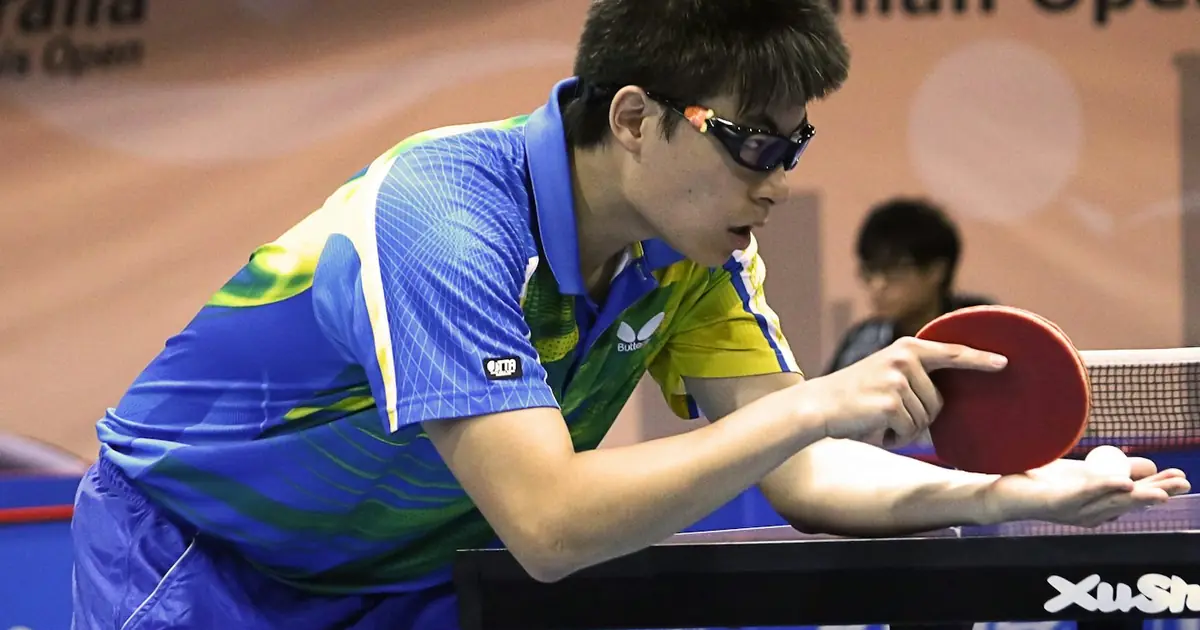
Around the World, also called Round the Table or Round Robin, is the classic party version of ping pong. Wikipedia describes it as an informal party-type variation in which players line up on either side of the table and are eliminated when they lose a point.
- Line up. Split players into two queues, one at each end. If the queues are uneven, the longer one serves first.
- Hit and run. Each player hits the ball once, then runs around the table and joins the back of the opposite queue.
- Lose a life. Miss the ball, hit it out or hit into the net and you lose a life. Give everyone 1 to 3 lives depending on group size.
- Final two. When only two players remain, they play head to head. Common endings are a single deciding point or a short game to 3 or 5.
If you only have a couple of paddles, use the shared-paddle version: after you hit, put the paddle down on the table for the next player in line to pick up.
Cooperative Version
For younger or newer players, drop the eliminations. Everyone rotates in the same way, but the group counts consecutive hits and tries to beat its own record.
2. King of the Table (Winner Stays On)
Players: 3 or more. Equipment: Standard.
King of the Table, also known as King of the Hill or Beat the Champ, keeps a table busy when more people want to play than there are spots. It is a natural fit for office ping pong breaks.
- One end of the table is the "king's" side. Challengers queue at the other end.
- Play a single point, a best-of-3 points or a short game to 5 or 11, depending on how many people are waiting.
- The winner takes or keeps the king's side. The loser goes to the back of the queue.
- Optional: the challenger always serves, which gives newcomers a small edge.
3. Five Lives
Players: Singles, doubles or teams taking turns. Equipment: Standard.
Instead of counting points up, each side starts with 5 lives and loses one for every point it drops. When a side runs out, the winner keeps whatever lives it has left and faces the next challenger, who starts fresh with 5. It is a quick way to blend King of the Table with a built-in handicap for the reigning champion.
Classic Scoring Games
4. 21-Point Classic
Players: 2 (singles) or 4 (doubles).
Before September 2001, official games were played to 21 points. The ITTF then switched to 11-point games and cut the service rotation from five points to two. Many basement and garage players still prefer the longer format because one bad run of points does not decide a game.
| Rule | 21-Point Classic | Modern 11-Point |
|---|---|---|
| Points to win a game | 21 | 11 |
| Serve changes | Every 5 points | Every 2 points |
| Winning margin | 2 points | 2 points |
| At deuce | Common house rule: alternate serves | Alternate every point from 10-10 |
For more on how points and games are counted today, see table tennis scoring. Fun fact: the 40mm ball used today replaced the older 38mm ball in October 2000, less than a year before the scoring change. Our history of table tennis covers more of those rule changes.
Skill Challenge Games for Two Players
5. Half-Table
Players: 2.
Play a normal game, but only one half of the table counts, split along the center line. Any ball that lands on the other half is out. The smaller target forces slower, more controlled shots and rewards accuracy over power. Choose the forehand or backhand half to drill a specific stroke, or swap halves each game.
6. One-Bounce (Both Sides)
Players: 2.
Every shot during the rally must bounce on your own side first and then on your opponent's side, just like a serve. Fast hitting becomes almost impossible, so points are won with spin, placement and patience. It is also a sneaky way to practice serve contact; our guide to how to serve in ping pong explains the technique.
7. Two-Ball Rally
Players: 2 (plus an optional counter).
Both players hold a ball. On a count of three, both serve at the same time and try to keep both balls in play. Once one ball is lost, the remaining ball is played out as a normal point. Keep the shots gentle and upward, or the balls disappear fast.
8. Wrong-Hand, Swap-Paddle and Grip-Switch Games
Players: 2+.
These are handicap games that level the field when one player is much stronger:
- Wrong hand: The stronger player, or both players, use the non-dominant hand.
- Swap paddles: Trade paddles, or give the stronger player a basic or sandpaper paddle.
- Grip switch: A shakehand player tries penhold, or the reverse. See our guide to table tennis grips for how each one works.
- Forehands only: Hold a paddle in each hand and hit only forehands; any backhand loses the point.
Target and Cup Games
9. Target Practice
Players: 1 or more.
Place a few light household objects on one side of the table, such as an empty bottle, a toy or a small box. One player feeds balls from the other side, or simply serves, and each target knocked over scores points. Give small targets more points than big ones. A timed version works well for groups: who can clear every target fastest?
10. Cups Challenge
Players: 1 or more.
Set out a few plastic cups or paper cups on the far side. Players take turns serving or rallying and score when the ball lands in or knocks over a cup. Put the cups near the corners and the end line to reward deep, well-placed shots. It is a dry, kid-safe cousin of party games that use the same cups.
Doubles Variations
11. Fun Twists on Doubles
Players: 4.
Standard doubles already asks partners to alternate shots and serve diagonally; our table tennis doubles rules guide covers the official version. For casual play, try these twists:
- Free-hit doubles: Either partner may hit any ball. Faster, more chaotic and easier for beginners.
- Two vs one: A strong player alone against a pair, with the pair allowed to hit in any order.
- Mixed-skill pairs: Pair the strongest player with the newest one, then rotate partners every game.
- Doubles Around the World: Pairs queue instead of individuals and run around the table together.
Kid-Friendly and Paddle-Free Games
12. Paddle-Free Games
Players: 2+.
Young children can enjoy the table before they can control a paddle:
- Blow pong: Kneel at each end and blow the ball across the table; score when it drops off the far end.
- Hand ping pong: Hit the ball with an open palm instead of a paddle.
- Roll and catch: Roll the ball under the net and catch it before it falls off. Add a second ball once it gets easy.
Making Games Easier for Kids
- Count rallies instead of points, so kids play with each other, not against each other.
- Allow two bounces on their own side.
- Use a smaller table if you have one; see our guide to table tennis for kids.
13. Solo Playback
Players: 1.
Many folding tables let you raise one half to a vertical playback position. Hit the ball against the raised half and keep the rally going, or challenge yourself to hit a set number in a row. Cornilleau describes this "solitaire" setup as a way to practice alone at your own pace. More drills are in our ping pong practice guide.
Ping Pong Party and Drinking Games for Adults
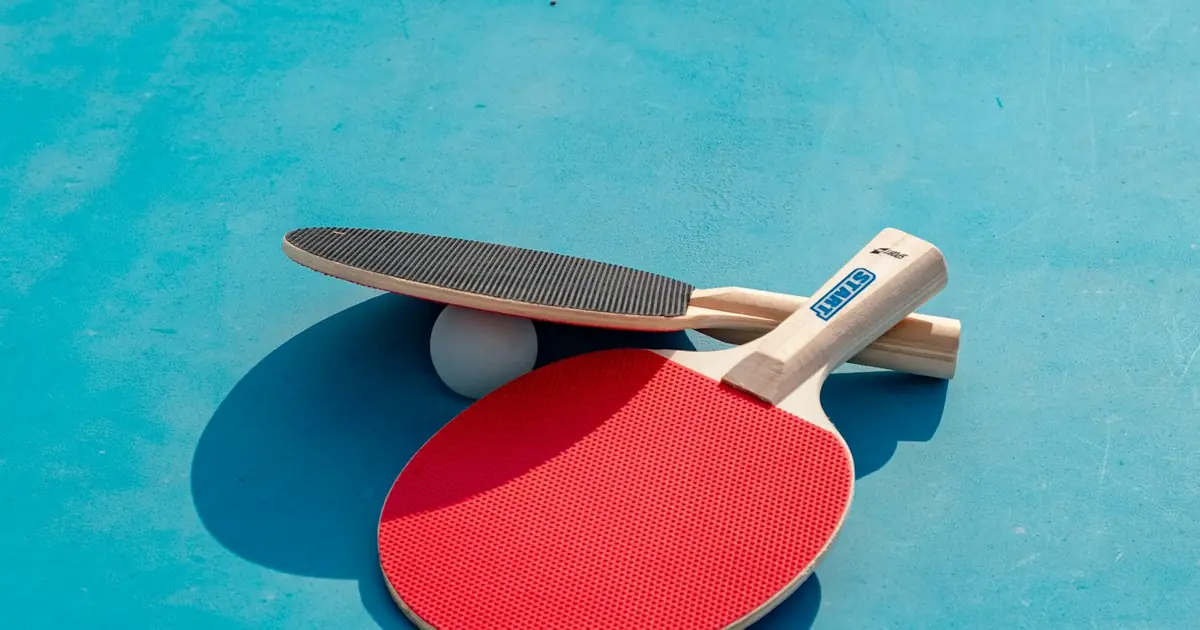
The ping pong table is also a staple of adult party games, and the best known has table tennis roots. According to Wikipedia, beer pong is generally believed to have started at Dartmouth College fraternities in the 1950s and 1960s, and the first version looked like an actual ping pong game, with paddles, a net and cups of beer on each side. The paddle-free throwing game, sometimes called Beirut, came later.
- Paddle beer pong: Rally as usual with a cup or two on each side. Agree on house rules for a ball that lands in or hits a cup.
- Throwing beer pong: The modern version, with triangles of cups and no paddles. We cover the full setup and house rules in our beer pong rules guide.
- Cups Around the World: Add a cup at each end of an Around the World game; landing a ball in it knocks out the next player in line.
Which Ping Pong Game Should You Play?
| Situation | Try This |
|---|---|
| Big party or family gathering | Around the World, then King of the Table |
| One strong player, one beginner | Wrong-hand, swap-paddle or Five Lives |
| Two players wanting to improve | Half-table and one-bounce |
| Young kids | Target practice, cups and paddle-free games |
| Nobody else around | Solo playback or serving at targets |
| Adults at a party | Paddle beer pong or Cups Around the World |
If these games spark a bigger interest, see how the pros do it in our rundown of the best ping pong players, or read about the benefits of table tennis. And if you would rather play on a screen, we have a separate guide to ping pong video games.
Frequently Asked Questions
What Is the Most Popular Ping Pong Game for Groups?
Around the World (also called Round the Table or Round Robin) is the classic group game. Players line up at both ends, hit once and run to the other side, and anyone who misses loses a life or is knocked out until one winner is left.
How Many People Can Play Around the World Ping Pong?
It works with as few as 3 players, but it is most fun with 6 or more. Large groups of 20 or more can play too, though it helps to give everyone extra lives so nobody waits too long after being knocked out.
Can You Play Ping Pong by Yourself?
Yes. On most folding tables you can raise one half to a vertical playback position and rally against it, or set up targets on the far side and practice serving at them. A return board or a robot does the same job if your table does not fold.
What Is the Difference Between 11-Point and 21-Point Ping Pong?
Official games were played to 21 with the serve changing every 5 points until the ITTF switched to 11-point games with serves every 2 points in 2001. Both versions require a 2-point winning margin, and many casual players still enjoy the longer 21-point format.
What Are Good Ping Pong Games for Kids?
Target practice, half-table rallies, one-bounce cooperative rallies and paddle-free blow or roll games suit young children. Keep scoring simple, lower the net or play on a smaller table if needed, and reward long rallies rather than only winners.
Is Beer Pong Played on a Ping Pong Table?
It can be. According to Wikipedia, the earliest beer pong was played with paddles and a net on a ping pong table, while the paddle-free throwing version (sometimes called Beirut) came later and is often played on longer dedicated tables.