Zhang Jike: How China's Showman Won the Grand Slam in 445 Days (2026)
In This Article
- Who Is Zhang Jike?
- Early Life: Named After a Football Star
- The Fastest Grand Slam Ever
- Olympic and World Titles
- Famous Moments: Barriers, Boards and a Fair Play Award
- Playing Style: Backhand Power and Modern Serves
- Butterfly Zhang Jike Blades: ALC vs ZLC vs Super ZLC
- Retirement and Life After Competing
- Legacy
- Frequently Asked Questions
Who Is Zhang Jike?
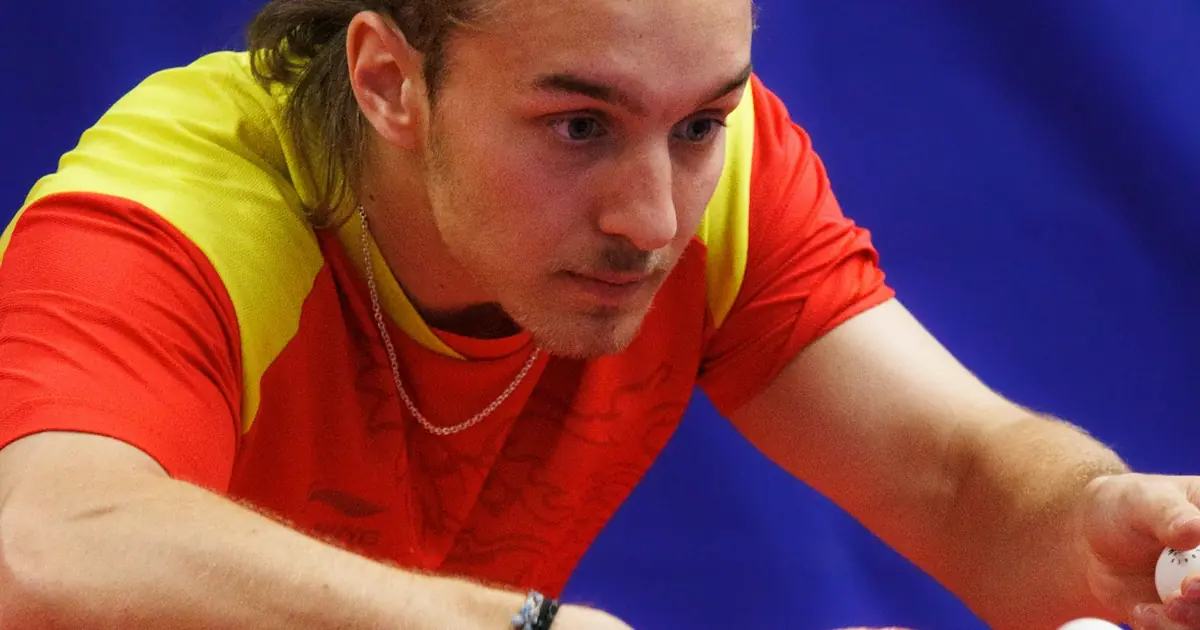
Zhang was one of the most explosive players of his generation, a two-winged attacker with a dangerous backhand and a big personality. His celebrations made headlines as often as his results, and he sits alongside teammates like Ma Long in any serious list of the best ping pong players of the modern era.
Quick Facts
- Born: 16 February 1988, Qingdao, Shandong, China
- Height: 1.81 m
- Style: Right-handed shakehand, two-winged attacker
- Olympic gold medals: 3 (singles and team 2012, team 2016)
- World Championship golds: 7 (2 singles, 1 doubles, 4 team)
- World Cup singles titles: 2 (2011, 2014)
- Grand Slam: Fourth man to complete it, in a record 445 days
- World No. 1: June to December 2012
Early Life: Named After a Football Star
Zhang grew up in a table tennis family. His father, Zhang Chuanming, is a table tennis coach, and Zhang started playing at the age of four, in March 1992. One fun detail: he was named after the Brazilian football great Zico, which is where the "Jike" in his name comes from.
He came through the Chinese system during one of its deepest eras, competing for places with Wang Hao, Ma Long and Xu Xin. By 2009 he was winning world medals, taking silver in mixed doubles and bronze in men's doubles at the World Championships in Yokohama.
The Fastest Grand Slam Ever
The career Grand Slam in table tennis means winning the three biggest singles titles: the World Championships, the World Cup and the Olympic Games. Zhang won all three back to back, according to the ITTF:
- 2011 World Championships, Rotterdam. His first world singles title.
- 2011 World Cup, Paris. The second leg, later the same year.
- 2012 Olympic Games, London. He beat Wang Hao 4-1 in the final on 2 August 2012 to finish the set.
The whole run took 445 days, the fastest Grand Slam on record. He was only the fourth man to complete it, after Jan-Ove Waldner (1992), Liu Guoliang (1999) and Kong Linghui (2000). Ma Long and Fan Zhendong have joined the club since, but none matched Zhang's pace. Read how the first one happened in our Jan-Ove Waldner profile.
Olympic and World Titles
Zhang won his biggest titles between 2010 and 2016, the peak of a dominant Chinese team. For context on the Olympic event itself, see our guide to table tennis at the Olympics.
| Competition | Event | Result and Year |
|---|---|---|
| Olympic Games | Men's singles | Gold 2012 (London), silver 2016 (Rio) |
| Olympic Games | Men's team | Gold 2012, 2016 |
| World Championships | Men's singles | Gold 2011 (Rotterdam), 2013 (Paris); bronze 2015 |
| World Championships | Men's doubles | Gold 2015 (Suzhou, with Xu Xin); bronze 2009, 2011 |
| World Championships | Men's team | Gold 2010, 2012, 2014, 2016 |
| World Championships | Mixed doubles | Silver 2009 |
| World Cup | Men's singles | Gold 2011 (Paris), 2014 (Düsseldorf); silver 2010 |
| Team World Cup | Men's team | Gold 2009, 2010, 2013, 2015 |
| Asian Games | Doubles and team | Gold in both, 2010 and 2014 |
At Rio 2016 he reached a second straight Olympic singles final but lost 4-0 to Ma Long, who used that win to complete his own Grand Slam. Zhang still left Rio with team gold.
Famous Moments: Barriers, Boards and a Fair Play Award
Zhang's emotional celebrations are a big part of his legend, and two of them stand out.
Jumping the Barriers in Paris (2013)
After retaining his world singles title in Paris in 2013, he jumped over the court barriers to run to his parents in the stands.
The 2014 World Cup Celebration in Düsseldorf
The most talked-about moment came in October 2014. After beating Ma Long 4-3 in the World Cup final in Düsseldorf, Zhang kicked two of the sponsorship surrounds, which count as part of the playing equipment, during his celebration. According to the ETTU:
- The jury could have disqualified him, but that would have stripped his title and ranking points.
- Instead he lost his $45,000 prize money.
- The ITTF Executive Committee proposed using that money to fund an annual Fair Play award for good conduct on and off the table.
ITTF President Thomas Weikert said the ITTF encourages players to show strong emotions, but called the reaction destructive and said keeping the title was right given his "brilliant performance." Few players have ever accidentally funded a sportsmanship prize.
Playing Style: Backhand Power and Modern Serves
Zhang played with a right-handed shakehand grip as an aggressive two-winged attacker, built on heavy topspin loops, drives and fast counters from both sides. What made him influential was the backhand.
- Chiquita backhand flick: The ITTF notes his banana-shaped backhand flick over the table is widely copied in training halls. Attacking short serves this way became a standard tool for elite players.
- Reverse serve: The ITTF also highlights his reverse serve as part of his legacy. Our guide on how to serve in ping pong covers the fundamentals behind spin variation.
- Big-match temperament: He won his biggest titles in finals against elite teammates, including Wang Hao at London 2012 and Ma Long at the 2014 World Cup.
Butterfly Zhang Jike Blades: ALC vs ZLC vs Super ZLC
Butterfly released several signature blades under his name, and players still search for how they compare. All three are offensive shakehand blades with a 5-ply wood core plus two fiber layers and a 157 x 150 mm head. The difference is the fiber. The figures below come from Butterfly's specification sheet (higher reaction means more ball speed; higher vibration means a harder feel).
| Blade | Fiber | Thickness | Weight | Reaction | Vibration |
|---|---|---|---|---|---|
| Zhang Jike ALC | Arylate-Carbon | 5.8 mm | 90 g | 11.8 | 10.3 |
| Zhang Jike ZLC | ZL Carbon | 5.5 mm | 89 g | 11.7 | 10.8 |
| Zhang Jike Super ZLC | Super ZL Carbon | 5.6 mm | 90 g | 12.3 | 11.1 |
| Timo Boll ALC (reference) | Arylate-Carbon | 5.8 mm | 88 g | 11.8 | 10.3 |
| Viscaria (reference) | Arylate-Carbon | 5.8 mm | 87 g | 11.8 | 10.3 |
What the Numbers Mean
- ALC vs ZLC: Almost identical speed on paper. The ZLC is thinner and rated slightly harder in feel, while the ALC shares its figures with the Viscaria and Timo Boll ALC.
- Super ZLC: The fastest and hardest-feeling of the three, aimed at strong attackers.
- Timo Boll ALC vs Zhang Jike ALC: Same listed construction, thickness, reaction and vibration. The main listed difference is weight (88 g vs 90 g) and the signature handle and cosmetics. See our Timo Boll ALC review and Butterfly Viscaria review.
Signature blades and match setups are not always the same. Wikipedia lists his playing equipment as a Butterfly Viscaria FL blade with DHS Hurricane 3 National on the forehand and Butterfly Tenergy 80 on the backhand. Donic now lists him among its sponsored players.
Retirement and Life After Competing
Zhang's career wound down gradually rather than with one farewell match. After Rio 2016 he openly discussed retirement in ITTF interviews, then changed his mind, and he declined to play the 2016 Chinese Super League. Long absences followed: his world ranking fell to 176 in 2017 before climbing back to 71 in 2018.
He has not returned to the top international level since, and today he is widely described as retired. He remains a well-known public figure in China, and his life since competing has attracted heavy media attention there. For the current generation of Chinese stars, see our profiles of Ma Long and Fan Zhendong.
Legacy
Zhang Jike's place in history rests on one record that may never be beaten: a Grand Slam completed in 445 days. Add three Olympic golds, two world singles titles and a backhand that changed how elite players receive serve, and he ranks among the defining players of the 2010s. His celebrations, from barrier jumps to a $45,000 kick, also made him one of the most memorable characters the sport has produced.
Frequently Asked Questions
How Fast Did Zhang Jike Win the Grand Slam?
He completed it in 445 days, which the ITTF describes as record time. He won the 2011 World Championships in Rotterdam, the 2011 World Cup in Paris and the London 2012 Olympic singles title in a row.
How Many Olympic Gold Medals Does Zhang Jike Have?
Three: men's singles and men's team at London 2012, and men's team at Rio 2016. He also won singles silver in Rio, losing the final 4-0 to Ma Long.
Why Did Zhang Jike Lose His 2014 World Cup Prize Money?
After beating Ma Long 4-3 in the Düsseldorf final, he kicked two of the sponsorship surrounds around the court while celebrating. He kept the title but lost his $45,000 prize money, which the ITTF Executive Committee proposed to use for a Fair Play award.
Is Zhang Jike Retired?
He is widely described as retired. He has not competed at the top international level since the late 2010s, after long absences and a world ranking that fell to 176 in 2017.
What Is the Difference Between the Zhang Jike ALC and ZLC?
Both are Butterfly 5-ply wood blades with two fiber layers. The ALC uses Arylate-Carbon and is listed at 5.8 mm with a reaction rating of 11.8, while the ZLC uses ZL Carbon, is 5.5 mm thick and rates 11.7 for reaction with a slightly harder vibration figure.
Is the Zhang Jike Super ZLC the Same as the Viscaria?
No. The Viscaria uses Arylate-Carbon, like the Zhang Jike ALC, while the Super ZLC uses Super ZL Carbon. Butterfly's specification sheet gives the Super ZLC a higher reaction rating (12.3 vs 11.8) and a harder vibration figure (11.1 vs 10.3).
Sources and References
- Zhang Jike - Wikipedia
- Five Years Since Grand Slam, Fans Call It Zhang Jike Day - ITTF
- ZHANG Jike's Prize Money Goes to Fair Play Award - ETTU
- Zhang Jike Changing Heart on Retirement - ITTF
- Butterfly Blade Specifications - Megaspin
- Zhang Jike ALC [Discontinued] - Table Tennis Reference
- Zhang Jike Super ZLC [Discontinued] - Table Tennis Reference
- Zhang Jike - DONIC Champions