Xu Xin: The Cloudwalker Who Kept Penhold at the Top (2026)
 By Harshwardhan · Updated
In This Article
Who Is Xu Xin?
Xu Xin is a left-handed Chinese penhold player and former world No. 1. He won Olympic team gold in 2016 and 2020, the 2013 World Cup singles title and ten World Championship titles in doubles, mixed doubles and team events, which makes him one of the most decorated players of the Ma Long era.
Born on January 8, 1990, in Xuzhou, Jiangsu province, Xu stood out for three things: a long-armed forehand loop, footwork so light that fans called him "The Cloudwalker," and a flair for spectacular shots that earned him the nickname "The Showman." He was also one of the last penholders to reach the very top of the men's game. As of November 2026 he no longer plays for China at major international events, but he is still competing at home, and in July 2026 he won China's national men's doubles title with Ma Long.
Quick Facts
- Born: January 8, 1990, Xuzhou, Jiangsu, China
- Height: 1.83 m (6 ft 0 in)
- Plays: Left-handed, Chinese penhold grip with a reverse penhold backhand
- Nicknames: "The Cloudwalker," "The Showman," "XUperman"
- Highest ranking: World No. 1 (first reached January 2013)
- Olympic medals: 2 golds (team 2016, 2020), 1 silver (mixed doubles 2020)
- World Championship titles: 10 (3 men's doubles, 2 mixed doubles, 5 team)
- World Cup singles title: 1 (2013)
- Reported blade: STIGA Dynasty Carbon
- Domestic team (2026): Shanghai
Early Career: From Xuzhou to the Chinese Team
Xu attended a sports school in Jiangsu as a child; a well-known piece of trivia is that he sat next to future badminton world champion Wang Shixian in class. He later represented Shanghai, the team he has stayed linked with throughout his career.
His senior breakthrough came quickly. He won doubles silver at the 2009 World Championships in Yokohama, took team gold at the 2009 World Cup and became a fixture in China's World Championship teams from 2010. By the end of 2012 he had won the ITTF World Tour Grand Finals in Hangzhou, and in January 2013 he became world No. 1 for the first time, at 23.
Xu Xin's Titles and Medals

Xu's trophy list is long, and most of it was won in doubles and team play. The table counts gold medals at major senior events; silvers and bronzes are noted where they matter.
| Competition | Gold Medals | Years (Partners) |
|---|---|---|
| Olympic Games (team) | 2 | 2016 Rio, 2020 Tokyo |
| Olympic Games (mixed doubles) | 0 | Silver 2020 (with Liu Shiwen) |
| World Championships (men's doubles) | 3 | 2011 (Ma Long), 2015 (Zhang Jike), 2017 (Fan Zhendong) |
| World Championships (mixed doubles) | 2 | 2015 (Yang Ha-eun), 2019 (Liu Shiwen) |
| World Team Championships | 5 | 2010, 2012, 2014, 2016, 2018 |
| World Championships (singles) | 0 | Bronze 2013, 2017 |
| World Cup (singles) | 1 | 2013 Verviers (silver 2016) |
| World Cup (team) | 6 | 2009, 2010, 2011, 2013, 2015, 2018 |
| ITTF World Tour Grand Finals (singles) | 2 | 2012 Hangzhou, 2013 Dubai |
| Asian Games | 4 | Singles 2014; team 2010, 2014; mixed doubles 2010 |
| Asian Championships | 3 | Doubles 2009, 2011; team 2009 |
On the ITTF World Tour, Wikipedia credits him with 51 titles: 18 in singles, 28 in doubles and 6 in mixed doubles. Those numbers explain why the ITTF described him in 2019 as China's go-to doubles specialist. For context on how these events fit together, see our guides to the table tennis World Championships and table tennis at the Olympics.
Biggest Moments of His Career
Back-to-Back Grand Finals and the 2013 World Cup
Xu won the 2012 Grand Finals in Hangzhou, then defended the title at the 2013 edition in Dubai (played in January 2014), beating Ma Long in the final. In between he won the 2013 World Cup singles title in Verviers, Belgium. He never won a world singles title, but this run showed he could beat anyone in the world on his day.
Olympic Gold in Rio and Tokyo
Xu waited years for his Olympic chance because China's singles places went to Ma Long and Zhang Jike. In Rio 2016 he joined them in the men's team event and won gold. In Tokyo 2020 he added a second team gold.
Tokyo also gave him the most painful loss of his career. In the first-ever Olympic mixed doubles final, Xu and Liu Shiwen led Japan's Jun Mizutani and Mima Ito 2-0 in games but lost 4-3 on Japan's home soil.
The 2019 Season: Back to No. 1
2019 may have been his best year. At the Japan Open he won the singles, men's doubles with Fan Zhendong and mixed doubles with Zhu Yuling, a rare triple crown on the World Tour. That win took him back to world No. 1. He also won the Korea Open singles by beating Ma Long, after losing his previous six meetings with him, and became the first man to defend the Australian Open title. He finished the year ranked No. 1.
The same year had a surprise, too. At the 2019 World Championships in Budapest, France's Simon Gauzy beat him 4-2 in the singles quarterfinals, but he still left with the mixed doubles gold alongside Liu Shiwen.
Playing Style: Left-Handed Penhold Power
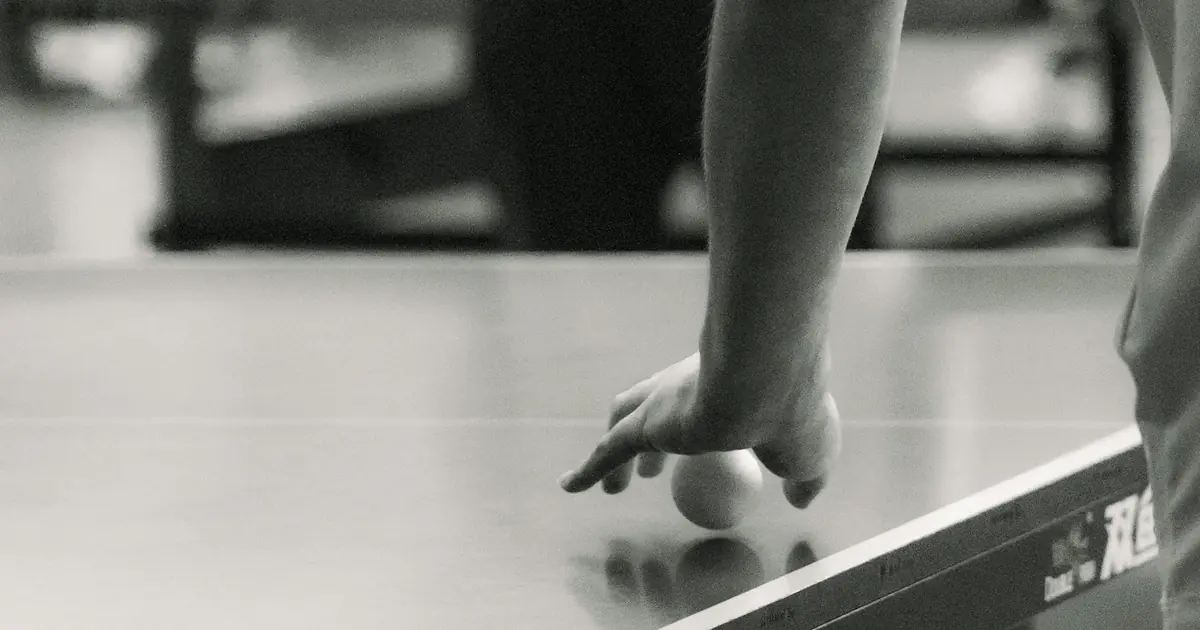
Xu is one of the last great modern Chinese penholders. He holds the racket like a pen, with rubber on both sides, and uses the reverse face for backhand attacks. You can learn more about the grip in our guide to penhold table tennis players. His main traits:
- Long forehand loop: his long arms let him reach wide balls and hit a fully extended forehand loop.
- Footwork: the "Cloudwalker" nickname comes from how lightly and quickly he covered the court, often using the forehand from the backhand corner.
- Reverse penhold backhand: he mixed the traditional penhold backhand with reverse-side attacks, the technique that kept penhold competitive against shakehand players.
- Showmanship: his spectacular highlight-reel rallies earned him the "Showman" tag. Commentator Adam Bobrow helped popularize "XUperman."
- Doubles intelligence: as a lefty, he fit naturally with right-handed partners, a left-right pairing that coaches often prefer because the players get in each other's way less.
That last point matters. In 2016 the ITTF noted that only two penholders were left in the men's top 20, and Xu was one of them. Without the reverse backhand, the grip might already have vanished from the top of the game.
Xu Xin Equipment: Reported Blade and Rubbers
Players at Xu's level do not publish full equipment specs, so the setup below reflects what reliable sources report rather than an official statement.
| Part | Reported Equipment | Notes |
|---|---|---|
| Blade | STIGA Dynasty Carbon (penhold) | STIGA says it was developed with Xu Xin and that he uses it |
| Forehand rubber | Skyline TG2 Blue, black | Reported by Wikipedia |
| Backhand rubber | DHS NEO Hurricane 3, custom sponge, red | Used on the reverse side for RPB attacks |
The STIGA Dynasty Carbon
According to STIGA, the Dynasty Carbon is a "very offensive" 5+2-ply blade with TeXtreme+ carbon, which the company says enlarges the sweet spot and improves stability. It weighs around 90 g (±5 g), is handmade in Sweden and comes in classic, concave (Master) and penhold handles.
Should you copy it? For most players, not at first. A fast carbon blade with tacky Chinese rubbers rewards long, powerful strokes and punishes short, loose ones. Our DHS Hurricane 3 review explains what makes the Chinese-style tacky rubber so different and who it suits.
Where Is Xu Xin Now? (As of November 2026)
Xu has not been part of China's squads at the biggest recent international events. He was not on the Paris 2024 Olympic team, and Wikipedia lists his world ranking at 103 as of May 2023, after he had largely stepped back from the international tour. He returned to domestic competition in October 2024 after more than a year away, helping Shanghai win the team title at the 2024 National Championships.
He kept playing after that. He played for Shanghai in China's Table Tennis Super League in 2025, and at the 2026 National Championships in Changsha he teamed up with Ma Long again. Xinhua reported that the pair beat Huang Youzheng and Xiang Peng 3-0 in the men's doubles final on July 19, 2026, giving them their third national doubles title together after 2015 and 2020.
No formal retirement announcement was found in 2025 and 2026 reports, so it is fair to say he is still an active domestic player rather than a retired one. Wikipedia also lists him as a vice chairman of the Asian Table Tennis Federation. His current world ranking is not near the top, because he no longer plays the international tour; see our explainer on World Table Tennis for how today's ranking events work.
Fun Facts About Xu Xin
- He is married to Yao Yan, a fellow table tennis player he met on the Shanghai team; they married in 2016.
- In 2018 at the Swedish Open he won the doubles with Fan Zhendong, then beat Fan 4-1 in the singles final about an hour later.
- His "Ma Long/Xu Xin" partnership spans more than 15 years, from the 2011 world doubles title to the 2026 national doubles title.
- At the 2016 Korea Open he beat Ma Long 4-3 in the final to win the event for the third time.
Xu's career is one reason why China is so good at table tennis: even a world No. 1 with a World Cup title spent years as a doubles and team specialist behind Ma Long and Zhang Jike. To see how he compares with the all-time greats, read our list of the best ping pong players.
Frequently Asked Questions
Is Xu Xin Left-Handed?
Yes. Xu Xin is a left-handed penhold player. Combined with his long reach, that made his wide forehand angles and doubles pairings with right-handers especially dangerous.
What Is Xu Xin's Highest World Ranking?
World No. 1. He first reached the top spot in January 2013 after winning the 2012 ITTF World Tour Grand Finals, returned to No. 1 after the 2019 Japan Open and finished 2019 ranked first.
Has Xu Xin Won an Olympic Gold Medal?
Yes, two, both in the men's team event: Rio 2016 and Tokyo 2020. He also won silver in mixed doubles with Liu Shiwen at Tokyo 2020.
Has Xu Xin Ever Won the World Championships Singles?
No. His best singles results at the World Championships were bronze medals in 2013 and 2017. All ten of his world titles came in doubles, mixed doubles and team events.
What Blade Does Xu Xin Use?
He is reported to use the STIGA Dynasty Carbon, a very offensive 5+2-ply blade that STIGA says was developed together with him. His reported rubbers are Skyline TG2 Blue on the forehand and a DHS NEO Hurricane 3 with a custom sponge on the backhand.
Is Xu Xin Retired?
No formal retirement was found in 2025 and 2026 reports. He no longer plays for China at major international events, but he still competes at home for Shanghai and won the 2026 national men's doubles title with Ma Long in July 2026.
Sources and References
- Xu Xin (table tennis) – Wikipedia
- Xu Xin – Tokyo 2020 athlete profile – Olympics.com
- Xu Xin, China's go-to doubles specialist – ITTF
- Xu Xin realising Olympic dream in Rio – ITTF
- 2015 World Table Tennis Championships – Wikipedia
- 2011 World Table Tennis Championships – Men's doubles – Wikipedia
- Rio 2016: penhold grip a dying art? – ITTF
- STIGA Dynasty Carbon – STIGA Sports