Why Is China So Good at Table Tennis? The Secrets of a Dynasty (2026)
 By Harshwardhan · Updated
In This Article
- Why Is China So Good at Table Tennis?
- 1. A Sport Chosen From the Top
- 2. Early Heroes: Rong Guotuan and the 1961 Worlds
- 3. A Huge Player Base and a Sports-School Pipeline
- 4. Depth: The Hardest Team in the World to Make
- 5. Coaching, Sparring Partners and Science
- 6. Innovation in Technique and Equipment
- 7. National Pride and Investment
- China's Olympic Table Tennis Record
- Who Has Beaten China?
- Is China's Dominance Fading?
- The Bottom Line
- Frequently Asked Questions
Why Is China So Good at Table Tennis?
The results speak for themselves. Through Paris 2024, China has won 37 of the 42 Olympic gold medals ever awarded in table tennis, and in Paris it took all five. No other nation has controlled an Olympic sport for so long.
Below are the seven main reasons behind the dynasty, the medal numbers, the rare players and teams who have beaten China, and an honest look at whether the gap is finally closing.
Quick Facts
- Olympic golds: 37 of 42 (1988 to Paris 2024)
- First world champion: Rong Guotuan, men's singles, 1959
- Last non-Chinese men's singles world champion: Werner Schlager (Austria), 2003
- Paris 2024: China won all five gold medals
- 2025 World Championships: China won four of five titles
- 2026 World Team Championships (London): China won both the men's and women's team titles
1. A Sport Chosen From the Top
China's success did not happen by accident. After the founding of the People's Republic in 1949, table tennis became a sport the leadership actively backed. Mao Zedong and Zhou Enlai both played, and the game suited a country with little money: it needs only a table, a net, paddles and balls, takes up little space and can be played by people of almost any age or fitness level.
That made it an ideal mass sport and an ideal showcase. A strong team could show the world a healthy, capable new nation, and at the time few other countries were pouring resources into the game. China saw a sport where it could become the best, and committed to it.
2. Early Heroes: Rong Guotuan and the 1961 Worlds
The turning point came in 1959. At the World Championships in Dortmund, Hong Kong-born Rong Guotuan won the men's singles title, beating Hungary's Ferenc Sidó in the final. He became the first world champion produced by the People's Republic of China.
Two years later Beijing hosted the 1961 World Championships, and Rong helped China's men win their first team title, beating Japan and Hungary in the final rounds. Table tennis was now a source of national pride. Rong's own story ended tragically: he was persecuted during the Cultural Revolution and died in 1968, and his name was officially rehabilitated in 1978.
The sport's political role peaked in 1971. At the World Championships in Nagoya, Japan, contact between US and Chinese players led to an invitation for the American team to visit China, a thaw that became known as ping pong diplomacy.
3. A Huge Player Base and a Sports-School Pipeline
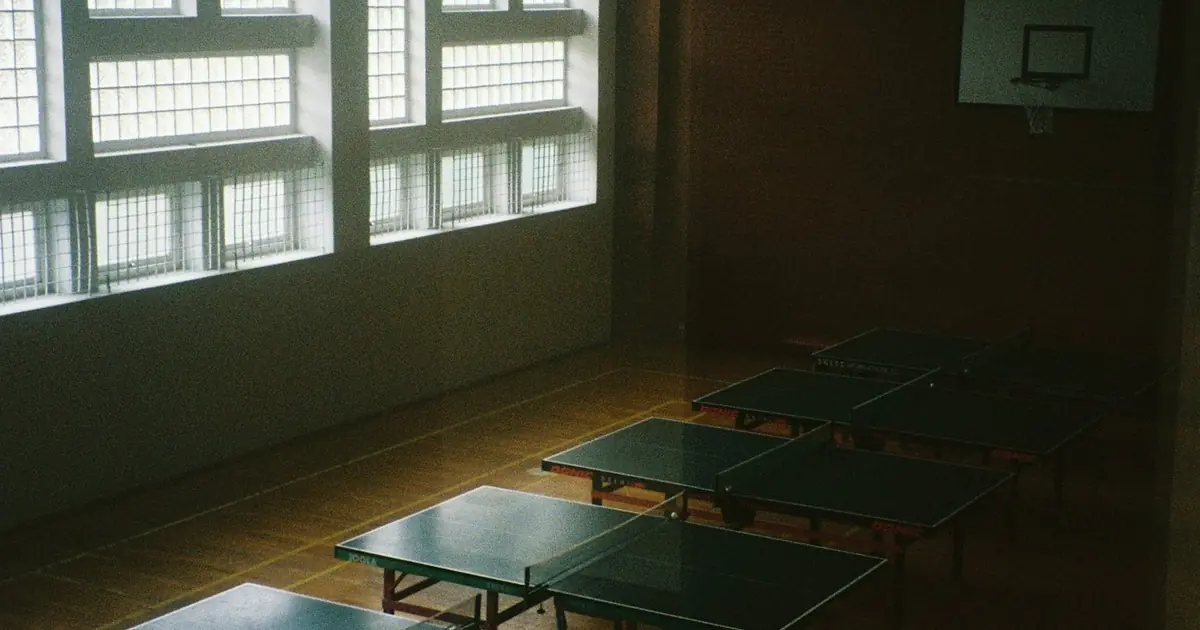
Table tennis is played in schools, parks, workplaces and community centers all over China, so the pool of children who try the game is enormous. Estimates of how many people play regularly vary widely and are hard to verify, but no one disputes that the base is far larger than in any Western country.
The talented few are moved into a structured system:
- Local clubs and schools. Children pick up the game and coaches watch for speed, coordination and competitiveness.
- Sports schools. Promising juniors move to specialist sports schools, where table tennis training takes up a large share of the day.
- Provincial teams. The best juniors join provincial squads and play in national competitions.
- National team. Only a small fraction reach the national team, where they train full time with elite coaches and staff.
This state-supported pathway, modeled in part on Soviet sports systems, means a gifted child in China has a clear route from first rally to world stage. In most other countries, juniors depend on local clubs, family money and luck.
4. Depth: The Hardest Team in the World to Make
Because so many strong players come through the system, the competition inside China is brutal. Players who would be national champions almost anywhere else may never get selected for a World Championships or Olympics. Domestic events and the professional Chinese league give these players regular top-level matches against each other.
That depth has two effects. First, Chinese players spend their careers practicing against world-class opponents every day. Second, China can lose a star to injury or retirement and still field a contender. When legends such as Ma Long, Zhang Jike and Xu Xin stepped back, players like Fan Zhendong, Wang Chuqin and Lin Shidong were ready to step in. On the women's side, Sun Yingsha leads a squad that also includes Wang Manyu, Chen Xingtong and Kuai Man.
5. Coaching, Sparring Partners and Science
Chinese national team players train full time with specialist coaches, and the coaching staff includes former champions. Liu Guoliang, the 1996 Olympic singles champion, went on to coach the national team and later became president of the Chinese Table Tennis Association.
The national program is widely reported to use dedicated practice partners, including players who copy the styles of specific foreign rivals so that top players can rehearse a match before it happens. Add sports scientists, video analysis and long daily training sessions, and Chinese players arrive at major events unusually well prepared for almost any opponent.
6. Innovation in Technique and Equipment

China has repeatedly pushed the game forward rather than just copying it.
- Penhold innovation: Chinese players developed the reverse penhold backhand, which let penhold players attack with the back of the racket. Our guide to penhold table tennis players covers the famous names.
- Two-winged attack: Modern Chinese men combine powerful forehand loops with a strong backhand close to the table, a style now copied worldwide.
- Tacky rubbers: Chinese rubbers such as the DHS Hurricane line are known for their sticky surface, which suits heavy spin and short serves.
The sport's rules have also changed several times in recent decades, including the switch to a larger 40mm ball in 2000 and to 11-point games in 2001. China adapted quickly and kept winning.
7. National Pride and Investment
Table tennis is often called China's national sport, and its stars are household names. Winning Olympic and world titles carries real prestige, so the sport keeps receiving funding, attention and talented recruits. In many other countries, table tennis is a recreational game with small budgets and little media coverage, which makes it hard to build a comparable program.
China's Olympic Table Tennis Record
Since table tennis joined the Olympics at Seoul 1988, China has won a medal in every event except the first men's singles. Here is the all-time gold medal count.
| Nation | Gold | Silver | Bronze | Total |
|---|---|---|---|---|
| China | 37 | 21 | 8 | 66 |
| South Korea | 3 | 3 | 14 | 20 |
| Japan | 1 | 4 | 5 | 10 |
| Sweden | 1 | 3 | 1 | 5 |
| Germany | 0 | 4 | 5 | 9 |
All-time Olympic table tennis medals, as of Paris 2024 (source: Wikipedia, Table Tennis at the Summer Olympics).
For event-by-event results and the full story of the sport at the Games, see our guide to table tennis at the Olympics.
Who Has Beaten China?

Because China wins so often, its defeats in the biggest finals are some of the most famous moments in the sport.
| Year | Event | Winner(s) |
|---|---|---|
| 1988 | Olympic men's singles | Yoo Nam-kyu (South Korea) |
| 1988 | Olympic women's doubles | Hyun Jung-hwa and Yang Young-ja (South Korea) |
| 1992 | Olympic men's singles | Jan-Ove Waldner (Sweden) |
| 2003 | World Championships men's singles | Werner Schlager (Austria) |
| 2004 | Olympic men's singles | Ryu Seung-min (South Korea) |
| 2010 | World Team Championships, women | Singapore (beat China in the final) |
| 2021 | Olympic mixed doubles (Tokyo 2020) | Jun Mizutani and Mima Ito (Japan) |
| 2025 | Men's World Cup | Hugo Calderano (Brazil) |
| 2025 | World Championships men's doubles | Hiroto Shinozuka and Shunsuke Togami (Japan) |
- Jan-Ove Waldner: The Swede is still the only player from outside Asia to win an Olympic table tennis gold. Read his story in our Jan-Ove Waldner profile.
- Werner Schlager: Since the Austrian's 2003 world title, every men's singles world championship has gone to a Chinese player.
- Mizutani and Ito: In the first-ever Olympic mixed doubles final, the Japanese pair beat China's Xu Xin and Liu Shiwen in Tokyo.
- Hugo Calderano: At the 2025 World Cup in Macao, the Brazilian came back from 1–3 down to beat Wang Chuqin in the semifinal, then beat Lin Shidong 4–1 in the final. The ITTF noted he was the first Brazilian and first Pan American men's World Cup winner.
Is China's Dominance Fading?
The honest answer as of 2026: the gap is narrower in places, but China is still clearly on top.
Evidence China Is Still Dominant
- Paris 2024: China won all five golds, the first clean sweep of the five-event program. Fan Zhendong won the men's singles and Chen Meng the women's.
- 2025 World Championships (Doha): China won four of five titles, with Wang Chuqin and Sun Yingsha winning the singles and taking a third straight mixed doubles title together.
- 2026 World Team Championships (London): At the centenary edition, held from April 28 to May 10, China won both the men's and women's team titles, with Japan taking silver in each.
Evidence the Rest of the World Is Catching Up
- Sweden and France: At Paris 2024, Truls Möregårdh took men's singles silver, Sweden reached the men's team final and France's Félix Lebrun won singles bronze.
- Japan: Japan reached both team finals in London 2026 and won the 2025 world men's doubles title, its first since 1961.
- Brazil: Calderano's 2025 World Cup win and his run to the 2025 world singles final showed a non-Asian, non-European contender can beat China's best.
Rivals now win the occasional big title, but in the finals that matter most, China still wins far more often than anyone else. For results year by year, see our guide to the table tennis world championships.
The Bottom Line
China is so good at table tennis because it made the sport a national project early, found heroes like Rong Guotuan to inspire millions, and built a system that turns a giant player base into a small group of full-time professionals pushed by fierce internal competition, expert coaching and constant innovation. The rest of the world is catching up in places, but through 2026 China remains the team to beat. To see the greatest names this system has produced, browse our list of the best ping pong players of all time.
Frequently Asked Questions
Why Is China So Good at Table Tennis?
China combines an early government decision to back the sport, a huge base of players, a sports-school pipeline that funnels talent to provincial and national teams, intense internal competition, specialist coaching and steady innovation in technique and equipment. Few other countries invest in table tennis on the same scale.
How Many Olympic Gold Medals Has China Won in Table Tennis?
Through Paris 2024, China has won 37 of the 42 Olympic table tennis gold medals awarded since the sport joined the Games in 1988, including all five golds in Paris.
Who Was China's First Table Tennis World Champion?
Rong Guotuan won the men's singles at the 1959 World Championships in Dortmund, beating Hungary's Ferenc Sidó in the final. He was the first world champion produced by the People's Republic of China.
Who Has Beaten China in Table Tennis?
Olympic gold medalists from outside China include South Korea's Yoo Nam-kyu and Ryu Seung-min, Sweden's Jan-Ove Waldner and Japan's Jun Mizutani and Mima Ito. Singapore's women beat China in the 2010 World Team final, and Brazil's Hugo Calderano won the 2025 Men's World Cup by beating Wang Chuqin and Lin Shidong.
Is China's Table Tennis Dominance Ending?
Not yet. China swept all five golds at Paris 2024, won four of five titles at the 2025 World Championships and took both team titles at the 2026 World Team Championships in London. Rivals such as Japan, Sweden, France and Brazil are closing the gap, but China still wins most of the biggest finals.
Why Is Table Tennis So Popular in China?
It is cheap, needs little space and can be played by almost anyone, which made it a practical mass sport in the early decades of the People's Republic. Early world titles and the 1971 ping pong diplomacy episode then turned it into a source of national pride.
Sources and References
- Wikipedia: Rong Guotuan
- Wikipedia: Table Tennis in China
- Wikipedia: Ping-Pong Diplomacy
- Wikipedia: Table Tennis at the Summer Olympics
- Wikipedia: Table Tennis at the 2024 Summer Olympics
- Wikipedia: 2025 World Table Tennis Championships
- Wikipedia: 2026 World Team Table Tennis Championships
- Wikipedia: 2010 World Team Table Tennis Championships
- Wikipedia: Werner Schlager
- ITTF: Men's and Women's World Cup Macao 2025, Final Day
- ITTF: Mizutani and Ito Secure Historic Mixed Doubles Gold in Tokyo