Para Table Tennis Explained: Classes, Rules and Paralympic Stars (2026)
 By Harshwardhan · Updated
In This Article
What Is Para Table Tennis?
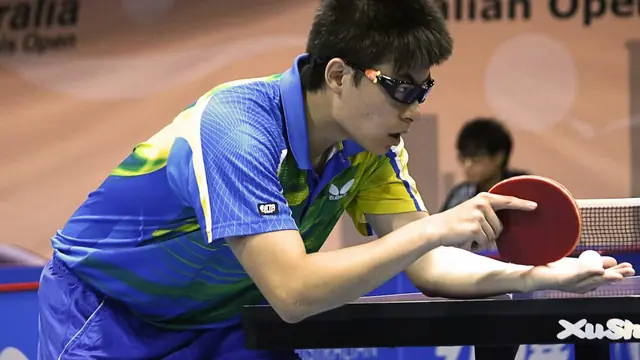
If you have watched a Paralympic match, you know it is the same fast, spin-heavy sport you see at the Olympics. Same table height, same net, same 40 mm ball, games to 11. What changes is who plays whom, thanks to a classification system, plus a few rules that make the game fair from a wheelchair.
Para table tennis is governed by the ITTF, which sanctions the World Para Championships and international tournaments, while the International Paralympic Committee runs the Paralympic event.
Quick Facts
- Paralympic debut: Rome 1960 (11 medal events)
- Olympic debut, for comparison: Seoul 1988, 28 years later
- First events for standing players: Toronto 1976
- First World Para Championships: Assen, Netherlands, 1990
- Classes: 11 (1–5 wheelchair, 6–10 standing, 11 intellectual impairment)
- Match format: best of five games, each to 11 points
- Paris 2024: 31 medal events, 280 athletes from 48 nations
A Short History of Paralympic Table Tennis
Table tennis is one of the original Paralympic sports. At Rome 1960 there were 11 medal events, six for men and five for women, and every one of them was for wheelchair players. Standing athletes did not get their own events until Toronto 1976.
The sport's world championships came much later: the first World Para Table Tennis Championships were held in Assen, Netherlands, in 1990. For the wider story of how the game itself began in 1880s Britain, see our history of table tennis.
The Paralympic program has grown steadily. Tokyo 2020 had 31 medal events across singles and team play. Paris 2024 also had 31, but swapped team events for doubles: 21 singles events plus men's, women's and mixed doubles. It was the first Paralympic tournament with doubles events since 1976.
Para Table Tennis Classification: The 11 Classes
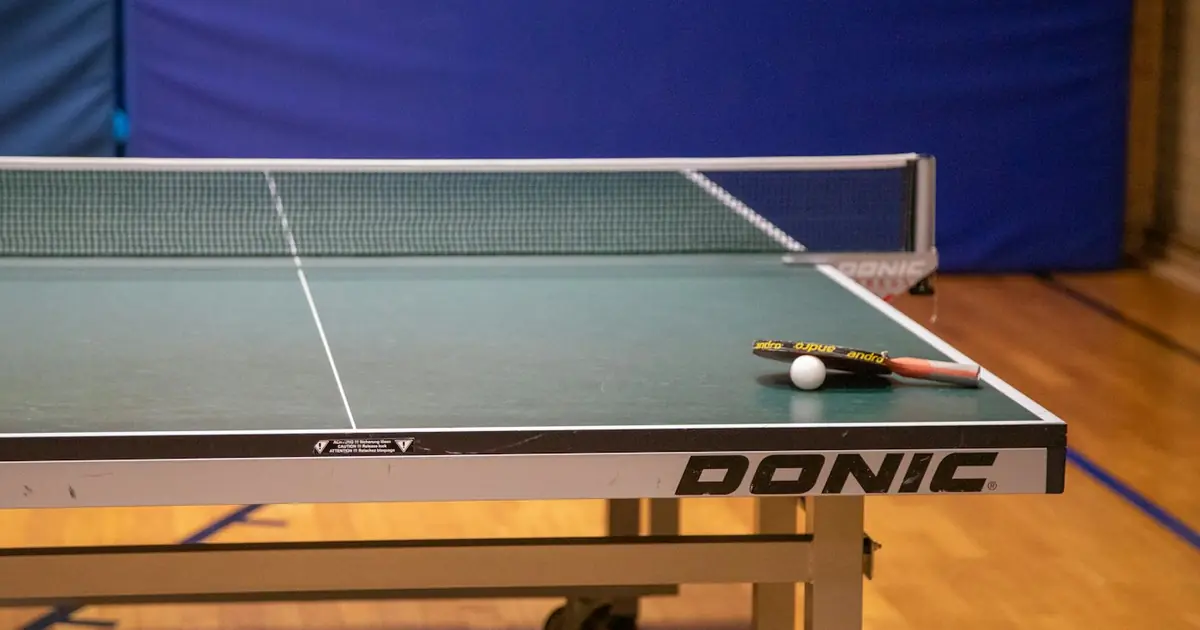
Classification is what makes para table tennis competitive. A trained classifier assesses each athlete and assigns a class, so a player with very limited trunk control is not drawn against someone with near-normal function. In the wheelchair and standing groups, a lower number means the impairment has a greater impact on play.
| Class | Group | Typical Profile (Simplified) |
|---|---|---|
| 1 | Wheelchair | No sitting balance, severe reduction of function in the playing arm |
| 2 | Wheelchair | No sitting balance, reduced function in the playing arm |
| 3 | Wheelchair | No sitting balance (upper trunk may move), near-normal arms with slight losses in the playing hand |
| 4 | Wheelchair | Some sitting balance, but the pelvis is not anchored |
| 5 | Wheelchair | Normal trunk muscle function |
| 6 | Standing | Severe impairments of both legs and arms |
| 7 | Standing | Very severe leg impairment, or severe to moderate playing-arm impairment |
| 8 | Standing | Moderate leg or playing-arm impairment, or moderate cerebral palsy with a good playing arm |
| 9 | Standing | Mild leg or playing-arm impairment, or severe non-playing-arm impairment |
| 10 | Standing | Very mild leg or playing-arm impairment, or severe to moderate non-playing-arm impairment |
| 11 | Intellectual impairment | Athletes with an intellectual impairment |
Official class profiles are far more detailed than this summary; the ITTF publishes the full classification rules and procedures. Classes are not always fixed for life either. For international play, an athlete's initial class is set at their first ITTF Fa20 tournament and can be reviewed after the classifier watches them compete.
How Para Table Tennis Rules Differ
The core ping pong rules apply: same table, net, ball and 11-point games. The differences are small but important, and most of them involve wheelchair play.
The Wheelchair Serve Rule
This is the best-known adaptation. When the receiver is in a wheelchair, a serve is a let (replayed) if, after bouncing on the receiver's side, the ball:
- comes back toward the net,
- comes to rest on the receiver's half, or
- in singles, leaves the table over one of the sidelines.
In other words, the short, backspin-heavy and wide-angle serves that win points in standing play are neutralized, because a seated player cannot lunge forward or sideways to reach them. If the receiver hits the ball before it crosses a sideline or bounces twice, the serve counts as good. Compare that with the standing-game requirements in our guide to a legal table tennis serve.
The Ball Toss
Standard rules require the ball to rest on an open palm and be thrown at least 16 cm upward. Where a para athlete physically cannot do that, the ball may be tossed from the elbow or from the racket, and umpires may relax service requirements for standing players whose impairment prevents compliance.
Wheelchair Doubles
In wheelchair doubles, the server serves first and the receiver returns first, but after that either player may return the ball. No part of a player's wheelchair may cross the imaginary extension of the table's center line; if it does, the other pair wins the point.
Staying in the Chair
A wheelchair player loses the point if they lose minimum contact with the seat or cushion while hitting the ball, touch the table with either hand before striking, or let a footrest or foot touch the floor during the rally.
Equipment and Venue Tweaks
| Item | Para Rule |
|---|---|
| Table legs | At least 40 cm in from the end line for wheelchair players, so knees and footrests fit underneath |
| Wheelchair | At least two large wheels and one small wheel |
| Cushions | Maximum two, total height limited to 15 cm |
| Racket grip | Players with limited hand function may strap or bind the racket to the hand |
| Playing area | Wheelchair events may use a smaller 8 m x 6 m area |
Standing classes play under essentially the same rules as anyone else, which is why players like Natalia Partyka can move between para and able-bodied competition. Your grip choice is free in both.
Notable Para Table Tennis Players
Natalia Partyka (Poland, Class 10)
Born without a right hand and forearm, Partyka is one of the sport's most famous names. The International Paralympic Committee described her as a four-time Paralympic singles champion back in 2016, and she has also competed at multiple Olympic Games, reaching the last 32 of women's singles at London 2012. At Paris 2024 she added a silver in women's singles WS10. She belongs on any list of the best female table tennis players when you look at durability alone.
Ibrahim Hamadtou (Egypt, Class 6)
Hamadtou has no arms and plays by holding the racket in his mouth, serving with his foot. He became internationally known through a viral video, won silver at the African Para Table Tennis Championships in 2011 and 2013, and drew global attention at the Tokyo 2020 Paralympics.
Ian Seidenfeld (USA, Class 6)
Seidenfeld delivered the biggest recent US result in the sport: gold in men's class 6 singles at Tokyo 2020, where he upset reigning Paralympic champion Peter Rosenmeier. He followed it with bronze in MS6 at Paris 2024, the only US para table tennis medal of those Games.
Melissa Tapper (Australia, Class 10)
Tapper competed at both the Olympic and Paralympic Games at Rio 2016.
Rankings and Major Events

The ITTF publishes separate para world rankings by class, and USATT keeps US para rankings, so check the official pages for current standings rather than relying on old lists. Tournaments carry a "factor" that sets their ranking weight: the Paralympic Games sit at the top, followed by the World Para Championships, regional championships and international tournaments. If you follow the able-bodied tour, our table tennis rankings guide explains how the main ITTF system works.
How to Get Involved in Para Table Tennis
Para table tennis is one of the more accessible adaptive sports: the equipment is the same, and many clubs can welcome wheelchair players with a standard table. In the US, the path usually looks like this:
- Find a club. Start with a local club or rec center; some offer para-specific hours. Our list of places to play ping pong can help.
- Join USA Table Tennis. USATT membership is required to play in USATT-sanctioned events.
- Contact the USATT Para program. It runs the para national team, development programs and selection procedures, and can point you toward classification.
- Get classified. A trained classifier assigns your class. Athletes with an intellectual impairment (class 11) are directed through the Virtus definition and partner organizations.
- Train and compete. Work with a coach, learn the ITTF rules handbook and enter local and regional tournaments. International events require a valid passport and go through the national program.
Outside the US, start with your national table tennis association or Paralympic committee; most run para programs that follow the same ITTF classification. New to the game entirely? Our guide on how to play table tennis covers the basics, and the benefits of table tennis are just as real from a wheelchair.
Frequently Asked Questions
What Is Para Table Tennis?
Para table tennis is table tennis for athletes with a physical or intellectual impairment. It follows ITTF rules with a few adaptations, mainly for wheelchair players, and athletes compete in 11 classes so that players with similar levels of function face each other.
How Many Classes Are There in Para Table Tennis?
There are 11. Classes 1 to 5 are for wheelchair players, classes 6 to 10 are for standing players, and class 11 is for players with an intellectual impairment. In the physical classes, a lower number means the impairment has a bigger effect on play.
When Did Table Tennis Become a Paralympic Sport?
Table tennis was on the program at the very first Paralympic Games in Rome in 1960, with 11 medal events. That is 28 years before it joined the Olympics at Seoul 1988.
Can Para Athletes Compete at the Olympics?
Yes, if they qualify through the standard route. Poland's Natalia Partyka, a class 10 player born without a right hand and forearm, has played table tennis at both the Olympic and Paralympic Games, and Australia's Melissa Tapper competed at both Games in Rio 2016.
Has the USA Won a Paralympic Table Tennis Medal Recently?
Yes. Ian Seidenfeld won men's class 6 singles gold at the Tokyo 2020 Paralympics, upsetting reigning champion Peter Rosenmeier, and he took bronze in men's singles MS6 at Paris 2024.
How Do I Get Classified for Para Table Tennis in the US?
Start by joining USA Table Tennis and finding a club, then contact the USATT Para program. A trained classifier assigns your class; for international events, the initial class is set at your first ITTF Fa20 tournament and can change after the classifier watches you play.
Sources and References
- Wikipedia: Para Table Tennis
- International Paralympic Committee: 10 Things to Know About Para Table Tennis
- International Paralympic Committee: Classification in Para Table Tennis
- ITTF: Para Table Tennis Classification Rules and Procedures
- Wikipedia: Table Tennis at the 2024 Summer Paralympics
- USATT Para
- Team USA: Ian Seidenfeld Upsets Reigning Paralympic Table Tennis Champ to Take Gold Medal
- International Paralympic Committee: Meet Ibrahim Hamadtou
- Cornilleau: Discovering Para Table Tennis
- Wikipedia: Natalia Partyka