Ping Pong Accessories: What's Worth Buying and What to Look For (2026)
 By Harshwardhan · Updated
In This Article
Which Ping Pong Accessories Are Worth Buying?
The ping pong accessories worth buying first are a paddle case, a rubber cleaner or cleaning sponge, and a way to pick up balls without bending. After that, add a table cover if your table sits in a garage or outdoors, and a scoreboard if you play matches with friends or run a club. Everything else depends on how seriously and how often you play.
None of these items are required by the rules. A table, a net, paddles and balls are all you need to start. Accessories either protect the equipment you already own or remove small annoyances, such as hunting for balls under the sofa or arguing about the score.
This guide covers each accessory briefly: what it does, who needs it and what to look for. Where we already have a dedicated buyer's guide, we link to it rather than repeating it.
Quick Facts
- Must-haves: Paddle case, rubber cleaner or sponge, ball pickup tool
- Table add-ons: Net and post set, table cover, scoreboard, ball holder
- Training add-ons: Robot, return board, catch net
- Player gear: Towel, table tennis shoes
- Rule limits worth knowing: Net top 15.25 cm (6 in) above the table; rubber up to 4 mm (sandwich) or 2 mm (plain pimpled)
Ping Pong Accessories at a Glance
Use this table to decide what is worth buying for your situation.
| Accessory | Main Job | Who Needs It | Priority |
|---|---|---|---|
| Paddle case | Protects rubber from dust, light and knocks | Anyone with a decent paddle | High |
| Cleaner and sponge | Restores grip on inverted rubber | Players using smooth rubber | High |
| Protective film | Covers rubber between sessions | Players with tacky or expensive rubbers | Medium |
| Edge tape | Guards blade and rubber edges | Custom racket owners | Medium |
| Ball pickup tube or net | Collects balls without bending | Everyone, especially robot users | High |
| Net and post set | Correct height and tension | Anyone with a sagging or broken net | Medium |
| Net gauge | Checks net height | Clubs and serious home players | Low |
| Table cover | Shields the top from dust, sun and moisture | Garage and outdoor tables | High (outdoors) |
| Scoreboard | Keeps the score visible | Clubs, families, leagues | Low to medium |
| Ball holder | Keeps spare balls at the table | Home tables | Low |
| Towel | Dries hands, face and grip | Everyone who plays long sessions | Medium |
| Shoes | Grip and quick lateral movement | Regular and club players | Medium |
| Robot or return board | Solo practice | Players without a regular partner | Situational |
Paddle Accessories
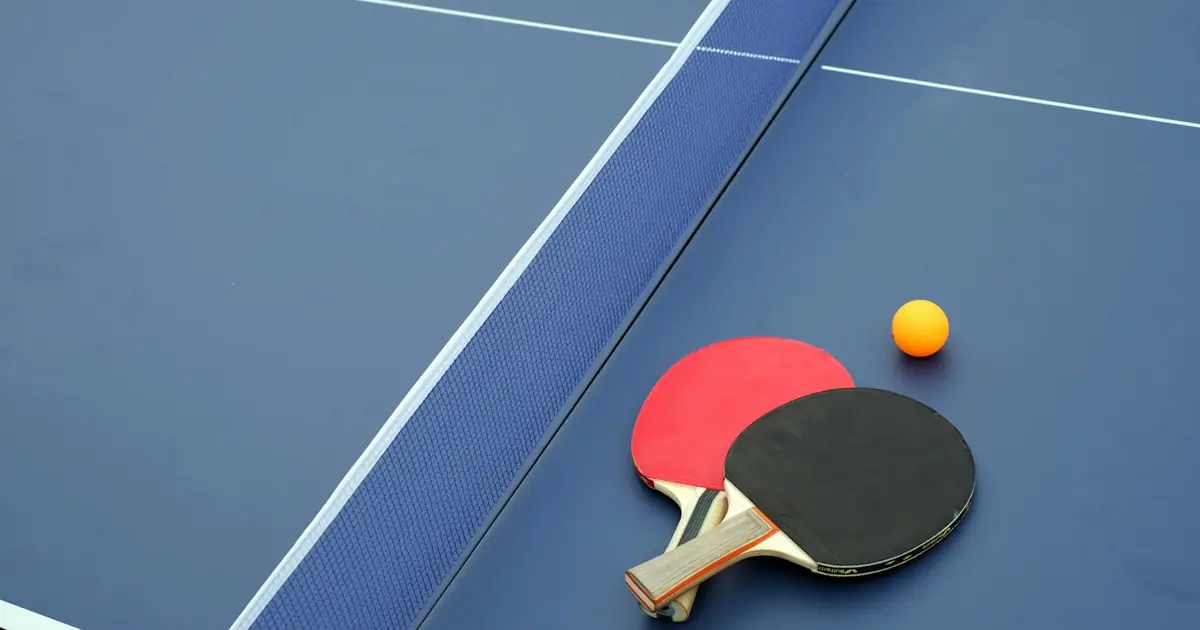
Paddle accessories pay off fastest, because rubber is the part of your equipment that wears out. Keeping it clean and covered keeps it grippy for longer.
Paddle Case
A case keeps dust, sunlight and bag knocks off your rubber. A single-paddle case is enough for most players; a double case fits a backup racket and some balls. Look for a rigid shell if you carry the paddle in a sports bag, a zipper that runs the full edge, and a ball pocket if you want to carry your own balls. Keep the case out of hot cars, since heat is hard on rubber and glue. Our guide to the best ping pong paddle cases compares hard and soft options.
Rubber Cleaner and Sponge
Sweat, dust and ball dust coat smooth inverted rubber and reduce its grip. A foam or spray cleaner plus a soft sponge is the standard fix. Look for a cleaner made for table tennis rubber and a sponge soft enough not to scratch the topsheet. Water and a clean sponge also work for daily cleaning. The full routine is in how to clean a ping pong paddle.
Butterfly Clean Care Sponge
Best for: Players with inverted rubber who want a simple wipe-down after every session
Butterfly's Clean Care is a dedicated rubber-cleaning sponge that stores in a sealable cup. It covers the wiping half of a cleaning routine; add water or a foam cleaner for the rest.
| Type | Rubber cleaning sponge |
|---|---|
| Storage | Sealable cup |
Pros
- Soft sponge made for table tennis rubber
- Sealable cup keeps the sponge clean between uses
Cons
- A sponge only; pair it with water or a rubber cleaner
Protective Film
Protective film is a thin sheet you press onto clean rubber after each session. It keeps dust off and slows the rubber's exposure to air. Non-adhesive film suits most rubbers; adhesive film is a common choice for tacky rubbers because it holds tight to the surface. Apply it only after cleaning so you are not sealing dirt in. If you are not sure what kind of rubber you have, our table tennis rubber types guide explains the differences.
Edge Tape
Edge tape (also called side tape) wraps the rim of the blade and the rubber edges. It protects against chips when the racket clips the table and helps stop rubber edges lifting. It goes on after the rubbers are glued and trimmed, so it is mainly for players who assemble their own rackets; our table tennis glue guide covers that process.
What to look for:
- Width: Match it to the combined thickness of the blade and both rubbers. Butterfly, for example, offers 6, 9 and 12 mm widths.
- Roll length: A 1 m strip covers one or two rackets; long rolls make sense for clubs or frequent rubber changes.
- Material: Cloth tapes are thin and flexible; thicker protector tapes absorb more impact but add a little weight.
Butterfly Side Tape (12 mm)
Best for: Owners of custom rackets who want to protect the blade edge
Butterfly sells its side tape in 6, 9 and 12 mm widths and in rolls from 1 m to 50 m. It wraps the racket edge to guard against table strikes and knocks in a bag.
| Widths Offered | 6 mm, 9 mm or 12 mm |
|---|---|
| Rolls Offered | 1 m, 10 m or 50 m |
| Use | Protects blade and rubber edges |
Pros
- Several widths to match blade and rubber thickness
- Long rolls cover many rackets
Cons
- Has to be trimmed and fitted by hand
- Replaced each time you change rubbers
Table Accessories
Table accessories keep the playing surface in shape and the game running smoothly.
Net and Post Set (Including Retractable Nets)
A sagging or low net changes every rally. The top of the net should sit 15.25 cm (6 in) above the playing surface, and the tension should be firm enough that a ball dropped on the tape does not sink into it. Screw clamps suit tables where the net stays on; spring clips suit tables that fold away often. Retractable nets roll into a post and stretch to fit many table widths, which makes them handy for dining tables and travel but usually less precise than a dedicated set. Always check the maximum table thickness a clamp accepts. See the best ping pong nets for specific sets.
Net Height Gauge
A gauge is a small card or tool that checks net height in seconds. Some do double duty: Newgy's NetChecker has a center slot for net height and corner notches for rubber thickness, matching the 4 mm limit for sandwich rubber and 2 mm for ordinary pimpled rubber. It is a cheap upgrade for clubs and for anyone who keeps nudging the net out of position.
Newgy NetChecker
Best for: Clubs, coaches and players who want a regulation net height
Newgy's NetChecker uses a center slot to measure net height and corner notches to check rubber thickness against the 4 mm sandwich and 2 mm pimpled-rubber limits.
| Center Slot | Checks net height |
|---|---|
| Corner Notches | Check rubber thickness: 4 mm sandwich, 2 mm pimpled |
Pros
- One small tool for net height and rubber thickness
- Fits in a racket case
Cons
- Does not measure net tension
Not listed on Amazon US right now. Check the maker's website or a specialist table tennis dealer.
Table Cover
A cover protects the top from dust, scratches, sunlight and moisture. For indoor tables, a light dust cover is enough. For garages, patios and outdoor tables, look for a weather-resistant fabric, a fit that matches the folded or open position you store the table in, and secure straps or a drawstring. The best ping pong table covers guide sorts options by size and use.
Scoreboard
A scoreboard ends "what's the score?" arguments and helps when spectators or kids are watching. A game goes to 11 points and must be won by 2, so a flip counter needs at least two digits per player; many also include a small counter for games won. What to look for:
- Flip or electronic: Flip counters need no batteries; electronic boards suit clubs and leagues.
- Size and visibility: Large, high-contrast numbers if people watch from across the room.
- Games counter: Useful for best-of-five or best-of-seven matches.
- Stability: A weighted or folding base so it does not tip when flipped.
Our ping pong scoreboards guide goes deeper.
Ball Storage and Ball Holders
Balls get stepped on and lost, so keep spares close. Simple options include a holder that clips to the table edge or net post, a wall-mounted rack for paddles and balls, or a lidded bin under the table. Look for a holder that does not touch the playing surface and does not interfere with the net clamp. Store balls away from heat, which can deform them.
Training Accessories
Training accessories matter most when you practice alone or hit lots of balls in a session.
Ball Pickup Tube or Net
Picking up balls by hand gets old fast, especially after robot or multiball drills. There are three main designs:
| Type | How It Works | Best For |
|---|---|---|
| Pickup tube | Press the end over a ball and it pops inside | Light home use |
| Telescoping pickup net | Roll a basket or net along the floor to scoop many balls | Robot and multiball sessions |
| Angled retriever | Reaches one ball at a time in awkward spots | Under tables, sofas and corners |
Look for a handle long enough that you do not have to bend, a capacity that suits how many balls you use, and a frame light enough to carry around the court. Newgy's Pong-Pal is an example of the angled type.
Newgy Pong-Pal Ball Retriever
Best for: Home players tired of crawling under the table for stray balls
Newgy describes the Pong-Pal as a ball retriever with an angled end that reaches balls under the table and in other hard-to-reach spots. It complements, rather than replaces, a bulk pickup net.
| Type | Ball retriever |
|---|---|
| Design | Angled end for reaching under tables and into corners |
Pros
- Reaches balls in spots a tube cannot
- Made by a table tennis robot maker
Cons
- Picks up one ball at a time, not a bulk collector
Not listed on Amazon US right now. Check the maker's website or a specialist table tennis dealer.
Robot, Return Board and Catch Net
A robot feeds balls so you can drill strokes without a partner; a return board is a cheaper rebound surface that sends your shots back. If you use a robot, a catch net that hangs behind the table funnels balls back into the robot's tray, which cuts pickup time sharply. Newgy, for example, sells an add-on that blocks angled shots and steers them into its Ball Catch Net II. Compare models in the best table tennis robots and our guide to ping pong return boards.
Player Accessories
Towel
Sweaty hands affect your grip, and sweat on the rubber reduces spin. Under ITTF rules, players may towel off only at set breaks: after every 6 points from the start of each game and at the change of ends in the deciding game. A small, absorbent sports towel kept by the court covers it. Look for a fast-drying fabric and a size that fits in your bag.
Table Tennis Shoes
Ping pong is played with short, quick steps and fast changes of direction. Table tennis shoes typically use a thin, grippy, non-marking sole that keeps you low to the floor. Running shoes with thick, cushioned heels are the main thing to avoid because they make it easier to roll an ankle when you move sideways. Look for a sole suited to indoor floors and a snug heel. See the best table tennis shoes for specific models.
What to Buy First
If you are building a setup from scratch, buy in this order:
- Protect the paddle. A case and a cleaner or sponge keep your rubber playing well for longer.
- Save your back. A pickup tube or net makes every session more enjoyable.
- Protect the table. A cover is essential for outdoor and garage tables.
- Fix the net. Replace a sagging or wobbly net and check the height.
- Add extras by need. A scoreboard for matches, a robot or return board for solo practice, and shoes once you play regularly.
Skip anything that does not solve a problem you actually have. The best accessory budget is a small one spent on the items you will use every session.
Frequently Asked Questions
What Accessories Do You Need for Ping Pong?
Only a table, net, paddles and balls are essential. The most useful extras are a paddle case, a rubber cleaner or sponge, and a ball pickup tool; a table cover matters if the table lives in a garage or outdoors.
Is Edge Tape Necessary on a Ping Pong Paddle?
No. Edge tape is optional. It protects the blade and rubber edges from chips when the racket hits the table, which is why many owners of custom rackets use it. Premade paddles usually come with edges already finished.
What Is the Best Way to Pick Up Ping Pong Balls?
For a few balls, a tube-style picker or an angled retriever is enough. For robot or multiball sessions, a telescoping pickup net or a catch net that attaches to the table saves the most time.
Do I Need Table Tennis Shoes?
Not for casual play. Regular players benefit from court shoes with a thin, grippy, non-marking sole, which help with quick side-to-side movement. Running shoes with thick heels are the main thing to avoid.
How Do You Keep Score in Ping Pong Without a Scoreboard?
Call the score aloud before each serve, server's score first. A game goes to 11 points and must be won by 2. A flip scoreboard simply makes the score visible to everyone and ends disputes.